Ryan Smith had a billion-dollar company and an unfinished assignment. His grandmother kept a “smart shelf,” reserved for family members with college degrees. Building Qualtrics did not satisfy the admissions committee. In 2016, Smith completed his management degree at Brigham Young University and finally qualified. A valuation could impress investors. Grandma had her own underwriting standards.
It is a useful place to begin with someone whose public life is usually introduced by a transaction. The software business sold to SAP. The basketball team bought from the Miller family. The hockey franchise brought to Utah. Each deal makes a clean headline, and each leaves something out: how long Smith is willing to stay attached to an idea, a group of people, or a place.
Born in Eugene, Oregon, in 1978, Smith made his business career in Provo, Utah. He and Ashley, whom he met at BYU, have five children. His story stretches across enterprise software and professional sports, two businesses with very different dress codes and a shared dependence on people choosing to come back. The link between them becomes clearer when you start before the money.
First, find someone who needs it
Qualtrics began in 2002. Ryan, his father Scott, his brother Jared, and Stuart Orgill became its founding team. Scott was a marketing professor; the business grew out of the problem of collecting and analyzing research. The family basement in Provo supplied the early office. Ryan left college to work on it. The degree would have to wait.
The customer did not arrive fully formed. Smith has described trying to give the software away, approaching technology chiefs, and pursuing companies before finding traction with universities. Academic researchers needed to ask questions, gather responses, and make sense of the results. That was a specific job with specific users. It gave the fledgling company something firmer than a large theoretical market.
There is a quiet irony here. A founder who interrupted his own education found an early market inside educational institutions. Universities offered demanding users and a way to improve the product. The company then expanded into business customers. Asking people what they thought turned out to have applications well beyond the classroom.
The underlying proposition was easy to grasp, even if the software took work: organizations have questions that their existing records cannot answer. Sales figures tell you what was purchased. They may tell you much less about why a customer is annoyed, why an employee is leaving, or how a new product might be received. Qualtrics built tools for gathering that missing information.
Ten years before the first venture cheque
For roughly its first decade, Qualtrics grew without venture capital. In 2012, it raised $70 million from Accel and Sequoia. By then, the business had already survived the less photogenic part of entrepreneurship: finding customers, getting paid, and financing another round of work from the proceeds.
That year also brought a $500 million acquisition offer, which Smith turned down. The number makes the decision sound like a test of nerve. His own explanation was more practical. A profitable company with a long horizon had choices. Selling would mean leaving work he still wanted to do. The offer put a price on the company; it did not settle what the next years of his life should contain.
“When you build a company to keep,” he said in a 2013 interview, describing the outlook behind the decision. The short phrase helps explain the delay in fundraising. Outside investment arrived after the business had acquired some independence of its own. Investors were joining an operating company with customers, rather than paying for the privilege of discovering whether one could exist.
Smith’s account of raising money also includes his brother’s reluctance to acquire a boss after leaving Google. Family businesses have their own investment committees. The eventual agreement brought in people who remained part of Smith’s orbit, including Accel’s Ryan Sweeney. In this story, relationships have a habit of outlasting the transaction that introduced them.
An exit with several entrances
By November 2018, Qualtrics was preparing to go public. SAP interrupted that route with an agreement to acquire the company for $8 billion in cash. The acquisition closed on January 23, 2019. Smith continued to lead Qualtrics, and its Provo and Seattle headquarters remained. A sale of that size can sound like a final scene. The company was about to acquire several more chapters.
SAP’s rationale joined two kinds of information. Its systems held operational data about what businesses were doing. Qualtrics collected feedback about how customers and employees experienced those businesses. Put together, the companies argued, those records could help explain both events and the reactions behind them. The language was corporate; the question underneath was human: how did this feel to the person on the receiving end?
In January 2021, Qualtrics completed its Nasdaq IPO while SAP retained majority control. Then, in June 2023, Silver Lake and CPP Investments completed an acquisition that returned the company to private ownership. The agreed equity value was approximately $12.5 billion on a fully diluted basis. Acquisition, listing, acquisition: even the paperwork had a busy few years.
These figures describe different transactions at different times. They are not Smith’s personal proceeds, and they do not form a tidy chart of uninterrupted appreciation. What they do show is an enterprise that continued changing its ownership structure after its founder’s first widely celebrated sale. Smith remained associated with it as co-founder and executive chairman.
- 2019SAP acquisition$8bn announced deal
- 2021Nasdaq IPOSAP retains control
- 2023Back to private~$12.5bn equity value
The customer can boo
In December 2020, the NBA approved the sale of the Utah Jazz to an ownership group led by Smith. Ryan and Ashley took over majority ownership after the Miller family’s 35-year stewardship. For a longtime Jazz supporter, it was a purchase with a personal history attached. It also brought a much more public kind of feedback.
Enterprise customers can complain in meetings, decline a renewal, or write an unhappy email. Basketball supporters can deliver their assessment together, at volume, while television cameras are running. An arena is an unusually candid workplace. The product has a scoreboard, and nobody needs a software licence to have an opinion about it.
Smith brought his familiar business vocabulary into the building. At the time of the purchase, he described thinking about what visiting players encountered when they arrived. It was a revealing extension of the usual owner’s attention: the experience mattered even for people wearing the other team’s jersey. The arena contained several audiences at once, each arriving with a different reason to care.
His titles now include chairman and CEO of Smith Entertainment Group and governor of the Jazz and Utah Mammoth. SEG’s interests extend to Delta Center, media, and the Salt Lake City Stars. The collection places Smith in the practical business of hosting people: bringing them into a building, giving them something worth seeing, and asking them to return.
“Nail it, then scale it!”
Ryan Smith / 2014
Utah gets another home team
The NHL approved a Utah franchise controlled by Smith Entertainment Group in April 2024. Its first season was played as Utah Hockey Club. In May 2025 it became the Utah Mammoth. A software founder had acquired another reason to pay close attention to a crowd.
The permanent identity followed four rounds of fan voting. For an entrepreneur whose original business was gathering responses, letting supporters help choose a name was a particularly fitting assignment. The surveys could settle branding preferences. The games would bring their own verdicts, delivered on a less convenient schedule.
Sports ownership also changes the meaning of local commitment. Qualtrics could serve customers far from Provo. A team has a home crowd, a building, and neighbours. Expanding that business involves decisions people encounter in their own city. Smith’s ambitions for Utah now have a physical presence that a software subscription never needed.
Still turning up at the software meeting
The sports calendar has not erased the technology business. In 2025, Smith and Sweeney launched Halo Experience Company, an investment firm connecting technology with sports and entertainment. Their partnership reaches back to the first Qualtrics funding round. A founder and an investor had accumulated enough shared history to try working together from another side of the table.
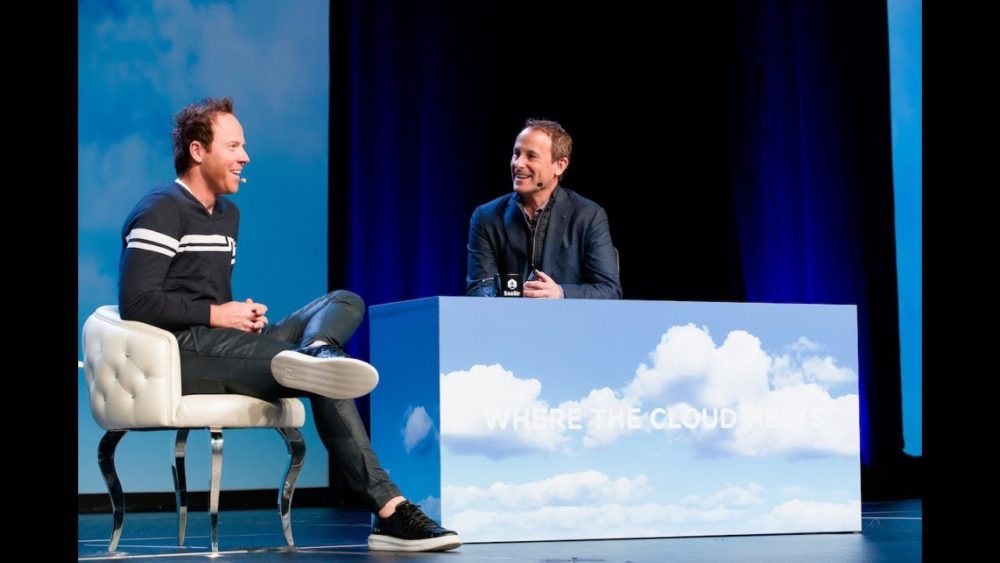
In September 2026, Smith appeared at the launch event for the Qualtrics XM Data & AI Platform to discuss customer experiences in Utah’s sports venues. That is a useful recent snapshot: the executive chairman returning to the company he helped start, with examples drawn from the businesses that followed it. His career keeps giving the original idea new places to be tested.
The fascination is in the continuity. Research software asks an organization to hear from people it might otherwise overlook. Running an arena puts those people in front of you. Investing in the surrounding technology creates another set of questions about how they buy, watch, arrive, and participate. Smith’s interests have widened, while the recurring subject remains recognizably close to the first one.
There is a temptation to compress a career like this into a lesson about refusing an early offer. It would be a poor rule for anyone else’s company. Smith had a particular business, particular partners, and reasons of his own for continuing. The useful detail is his attachment to the work. Half a billion dollars did not answer every question he had about what he wanted to build.
Nor did the larger transactions finish the story. He bought into sports in the state where he had built software, and kept a role at the software company while the sports holdings grew. Meanwhile, the grandmother’s shelf remains a pleasing corrective to all those deal announcements. Some rooms accept a valuation. Others require you to finish the course.
Keep the conversation going
Read more about the businesses, or hear Smith tell the early story himself.