A chemist trying to make a new catalyst for polyethylene ended up with a liquid instead. For a young Mark Lashier, the unexpected result became an assignment: improve the catalyst, devise a process and help take it into commercial production. A laboratory surprise had acquired a much longer to-do list.
Lashier later described his early role as a “technical translator.” It is a useful phrase for the space between knowing that something can happen and arranging for it to happen repeatedly, at industrial scale. His work eventually included helping build the first commercial facility for the process. The experiment had to survive contact with the world.
Today, as chairman and CEO of Phillips 66, he works at a different scale again. The questions involve refineries, pipelines, chemicals, renewable fuels and the investors who disagree about how those businesses should fit together. The habit of connecting an idea with a functioning operation gives his career a thread. Following it takes us back to Iowa, before the patents and the corporate titles.
The people he was tutoring had an interesting idea
Lashier grew up in Farragut, in southwest Iowa. His hometown takes its name from Admiral David Farragut, an association he would later enjoy invoking. In his account of childhood, a large family, limited means and an expectation of hard work sit alongside an appreciation for having a good time. The work ethic comes with a little less solemnity than the standard executive origin story.
At Iowa State, he earned money helping engineering students with physics and chemistry. Those students also introduced him to the possibilities of their field. His curiosity about their courses helped him find chemical engineering. It was a practical route into a profession: while helping other people understand the material, he discovered something he wanted to study himself.
He completed his bachelor’s degree in chemical engineering in 1985 and his doctorate in 1989, both at Iowa State. The second degree matters to the chronology. This was a sustained commitment to understanding processes before a career in managing them. When he joined Phillips Petroleum that year, his first title was associate research engineer.
A technical record that predates the corner office. Lashier’s early career began in research, then moved into production and commercial development.
The institution remained part of his professional life. He has served on the College of Engineering’s Industrial Advisory Council and on the chemical engineering department’s advisory council. In 2013, the university’s engineering college recognized him with its Professional Achievement Citation in Engineering. The relationship acquired a satisfying circularity: a graduate who had learned what engineers could do was now helping advise the place that trained them.
Learning the business a job at a time
The early appointments show how the laboratory became a starting point. In 1994, Lashier became a senior production engineer at the Sweeny Petrochemical Complex in Old Ocean, Texas. In 1996, he moved into commercial development in Bartlesville, Oklahoma. By 1997, he was an olefins manager. Research, production, commercial development: three different ways of finding out whether a process is useful.
Each move also changed the questions. A researcher can ask what a reaction produces. A production engineer has to consider what a plant can deliver. Commercial work brings in the customer and the economics. Lashier’s sequence of jobs placed those concerns alongside one another long before he was responsible for explaining an entire company to investors.
In 2000, when Chevron Phillips Chemical was formed, he became its Asia region general manager, based in Singapore. His subsequent international work included Saudi Arabia. The geographical change broadened a career that had already crossed professional boundaries. Chemical expertise could take him into the room; working with people in different countries required learning how business was conducted there.
His later executive posts at CPChem ranged across corporate planning and development, specialties, aromatics and styrenics, and olefins and polyolefins. The labels are a mouthful. Together, they describe a long apprenticeship inside a chemicals business, with responsibilities extending from products to projects to the allocation of capital.
- 1989Research
Phillips Petroleum - 2000Asia region
CPChem - 2017Chief executive
CPChem - 2021Operations chief
Phillips 66 - 2022Chief executive
Phillips 66
Three plain words for a complicated job
Lashier became president and CEO of Chevron Phillips Chemical on August 1, 2017, succeeding Peter Cella. By then, he had spent almost three decades in the industry. The appointment brought a technically trained insider to the leadership of the joint venture owned by Chevron and Phillips 66. His experience encompassed both the manufacturing work and the commercial decisions surrounding it.
In leadership interviews from that period, he emphasized trust, transparency and simplicity. They are modest words for an organization full of complex equipment. Their usefulness lies in the obligations they place on management: explain what is happening, behave consistently and remove the administrative obstacles that stop people doing their jobs.
Those principles also give a sense of his preferred managerial vocabulary. There is relatively little distance between a production problem and an organizational one when both require people to share accurate information. A technical solution becomes less useful if the people who need it cannot get a decision, understand the objective or trust the instructions.
In April 2021, he became president and chief operating officer of Phillips 66. His remit covered operational execution across its businesses. On July 1, 2022, he succeeded Greg Garland as CEO, 33 years after entering Phillips Petroleum’s research labs. Garland remained executive chairman during the handover.
“I wouldn’t have thought it possible.”
Mark Lashier, on imagining the CEO role at the start of his career, July 2022
That brief admission, made as he took the job, makes the promotions feel less preordained. The researcher had become the executive responsible for the whole enterprise. There is a temptation to turn every early assignment into evidence of destiny. His own surprise leaves room for a less polished explanation: a career assembled through opportunities, responsibilities and work that kept getting larger.
A refinery changes its ingredients
The practical meaning of industrial change is visible at Rodeo, California. Phillips 66 converted a refinery there into a renewable fuels facility. In June 2024, Lashier discussed the transformation of the 128-year-old site as a milestone in the company’s move toward a lower-carbon future. Existing industrial ground had acquired a different assignment.
Rodeo helps explain the kind of energy transition he describes publicly. A plant, its people and its production capabilities can be redirected. Meanwhile, conventional fuels remain part of the portfolio. His discussion of the project placed renewable fuels alongside gasoline, diesel and jet fuel. The company’s responsibilities were continuing while its choices about production were changing.
By May 2026, he was again arguing that liquid hydrocarbons would be needed for years, while supporting an approach that includes renewables. He also discussed the proposed Western Gateway pipeline and the ability to move products between regions. The pipeline was a proposal, rather than an accomplished fact. Logistics formed part of the argument for being able to respond when markets shift.
The shareholders get a vote on the theory
A chief executive’s explanation of a company is also an invitation to challenge it. In 2025, Elliott Investment Management attacked Phillips 66’s performance, governance and structure. It sought four board seats and pushed for a different direction. The integrated business that Lashier defended had become the subject of a public dispute over value and accountability.
At the May 21 shareholder meeting, the outcome split the four contested seats. Phillips 66 reported that two of its nominees, Robert Pease and Nigel Hearne, were expected to be elected alongside Elliott nominees Sigmund Cornelius and Michael Heim. Lashier welcomed the new directors. The vote made disagreement part of the board’s composition.
The episode supplies a necessary complication to his story. Experience does not remove the need to persuade. Neither a patent record nor decades inside a company settles the question of its best structure. Shareholders can accept an executive’s technical competence and still demand changes to the business he leads.
In a March 2026 investor discussion, Lashier continued to make the case for integrated positions and cash flow across the cycle. This is where the translation becomes financial: he has to explain why the connections between businesses justify keeping them together. The explanation remains open to scrutiny through operating performance, investment decisions and returns.
Back among the students
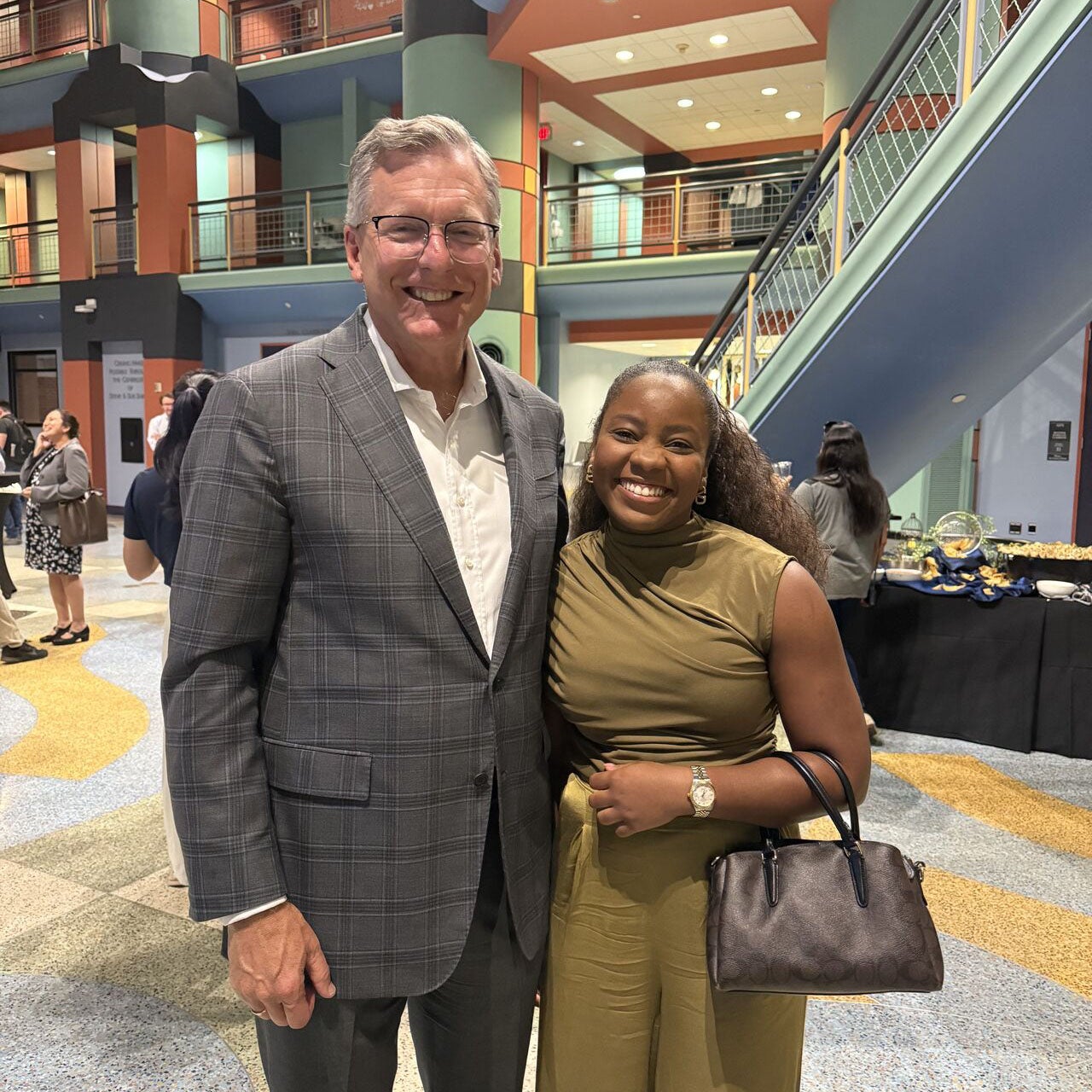
At Rice University on September 15, 2025, Lashier returned to questions that come before a job title. Speaking in the Engineers in the C-Suite series, he encouraged curiosity about cultures, technologies and processes. He discussed artificial intelligence and machine learning, and the need to understand personal values before negotiations or difficult decisions put them under pressure.
For students, the combination was practical. New technology would keep arriving; difficult choices would keep arriving too. Technical learning and personal judgment would have to develop together. The speaker’s own route, from research associate through overseas assignments to corporate leadership, gave that advice a substantial working history.
His current calendar contains the less philosophical obligations of the job. In October 2026, Phillips 66 announced that Chris Chandler would advise the CEO before taking over Refining in January 2027. Later that month, the board raised the quarterly dividend to $1.33 a share. Succession and capital allocation are part of keeping the operation working beyond the next presentation.
There is also breakfast. Lashier has jokingly claimed that his oatmeal deserves planetary recognition, with his grandchildren available as witnesses. It is an agreeable glimpse of a person whose public life otherwise involves fuel markets, chemical processes and investor questions. The family judging panel sounds considerably easier to convene than a shareholder meeting.
His career began with the work required after an unexpected laboratory result. It now includes the work required after a strategy is announced, challenged and put into practice. Across those changes of scale, the interesting distance remains the same: all the decisions between an idea and something that actually runs.