The first PsychPlus clinic had an unusual second job. It was a place to see patients, certainly. But it was also a beta site. Faisal Tai, a psychiatrist who began developing an electronic health record during residency, needed somewhere to test his software. So he opened a clinic. In that small reversal sits the explanation for the company that followed: the medical practice and its operating system would grow together.
- Build inside the clinic. Psychiatry, therapy and proprietary software share an operating model.
- Make capacity travel. Physical rooms can connect patients to remote clinicians.
- Extend the relationship. Employer programs and acquired digital tools reach beyond scheduled visits.
The clinic was the beta test
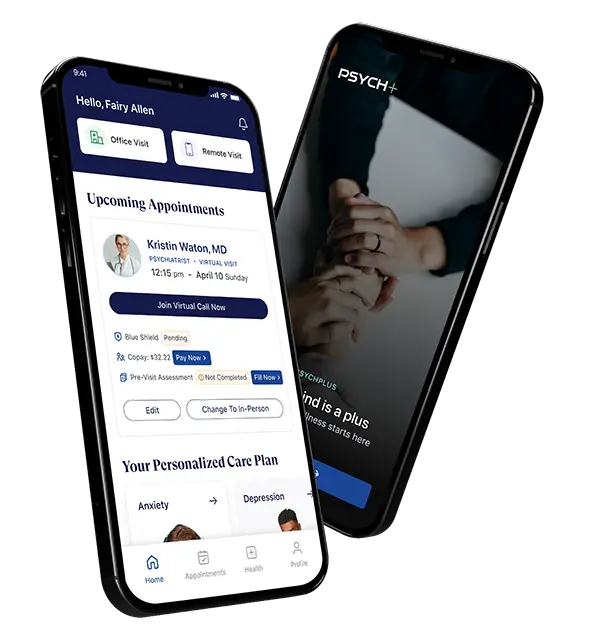
Tai’s biography describes work across more than 50 hospital and clinic settings. That is an education in the things a patient must negotiate before treatment begins: the appointment, the record, the insurance question. PsychPlus grew around those practical problems. Its proprietary platform, Galaxy, brings scheduling, documentation, billing and other clinical functions into the same system.
The distinction matters. A software supplier can deliver a tool and leave implementation to somebody else. A company running the clinic has to live with the consequences. A cumbersome booking process becomes its own missed appointment. An awkward handoff becomes its own follow-up problem. This is the appeal of the PsychPlus arrangement, and also its burden: more of the work belongs to the same organization.

An iPad in the waiting-room problem
Consider a detail tucked into the company’s insurance FAQ. PsychPlus says its locations keep an iPad available. If someone walks in and the local provider is fully booked, staff can place the patient in a consultation room and connect them virtually with a provider elsewhere. A crowded schedule in one building need not settle the question of whether someone can be seen.
That arrangement explains hybrid care better than the phrase itself. The room supplies privacy and a place to sit; the network supplies clinical capacity. It still depends on an appropriate clinician being available. But it gives the clinic another move to make before asking a patient to return later.
Workflow described in the company’s insurance FAQ; availability still applies.
Patients can seek therapy independently of psychiatry. Those needing psychiatric care can receive evaluation and medication management. PsychPlus advertises same-day and next-day appointments and offers both virtual and in-person visits. Its stated treatment range includes depression, anxiety, ADHD, bipolar disorder and other mental health conditions. The useful promise is a shorter route into appropriate care.
Who pays for the open door?
PsychPlus sells to several audiences. Individuals and families seek treatment. Hospitals need psychiatric coverage. Employers want a benefit employees can actually use. These customers share an access problem, but they buy different services. Hospital work and employer programs give PsychPlus relationships beyond the person booking a consultation on a phone.
For patients, insurance participation is central. The company says it accepts most major plans, including many Medicare and Medicaid plans. That does not establish anyone’s final bill: deductibles, copays, the clinician and the particular service still matter. The separate PsychPlus Foundation, established in 2023, supports uninsured and underinsured patients and reports receiving grants from the Tomball Regional Health Foundation.
Employers have another menu. PsychPlus describes per-employee-per-month, hybrid and direct pricing arrangements for its workforce offering. The commercial proposition reaches beyond a referral list into therapy, psychiatry and coordinated care. Whether that makes a good purchase depends on the contract, employee needs and actual access to clinicians.
Buying the hours between visits
In June 2026, PsychPlus announced its acquisition of Koa Health, a digital mental health business with international reach. Koa founder Oliver Harrison became PsychPlus president. The combination brings digital interventions alongside a clinical network. Strategically, it gives the company more ways to support people outside a scheduled consultation.
The deal also places PsychPlus across several competitive neighborhoods. LifeStance offers in-person and virtual therapy and psychiatry. Talkiatry concentrates on online psychiatry covered by insurance. Lyra serves the workforce mental health market. PsychPlus overlaps with each while also operating its own clinical technology. Its distinction is the combination; competitors already offer several of the individual pieces.
“At PsychPlus, we know mental health doesn’t exist in a vacuum.”
Faisal Tai, announcing the Dietitian Live partnership, August 2025
A smaller partnership makes the same point more concretely. In August 2025, PsychPlus announced referrals to Dietitian Live’s virtual registered dietitians. The offering includes support around emotional eating and metabolic side effects of psychiatric medication. Here, extending care means connecting a mental health appointment to a physical consequence that may follow it.
The handoffs get harder as the map grows
Bringing more services together creates more responsibility. In its June 2026 acquisition announcement, PsychPlus addressed a data incident involving legacy patient information from previous acquisitions. The company said its proprietary technology systems had not been accessed and active clinical data was unaffected. It also said it was improving security and making requisite notifications.
For anyone copying this model, that is a practical consideration. Buying practices brings records as well as clinical capacity. Sharing capacity requires dependable scheduling. Connecting services requires someone to follow the referral. The model’s value depends on these handoffs working, especially when patients need continuity rather than a succession of disconnected encounters.
Count the doors. Then count what happens inside.
PsychPlus’s October 2026 impact report says it serves all 50 states and supports more than 200 inpatient and outpatient access points. It lists 484 providers. Those figures describe reach and capacity; they do not, by themselves, establish better treatment outcomes. Beginning in 2027, the company promises annual updates that include unique patients receiving care.
Company-reported capacity. Access points include inpatient and outpatient settings.
The copyable idea is straightforward: test the product where the work happens, then examine every transfer of responsibility. PsychPlus began by putting software inside a clinic. Its larger wager is that clinics, hospitals and digital support can become a connected experience. The revealing measure will be what happens to the patient moving between them.