The most revealing thing about Brave Health is not that it offers therapy through a screen. By now, a video call with a clinician is about as futuristic as online banking. The revealing thing is whom the Miami company chose to serve: people whose insurance cards often make provider directories suddenly go quiet.
Brave delivers virtual therapy, psychiatry, medication management, group care, family counseling and specialized programs such as DBT, EMDR and pregnancy and postpartum support. Its center of gravity is Medicaid and Medicare, though it also accepts Marketplace and commercial plans. Patients are the users. Health plans, hospitals, primary-care providers and case managers are the distribution system. That distinction explains the business better than the word “telehealth” ever could.
The company says it served more than 55,000 people in 2025. By July 2026 it worked with more than 200 health plans across 14 states. Those are not 55,000 app downloads or 200 logos on a customer page. They represent clinical encounters, state licenses, insurance rules, referral handoffs and plenty of phone calls that do not connect on the first try.
01 / The originThe first idea met the wrong map
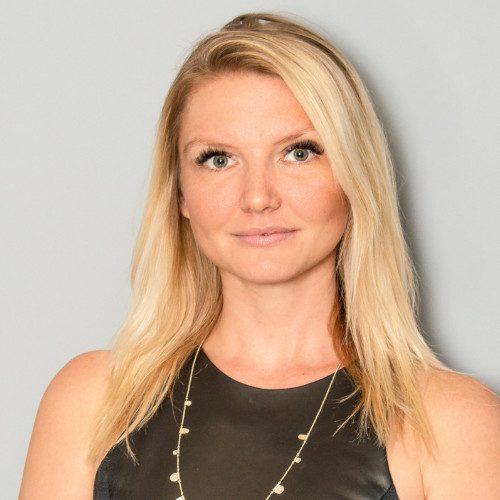
Brave began in 2017 with co-founders Anna Lindow and Jake Schwartz, colleagues from education company General Assembly. Lindow's motivation was personal: after losing a parent in high school, she received mental health care she later described as life-changing. Schwartz came to the problem through family members working in healthcare and clinics serving Medicaid patients, including people receiving medication-assisted treatment for opioid-use disorder.
The early concept leaned closer to physical clinics and addiction treatment. Then came the first useful failure: the demand did not sit neatly within driving distance of one storefront. Medicaid patients with behavioral health needs were dispersed. A building could be excellent and still be in the wrong place for most of them. The founders changed their minds about the delivery model. Virtual care could pool both patients and licensed clinicians across a state, creating enough density for services that a local market might not support.
In 2019, Brave launched with health plans in Florida. The pandemic later changed patients' and providers' willingness to use remote care, but it did not invent the thesis. The company had already decided that geography was the constraint. COVID-19 simply made the solution feel less strange.
“You can't treat who you can't reach.”Anna Lindow, co-founder and former CEO02 / The actual product
A video call sits at the end of the machine
For a patient, Brave can look straightforward: complete an intake, receive an assessment, meet a therapist or psychiatric provider on a phone, tablet or computer, then continue with individual sessions, groups or medication support. The clinical menu covers serious mental illness as well as anxiety, depression, trauma, relationships and perinatal mental health. Clinicians can adapt a plan over time instead of forcing a patient to choose permanently between therapy and psychiatry.
For a payer or discharge planner, the product is different. It is the chain between “this member needs help” and “this member is still receiving appropriate care.” Brave uses proactive outreach, same-day or rapid assessment, care coordination and data sharing with plans and providers. Its referrer toolkit includes patient handouts in Spanish and at a sixth-grade reading level. That detail says more about the operating philosophy than another dashboard screenshot would.
This is where Brave differs from consumer-first therapy brands. The company is not mainly asking an individual to swipe a credit card after seeing an advertisement. It accepts government-sponsored insurance and integrates with the institutions already managing a patient's care. Competitors include virtual providers such as Talkspace, Valera Health, Array and Teladoc, plus local community mental health centers. The dividing line is not virtual versus physical. It is whether a provider has built the contracts and operations to serve complex, insured populations reliably.
Company-reported figures. “Covered lives” describe potential insurance reach, not active patients.
03 / The economicsWhat it cost, and who pays
Brave was bootstrapped before an undisclosed 2018 seed round. A $10 million Series B in October 2021 brought cumulative funding to $20.75 million. One year later, Town Hall Ventures led a $40 million Series C, with Union Square Ventures, City Light Capital and others participating. Brave said it had raised $60 million in total at that point. No reliable public valuation or audited revenue figure is available.
The operating model is more useful than a speculative valuation. Brave contracts with insurers and gets referrals from health plans, hospitals and community providers. Clinical services are covered and billed through insurance. Public partner materials describe a deliberate reimbursement sequence: start a payer relationship with fee-for-service, gather data, then build value-based terms alongside it. Those later arrangements can include episode payments, quality bonuses, shared savings or other risk structures.
The engagement percentages were reported by Brave around 2021-22 and should be read as company-reported operating evidence, not universal clinical benchmarks.
The reason to take outcomes risk is simple: a health plan does not ultimately need more appointments. It needs members stabilized, gaps closed and avoidable emergency visits or readmissions reduced. Brave has published large improvements from partner analyses, including lower readmission-related costs. Those claims are promising, but the careful reader should distinguish internal or partner-reported analyses from independent randomized evidence.
04 / Distribution by partnershipThe company goes where trust already lives
Brave's partnerships reveal how it finds patients. A 2022 agreement with The Doula Network connected pregnant and postpartum Medicaid members to virtual therapy and psychiatry through trusted community doulas. Another collaboration let MedArrive's field providers refer people encountered during home visits. Value-based work with Molina Healthcare of Texas focused on the fragile period after psychiatric hospitalization. Sunshine Health added another outcomes-linked arrangement.
In 2025, Brave and Ophelia built reciprocal referrals between mental health care and medication-assisted treatment for opioid-use disorder. Brave patients who need OUD treatment can move toward Ophelia; Ophelia patients can get faster access to Brave's therapy, psychiatry and specialized groups. The parties coordinate care plans rather than asking a patient to translate between two clinical silos.
Each partnership follows the same logic: borrow a moment of trust or urgency from an organization already close to the patient. A doula, paramedic, hospital case manager or addiction clinician can open a door that a generic marketing email cannot.
“Access was never the finish line.”Sarah Tilton, CEO05 / The grown-up test
Can Medicaid-first care sustain itself?
Leadership changed as that question sharpened. In July 2026, Sarah Tilton became CEO, succeeding co-founder Jake Schwartz, who remained on the board. Tilton had spent six years inside Brave, most recently as president and chief operating officer. Her mandate was unusually plain: prove that a Medicaid-first behavioral health model can work clinically and financially.
That is the tension beneath every achievement. Government-sponsored insurance creates reach but brings lower reimbursement, state-by-state rules and patients facing practical barriers from unstable phone access to competing family demands. Remote care removes transportation, but it does not remove broadband problems, clinician shortages, licensing constraints or the need for emergency in-person services. Brave is an outpatient provider, not a replacement for crisis care or every community support.
Works when
A payer shares useful referral data, clinicians are licensed and available, outreach happens quickly, and reimbursement rewards continuity and outcomes.
Breaks when
Patients lack private connectivity, acuity requires in-person crisis care, handoffs arrive too late, or payment cannot cover the human work behind engagement.
Brave's remote-first culture supports the model. The company can recruit clinicians beyond a single metro area, offer part-time and full-time structures and build statewide groups. But culture here is operational, too: 95 percent of its clinical leaders reportedly started as Brave providers. Promoting people who understand the work from the appointment outward is a sensible defense against designing healthcare from a spreadsheet inward.
What another operator can copy
- Choose one expensive bottleneck. Brave chose engagement among insured patients who still could not get care.
- Let distribution shape the product. Build for case managers, hospitals and community partners as carefully as for end users.
- Start with a payment model that lets you learn. Instrument the workflow before taking broad outcomes risk.
- Turn awkward exceptions into infrastructure: language, reading level, licensing, follow-up and referral timing.
- Expand only where clinical supply, payer relationships and patient density can reinforce one another.
The playbook will not travel everywhere. A founder without payer access, sufficient capital or healthcare compliance expertise cannot copy it by adding Zoom to a scheduling page. Nor does it work when a condition requires hands-on examination, local crisis response or a level of care beyond outpatient treatment. Value-based contracts also punish weak measurement. Taking risk before knowing your cohort and costs is not brave; it is careless.
Still, the company occupies a distinct place in digital health. It is neither a wellness app nor merely a clinician directory. It is a tech-enabled provider trying to make a difficult insurance population reachable, treatable and economically viable. The screen is the visible part. The harder invention is everything required to make somebody appear on it - and come back next week.