The Story
Remaking Mental Health from the Ground Up
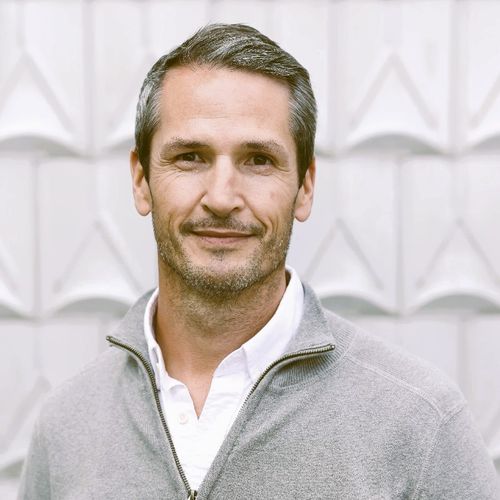
The appointment waits are still twelve weeks at most in-network providers. The payer directories are still full of disconnected phone numbers. The first medication trial still fails more often than it works. Brad Kittredge knows this because he watched it happen - to someone he loves - over an entire decade.
Brad's father struggled with depression for his adult life. The gap between his first attempt to get help and the moment a treatment actually worked was roughly ten years. That decade - of referrals that went nowhere, medications that failed, and systems that simply didn't connect - became the founding document for Brightside Health.
What separates Brad from other digital health founders who claim personal motivation is what he actually built. He didn't move the old model online. He rewrote it.
"If we take that same crappy care that I saw at a great health system and move it online, we're not solving the problem. What we need is to use this transition from traditional care to virtual care as an opportunity to remake them all from the ground up."
- Brad Kittredge, Frontlines Podcast
Brightside Health connects patients with licensed clinicians - typically within 24 to 48 hours. Not weeks. The platform combines precision psychiatry with evidence-based therapy, runs proprietary algorithms to improve prescribing accuracy, and actively serves the patients most telehealth companies turn away: people with suicidal ideation, high-acuity mood disorders, and severe depression.
That last part is not accidental. As the pandemic-era telehealth gold rush flooded the market with competitors targeting mild-to-moderate anxiety and depression, Brad made a deliberate strategic turn toward the hardest cases. He saw a gap where others saw liability. Brightside's Crisis Care program - focused on rapid suicide risk intervention - has since become one of its most distinctive offerings.
Today, Brightside serves 135 million covered lives across commercial insurance, Medicare, and Medicaid. It is the first telepsychiatry company to achieve 100% national Medicare Part B coverage. In March 2024, it closed a $33M Series C led by S32, with Anne Wojcicki's Redwood Pacific among the investors, bringing total capital raised to $150 million.
The Shadow Pilot
When Brightside launched as a cash-pay service, Brad collected insurance information from 500 Cigna members who were paying out of pocket. Over time, he compiled a 30-page outcomes report. Then he walked into Cigna and presented it as: "Here are the results of the pilot you guys didn't know you were doing with us." That document cracked open the payer relationship that would eventually scale Brightside to 135 million lives.
The path to Brightside ran through some of the most formative companies in consumer health. After earning an MBA, MPH, MA in International Affairs, and a BA in Psychology - four degrees spanning UC Berkeley and UC San Diego - Brad joined Deloitte Consulting. From there: McKesson, then Jawbone (as Director of Product Management, Health), then 23andMe.
At 23andMe, Brad was VP of Product, overseeing all elements of the consumer genomics experience - product vision, design, and management. In 2008, he had already founded ComplexDx, a platform for managing complex genetic tests, which 23andMe acquired in 2013. He then joined Lantern, an early digital mental health company, as VP of Product. By late 2017, he was ready to build something that went further than any of them.
"Within two days of maybe putting up our site with no ad spend or maybe $100 of ad spend, we got our first purchase."
- Brad Kittredge on Brightside's first revenue
In September 2017, co-founder Jeremy Barth started writing code. By January 2018 - five months later - the alpha was live. Within 48 hours, Jeremy's phone buzzed with a Stripe notification. Someone had paid. That early signal of consumer pull, with almost no marketing, confirmed the thesis: people were actively looking for something better and couldn't find it.
Mimi Winsberg, a Stanford-trained psychiatrist who had spent years at Google and co-founded Brightside alongside Brad and Jeremy, became Chief Medical Officer. Her clinical credibility gave Brightside something most startups lack in the first year: actual medical weight.
By 2024, the company had grown to over 400 employees, acquired Lionrock Recovery to expand into virtual intensive outpatient substance use disorder treatment, launched teen mental health services, and was eyeing profitability. Brad had built the kind of company that could accept a patient referred from an emergency department, provide a same-week appointment, and track clinical outcomes systematically - all inside one platform.
The mental health system leaves a ten-year gap between need and effective treatment. Brad Kittredge is closing it, one 48-hour appointment at a time.