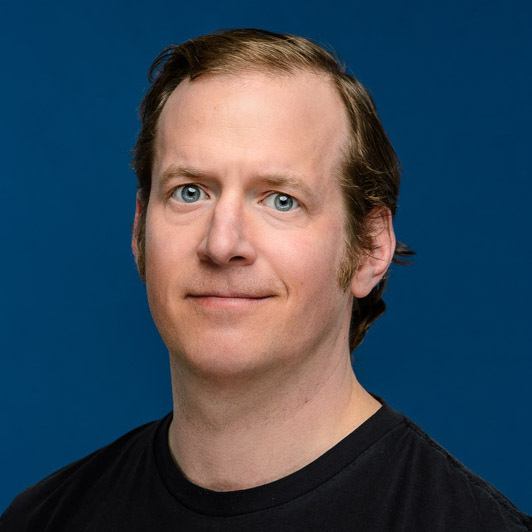
Andrew Chadeayne does not run a company that picks favorites. At CaaMTech, the psychedelic pharmaceutical firm he founded in 2019 in Issaquah, Washington, the goal is almost mischievously simple: make more molecules. Where rivals stake their futures on a single version of psilocybin, he is busy expanding what he calls "the universe of available compounds" - characterizing tryptamines, crystallizing structures, and filing patents at a pace the field had never seen.
A toolbox, not a silver bullet
CaaMTech's bet is that psychedelic medicine fails when it has too few tools. A clinician treating depression has different needs than one studying addiction. A compound suited to a long microdosing window is the wrong fit for a short, supervised clinical session. So Chadeayne's team makes "lots of molecules that share common properties," then defines them precisely - down to the exact 3D arrangement of atoms - so other scientists can actually study them.
That sounds academic until you remember the bottleneck it solves. You cannot develop, dose, or get regulatory approval for a drug you cannot define. By nailing down crystal structures and receptor profiles of psilocybin analogs and other tryptamines, CaaMTech lays groundwork that the rest of the industry can build on. The company has, by Chadeayne's own account, "never turned down a scientific collaboration."
Increasing the universe of available compounds.- Andrew Chadeayne, on CaaMTech's founding idea
He is unembarrassed about the engine underneath it: intellectual property. A self-described "chemical patent nerd," Chadeayne saw early that the scarcity of patentable compounds was choking psychedelic drug development. His answer was to file - more than 100 patent applications mapping the chemistry of the space. Not, he insists, to fence others out, but to make the field investable enough to fund the slow, expensive clinical work that turns a curiosity into a medicine.
It started with sugar
Before psychedelics, before patents, there was a sweeter subject. As an undergraduate at Princeton studying neuropsychology and chemistry, Chadeayne worked on addiction and reward. He was a co-author on a 2002 paper in Obesity Research with a title that still does the talking: "Evidence That Intermittent, Excessive Sugar Intake Causes Endogenous Opioid Dependence." Translation: sugar can hook the brain through the same opioid pathways as harder stuff. It is a strange, sticky place for a psychedelics career to begin - and a tell about how he thinks. The interesting question first; the field second.
From Princeton he went to Cornell for a PhD in chemistry, finishing in 2006. Then came a swerve. Somewhere in his third or fourth year of doctoral work, he hit a wall of self-doubt about ever matching his professor's brilliance - and instead of grinding harder, he widened the aperture. He went to law school.
I got it in my head that I could never be as smart as him.- on the Cornell moment that sent him toward law
At The George Washington University Law School he earned a J.D. in patent law in 2011 and walked away with the American Bar Association's Award for Excellence in Intellectual Property. The chemist now had a second language. The combination - lab and law - would define everything that came next.
Chlorine, sharks, and a near-miss
Chadeayne was a serious swimmer as a kid - second in the country at age twelve. Years later, the chemist in him went looking for the chlorine smell that never quite washes out. He found it, and a fix: high concentrations of sodium ascorbate could stabilize vitamin C in water long enough to neutralize the film. He turned it into SwimSpray, a water-soluble product that, he later noted, still worked five years on.
The science held up better than the business plan. He admits that aiming only at competitive swimmers was a mistake - too narrow a pool. The SwimSpray team even made it to the final rounds before Shark Tank, but never actually swam into the tank. It is the kind of honest, slightly self-deprecating story most founders edit out. He keeps it in.
Cannabis IP, and a $330M exit
In 2017 he became Chief Innovations Officer at Ebbu, a cannabis technology firm, where his odd double-credential finally had a job description: "being the bridge between R&D and IP." He built a worldwide patent portfolio around cannabis formulations. When Canopy Growth Corporation acquired Ebbu's assets, the deal was valued north of $330 million.
That exit could have been a finish line. It became a starting gun. Asked what he would do if he never had to work again, Chadeayne gave the only answer a person like this could give - and then went and did it.
This was my answer to "what would you do if you didn't have to work anymore?"- on founding CaaMTech after his Ebbu exit