The Dispatch
The patient capital of an impatient industry
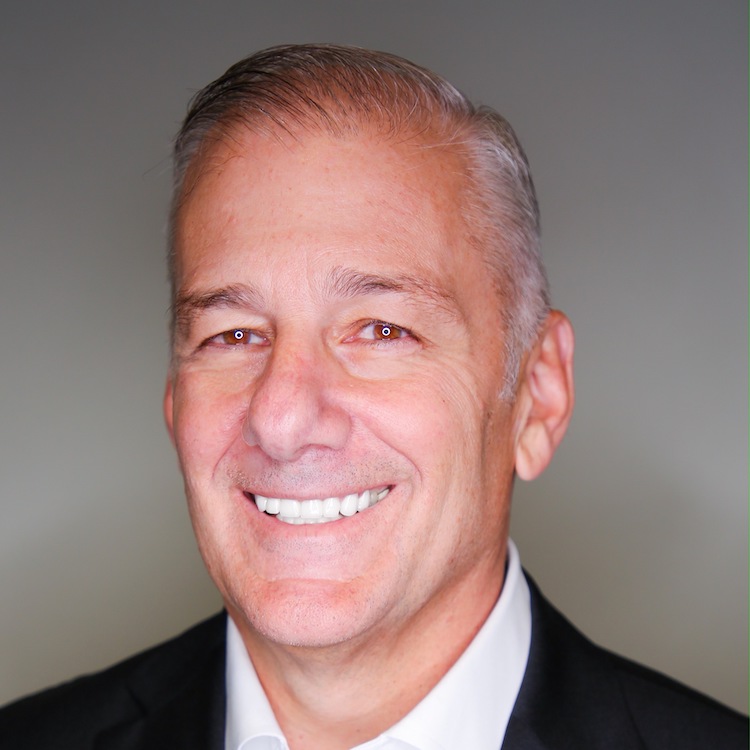
Walk into a cannabis investor conference today and the energy is all hockey-stick decks and projected federal legalization. Jeffrey Finkle has seen that movie before, in a different theater, and he knows how the second act goes. As Chief Executive Officer of The Arcview Group since June 2021, he runs the firm that has been the connective tissue of legal cannabis for more than a decade: the events, the capital, the consulting, the market research, the advocacy. The plant changed. His method did not.
Arcview is not one thing. It is a vertically integrated firm servicing cannabis, hemp, and the still-nascent psychedelics sector, with social equity written into the foundation rather than bolted on for the press release. Finkle oversees the whole apparatus: Arcview Capital, Arcview Ventures, Arcview Management Consulting and its market-research arm, plus member programs like Arcview Access and the Women's Inclusion Network. He inherited a decade of relationships in an industry the banks still will not touch, and the job is to turn those relationships into deals that survive contact with reality.
The Arcview Group sits at the forefront of the most exciting new industry opportunities in our lifetime.
- Jeffrey Finkle, on taking the CEO role
Here is the thing that explains him: he sees cannabis as seven subsectors, not one. Agtech. Biotech. Retail. Brands. Ancillary services. The plant is a category the way the internet was a category, which is to say it is several industries wearing a trench coat. That framing is not marketing. It is the worldview of someone who spent the dot-com boom learning, expensively, what happens when everyone treats a wide field as a single trade.
Because before any of this, Finkle was a software guy. In 1986 he founded a storage-management software company in Boston, a first-time entrepreneur shipping product in an industry that did not yet have a name for itself. He sold into a competitor, became its VP of marketing and sales, and rode the acquisition into Cheyenne Software and then Computer Associates. He ran the Unix division. He ran corporate development. He learned the unglamorous mechanics of how software companies actually make money, which is a useful thing to know when you are later judging whether a cannabis startup is a business or a vibe.
In 1999 he co-founded Odeon Capital Partners, an early-stage venture fund that raised $115 million, one of the first debut funds to clear $100 million. The timing was a cruel joke. "1999 was probably the best time ever to raise money," he has said, "but it was probably the worst time to put money out." Odeon had real wins, DealTime.com among them, but the vintage was brutal, and the lessons came at full price.
The most durable lesson was about founders. The conventional VC playbook of that era said you bring in adult supervision and swap out the founding CEO once the company gets serious. Finkle watched that fail enough times to reject it outright. "When you pull out the founding CEO you're pulling out the heart and soul and vision," he says. His approach now is to surround founders with strong operators and mentorship instead of replacing them. It is a quietly radical position for a man who spent years as a professional executive parachuted into other people's companies.
That respect for hard-won expertise shows up in how he picks bets. He is skeptical of the serial-entrepreneur mystique and partial to people who have lived inside a problem. "It's better to have wrestled with a problem in an industry for a long period of time," he argues. He is also openly critical of startup culture's obsession with fundraising as a milestone, noting that plenty of companies have no business chasing institutional capital at all. Coming from someone whose job is deploying capital, that is a refreshing kind of honesty.
By the mid-2010s Finkle was a fixture of the New York angel scene. He chaired the evaluation committee and served as treasurer of the ARC Angel Fund, sat as a frequent pitch-competition judge, and held office hours and guest lectures at 37 Angels, NYU's Polytech Incubator in Manhattan and Brooklyn, DreamIT Ventures, the Startup Leadership Program, and FashInvest. In 2014, AlleyWatch named him one of the 25 angel investors in New York you need to know. He has been a venture investor for two decades and an angel for nearly as long, and he still shows up to the rooms where founders are learning, which is not a thing fund managers are required to do.
Cannabis pulled him in around 2017, when he was already publicly enthusiastic about AI and AR/VR but reserved a special interest for the legal-weed market and its many subsectors. In 2018 he co-founded The Arcview Collective Fund, the first member-managed fund in cannabis, an experiment in letting the members themselves vote on and drive the deals. By 2021 he had run Arcview Ventures as CEO, and the board handed him the parent company, succeeding Kim Kovacs, who left to chase ESG work while keeping her board seat.
There is a second Finkle that does not fit the financier headline. He chairs the board of WellLife Network, a nonprofit that serves roughly 25,000 people across New York City and Long Island. The cannabis-capital CEO and the nonprofit chairman are the same person, and the overlap, social equity, second chances, communities the system underserves, is not an accident. He writes about all of it, the startups and the VCs and the life, on a personal blog he named finkabout.it, because a man who has carried the same last name for sixty-odd years is entitled to one good pun.
What makes him worth watching is not that he is bullish on cannabis. Everyone at the conference is bullish. It is that he has already lived through a gold rush, watched the floor fall out, and came back with a method instead of a grudge. He bets on people who have wrestled with their problem. He keeps founders in their chairs. He sees seven industries where others see one. And he is doing it all in a sector that the mainstream financial world is still, in 2026, pretending it can ignore.