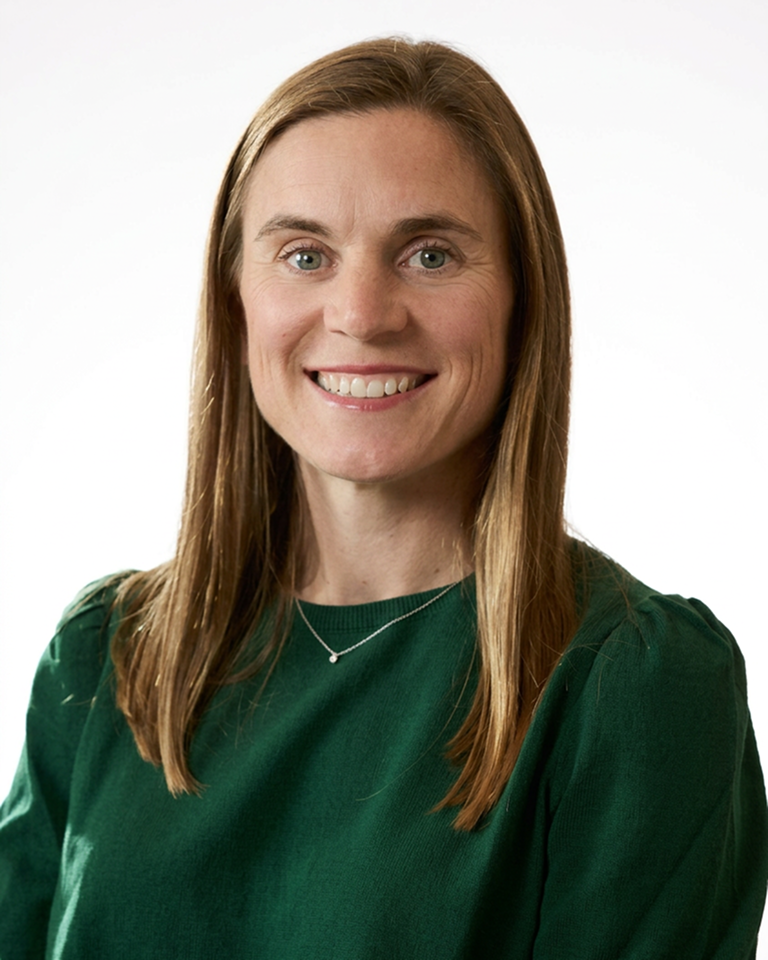
The Outside Back Who Learned to Play the Long Game
At Stanford, Annie Case played defense - an outside back, stationed wide, covering ground nobody was watching. Her stats page reads like a VC term sheet: no goals, no shots, but eight assists, 63 appearances, and a 2011 NCAA championship ring. She was the player who made the possibles possible for everyone else. It turns out that's a transferable skill.
Today Case is a Partner and current Advisor at Kleiner Perkins, the Sand Hill Road institution that backed Google, Amazon, and Genentech. She joined in 2018 and spent six years building a portfolio that reads like a thesis on where human behavior and technology collide: Modern Health for workplace mental health, Ambience for AI-native healthcare infrastructure, Future for personalized fitness coaching, Phia for AI-powered shopping. These aren't scattered bets. They trace a coherent line: people need better systems for their bodies, their minds, and their wallets, and most of the companies supposed to serve those needs are badly broken.
Every few decades, a product emerges that doesn't just improve a system, but redefines it. Lotus Health AI has the potential to do that for primary care by delivering greater access, lower cost, and better outcomes at scale.
- Annie Case, on the Lotus Health AI investmentWhat separates Case from the typical finance-to-VC pipeline is the operator layer in between. Before KP, she spent two years at Uber in product and business operations, supporting the SVP of Operations and helping push UberEats into international markets during the phase when the company was growing faster than its own processes could handle. That experience - moving fast without framework, making real tradeoffs with real consequences - gives her a different kind of credibility in the founder conversation. She's been inside a hyper-growth machine at the moment it was most chaotic. She knows what "scaling" actually costs.
From the Pitch to the Pitch Meeting
The Stanford thread runs deeper than the résumé line. When Case was playing at Stanford, one of her teammates was Christen Press - later a U.S. Women's National Team star and activist investor who co-founded Re-Inc, a gender-inclusive apparel brand built on the premise that authenticity isn't a marketing strategy, it's a business model. When Re-Inc was raising, Kleiner Perkins wrote the check. Case led it.
"Many brands have built their businesses on being more sexualized or specific to a gender, and for older brands, it's hard to shift. Companies that are really well-positioned are those who are not having to change or adapt their values."
Annie Case on Re-Inc investment - The Startup / MediumThat's not just an investment thesis. That's someone who shared a locker room with the founders, watched them live the values before anyone was calling it brand equity, and recognized that proximity to authentic conviction is exactly what an investor should want. It's hard to fake knowing someone that well.
Bain + Uber + KP
Case ran the strategy-to-execution arc that most VCs theorize about. Bain gave her analytical rigor. Uber gave her scar tissue from real operational chaos. KP gave her pattern recognition at scale. The combination produces a partner who asks different questions than someone who went straight from business school to Sand Hill Road.
Pac-12 All-Academic, Twice
While winning the 2011 NCAA championship, Case was also collecting Pac-12 All-Academic honors - twice. Human Biology undergraduate, then a Master's in Management Science & Engineering. The combination of biological systems thinking and engineering rigor maps precisely onto her healthcare AI thesis.
What She Actually Bets On
Case invests at seed and Series A, with checks ranging from $2M to $50M and a sweet spot around $25M. The portfolio clusters around three themes.
Healthcare AI and infrastructure. Ambience - an AI operating system for clinical documentation - represents her biggest swing: a company KP has backed from the ground up and doubled down on through the Series B. Lotus Health AI, which KP co-led with CRV in a $41M Series A in early 2026, targets primary care with an AI-native model that Case says doesn't just improve the system, it redefines it. Health Universe builds a no-code platform for healthcare data science. MedArrive deploys paramedics for home-based care. The thesis is consistent: healthcare is a system that wasn't built for the patient, and AI creates the leverage to fix the fundamental architecture.
Mental health and consumer wellness. Modern Health became a workplace mental health unicorn - Case was there early. Mindbloom operates psychedelic-assisted therapy at clinical scale. Future pairs fitness coaches with clients through an app-mediated relationship. These bets share a premise: the gap between knowing what's good for you and actually doing it is a product problem, and the right product can close it.
Consumer behavior and AI-native commerce. Phia, the AI shopping app co-founded by Phoebe Gates (Bill Gates' daughter) and climate activist Sophia Kianni, landed Kleiner Perkins as its seed lead in September 2025. By April when it launched, it had 500,000 users and 5,000+ brand partners. Case's framing was precise: "American consumers are price selective, deal-driven, and less brand loyal. Phia is meeting the moment." This isn't a product description. It's a diagnosis of a structural shift in consumer psychology that AI happens to be uniquely positioned to exploit.
Portfolio SnapshotKauffman Fellow, Outdoor Enthusiast, Advocate
In 2021, Case was selected for Kauffman Fellows Class 26, a cohort-based fellowship that connects high-potential investors with mentors and peers across the global venture ecosystem. Her mentor was Lynne Chou O'Keefe, a digital health investor whose influence tracks directly onto Case's healthcare thesis. The fellowship is, among other things, a credentialing device for investors whose backgrounds don't fit the standard pattern - and Case, who came to investing through operations and athletics rather than investment banking, fit that profile precisely.
Beyond the portfolio, Case is a passionate advocate for diversity in technology and women's participation in startups and VC. She writes for TechCrunch on the mechanics of early-stage investing, giving founders the inside view on what actually works in a pitch room. (Short version: come prepared, lead with the strange specific, and don't explain why you matter - prove it.) She grew up in Washington D.C. and now lives in San Francisco, where she runs, hikes, bikes, skis, and camps with the same intensity she brought to the Stanford back line.
There is a shift towards value. American consumers are price selective, deal-driven, and less brand loyal. Phia is meeting the moment.
- Annie Case, on leading Phia's $8M seed round (September 2025)Career Timeline
What the Defender Knew That the Scorer Didn't
There's a pattern across the Case portfolio that's easy to miss if you're counting unicorns: almost every company she's backed is trying to reach people who have been consistently underserved by the incumbent system. Workers who can't afford private therapy. Patients who can't get a primary care appointment. Shoppers who've been conditioned to pay for brand marketing they didn't ask for. The market for each company is enormous. The competition is often bloated, legacy-brained, and slow.
Case seems to find something interesting in the gap between what a system is supposed to do and what it actually does. Maybe that's the Human Biology training - understanding systems not as static structures but as processes that fail in predictable ways when the design is wrong. Maybe it's the Uber experience, watching a company build something so obviously better than taxis that the incumbents had no strategic response. Either way, the investment pattern holds: find the place where the current system is doing something humans genuinely need, but doing it badly, and back the company that takes the friction out.
The 2011 championship ring doesn't make it onto the Kleiner Perkins website bio. That's about right. It's the kind of detail that says something, not something you'd lead with. An outside back who won a national title by covering ground nobody was watching, and spent the next fifteen years doing precisely the same thing.
Watch