An acquisition usually gives a company a new business. Sometimes it also supplies a future chief executive. In January 2019, The Andersons brought Lansing Trade Group into the fold. The executive who came with it, Bill Krueger, had spent nearly 14 years as Lansing’s president and CEO. In October 2024, he took charge of The Andersons itself. The acquired business had delivered someone who would eventually run the buyer.
The pleasing twist is that this relationship had been developing for years. The Andersons and Lansing formed a limited liability company together in 2003. That October, Lansing named Krueger president. Twenty-one years later, he was preparing to lead the larger organization. His career offers a particularly patient version of a business story: people and companies learning each other’s habits long before the final change of title.
Krueger is associated with Overland Park, Kansas, while The Andersons is headquartered in Maumee, Ohio. His working world extends through the grain trade, fertilizer distribution, export terminals and renewable fuels. These businesses reward attention to connections. A crop has to find a customer. A facility has to fit a market. An acquisition has to produce something useful after everyone has stopped congratulating one another.
A Kansas City office, then a larger map
Krueger’s professional education began in grain merchandising, including positions with ConAgra Trade Group and Scoular. His academic preparation paired a bachelor’s degree in agribusiness from the University of Nebraska-Lincoln with an MBA in finance from Keller Graduate School of Management. Agriculture and finance would remain close companions throughout his career. One supplies the physical product; the other helps determine whether moving it makes economic sense.
He joined Lansing in 1995 to manage its Kansas City office. By 1997 he was vice president of commodity marketing. The sequence accelerated in 2003: chief operating officer in January, president in October. Dale Mayhew, who moved into the CEO and chairman positions, credited Krueger with helping a company that had increased annual revenue from $100 million to $700 million since 1995.
That progression matters because it began with responsibility for an office and expanded into responsibility for the enterprise. There is a difference between knowing how to make a trade and knowing how to organize people who make thousands of them. Krueger’s promotions trace that widening assignment. Mayhew’s announcement emphasized his suitability for day-to-day operations, leaving long-range strategic initiatives with the chairman and CEO.
The attraction of a useful partner
A small episode from Lansing’s expansion helps explain the business Krueger was building. In 2013, the CPI-Lansing partnership brought a rail-shuttle grain facility online in Fairmont, Nebraska. Cooperative Producers supplied operating knowledge and a local network; Lansing brought merchandising and market relationships. The facility was designed to move grain efficiently between trucks, storage and trains. Its commercial logic depended on those capabilities meeting in one place.
Bob Fifield, CPI’s CEO, described Krueger as continually seeking opportunities. The partnership had roots in a working relationship established in 1995 and had already developed a shuttle facility at Red Cloud in 2008. Here was growth through a repeat relationship, with each party contributing something the other could use. A grain elevator may be made of concrete and steel, but the reason to build it can begin with knowing the right people.
This example gives the later Andersons transaction some texture. Lansing brought a way of connecting markets, alongside its businesses and assets. The Andersons already knew the company as an affiliate. By the time the two came fully together, their partnership had a history substantial enough to make the acquisition an extension of an existing relationship.
When the buyer becomes your next assignment
In October 2018, The Andersons agreed to acquire the 67.5 percent of Lansing equity it did not already own, for cash and stock then valued at about $305 million. The transaction also brought consolidation of Thompsons Limited in Ontario, which the two companies had jointly owned. Its ambitions included broader trading and risk management services and a larger food, specialty grain and feed ingredients platform.
Those details help explain why Krueger’s next job was larger than maintaining the business he had arrived with. At The Andersons he led trade and processing before becoming chief operating officer on December 1, 2022. The COO assignment extended across the operating segments, with the nutrient and industrial business moving under his supervision after a transition period. His field of view widened again.
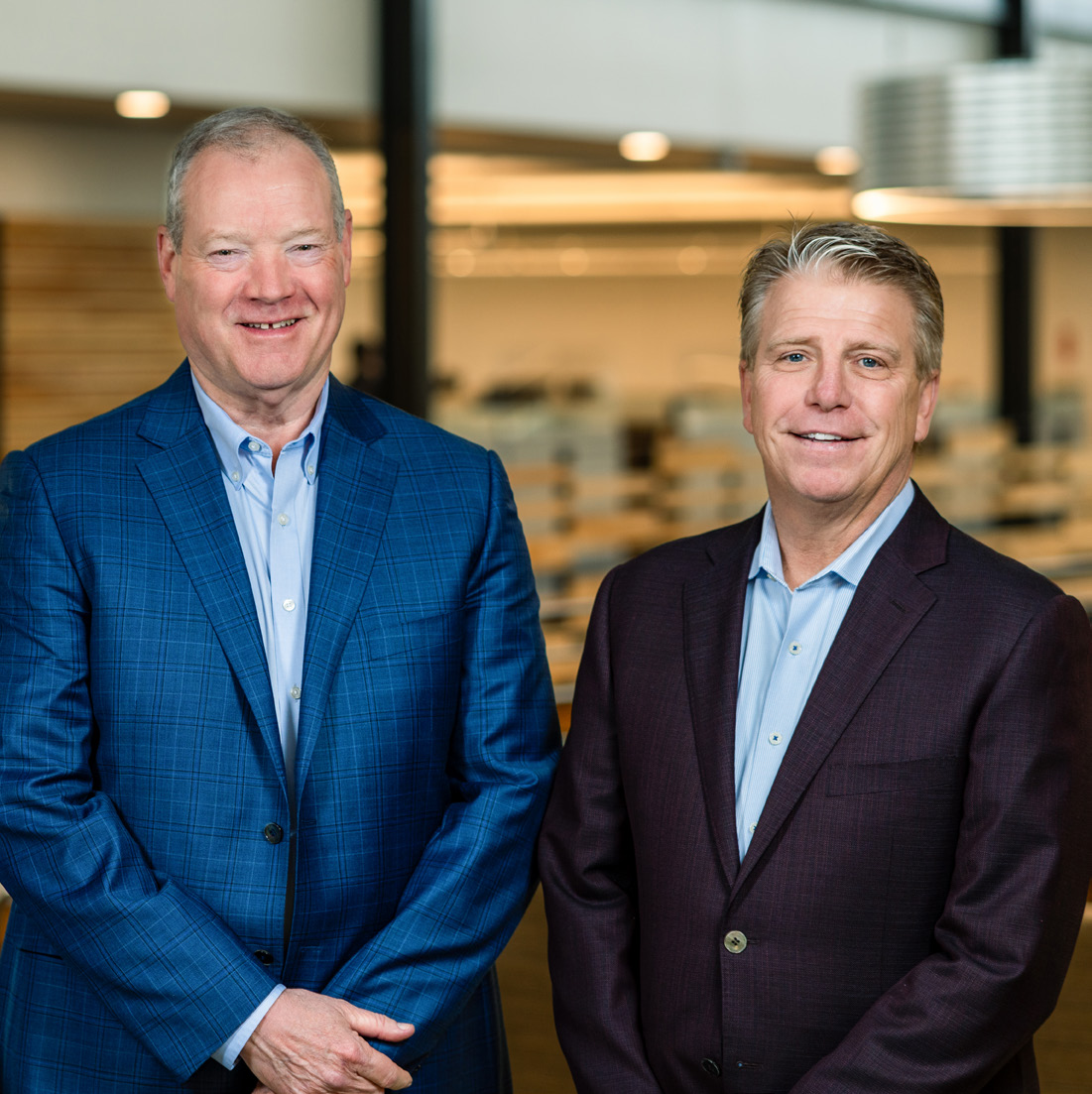
Pat Bowe remained an important connection. When Krueger’s selection as CEO was announced, Krueger publicly acknowledged Bowe’s value to both the business and his own development. He also thanked customers and employees. The emphasis was revealing: a new title expressed through existing relationships. He became president and CEO on October 1, 2024, and joined the board, while Bowe remained chairman.
Making the organization easier to use
Within months, Krueger’s administration announced a simpler operating structure. Beginning in 2025, the former Trade and Nutrient & Industrial segments would form Agribusiness, alongside Renewables. Weston Heide and Mark Simmons were appointed executive vice presidents to lead the two segments. Both had arrived through the Lansing acquisition in 2019. The transaction continued to shape the company through the people carrying responsibility.
The announced purpose was better coordination and efficiency. That can sound abstract until one considers the customer-facing pieces: grain handling, merchandising, agronomy and fertilizer. Putting related activities together creates an opportunity to serve a customer across more of the agricultural cycle. Whether that opportunity pays off depends on execution, but the choice of structure shows where Krueger wanted more cooperation.
At a May 2025 industry conference, he explained his enthusiasm for the company by starting with its team. He believed management could handle a substantially larger business and wanted to give them that opportunity. His remarks also resisted treating ownership of physical assets as a matter of doctrine. Opportunities would be assessed for their strategic fit and the returns available.
“I have to lead with our people.”
Bill Krueger · May 2025
Read together, the reorganization and those remarks suggest a practical leadership priority: build enough capacity inside the organization to support the next stage of growth. The interesting test is how people work across businesses once the reporting lines have changed. An organization chart is very obliging on paper. Customers ask rather more of it.
A wider footprint, and a closer grip
Skyland Grain supplied an early example of that growth. The Andersons announced completion of its majority investment in November 2024, expanding its grain and fertilizer reach across Kansas, Oklahoma, Colorado and Texas. Skyland brought grain handling, agronomy, cotton and fuel operations. Krueger emphasized farmer relationships and the combination of local assets with a broader merchandising presence.
He also pointed to an immediate operational consequence: combining the agronomy businesses doubled The Andersons’ retail farm center business. The attraction was specific. The company gained more places to serve growers, more purchasing scale and a stronger presence in markets it wanted to reach. For an executive whose Lansing career began in Kansas City, the investment also put more of the company’s map in the central and southern Plains.
In 2025, another decision increased control within an existing relationship. The Andersons acquired Marathon’s remaining ownership interest in their ethanol joint venture. The business operated four plants with combined annual capacity of 500 million gallons. Full ownership, Krueger said, would allow simpler decision making and greater efficiency. Marathon would continue as a commercial customer. Again, the next transaction grew out of a relationship already in place.
Broader grain and fertilizer reach in four Plains states.
Full ownership of four plants with 500 million gallons of annual capacity at acquisition.
The next number comes with a date
By December 2025, Krueger’s team had attached a number to its ambitions: a $7.00 run-rate earnings-per-share target exiting 2028. Plans included investment in the Clymers, Indiana, ethanol plant and expansion of the Houston export terminal. These were forward-looking commitments, with construction, operating performance and market conditions still to determine the outcome.
The annual results supplied a reminder of the distance between setting an ambition and earning it. For 2025, The Andersons reported net income attributable to the company of $96 million, against $114 million in 2024. Sales and merchandising revenues were about $11.0 billion. A larger assignment brings a larger set of numbers to explain, including the ones that move in the wrong direction.
During 2026, Krueger continued discussing investment in grain storage, cleaning projects and export capacity alongside ethanol expansion. In August, the company reported second-quarter net income attributable to The Andersons of about $57 million, up from about $8 million a year earlier. Renewables benefited from production, merchandising and tax credits. The results strengthened the current picture; the 2028 target remained a future objective.
Krueger’s career has repeatedly turned familiarity into a larger responsibility: an office into a company, an affiliate into an acquisition, an operating role into the chief executive’s seat. The continuity is striking. He has advanced by staying close to a trade in which a relationship can precede a transaction by years. Now he has to make the relationships inside a larger enterprise work with the same commercial purpose. The next chapter will be measured in what that company actually delivers.