Mario Colla used to travel to Miami for work. His friends had a useful way of interpreting this arrangement: Mario was going shopping. They asked him to bring things back. A business trip acquired a second itinerary, written by people who were staying at home. For anyone with customers to visit and a suitcase to close, this was an imperfect system. For someone who worked in commerce, it was also a rather good question. Why should buying a product depend on knowing somebody with a boarding pass?
Tiendamia grew out of that inconvenience. The company brought international shopping, payment and delivery into one service for Latin American customers. Colla helped turn a recurring favor into an operation that could cross borders without requiring a friend to cross them first. Years later, he would turn to a different obstruction between a customer and a purchase: the search box. The distance had become shorter. The frustration was familiar.
A shopkeeper with a software background
There was a shop before there was a platform. Colla grew up helping his parents in a small Montevideo business selling household goods, with an electronics section that particularly interested him. He started at about seven and continued until roughly fifteen. The customers came through an actual door; the merchandise occupied actual shelves. A radio recorder or a color television could be an object of fascination as well as something to sell.
That beginning gives his later career a useful point of reference. He has returned to the family business when explaining what connects his ventures. The service began with a simple question: “En qué le puedo ayudar” - how can I help you? A shopkeeper asks it before knowing whether the customer wants something obvious, something unusual or something the shop does not carry. The answer determines the next move.
Software gave Colla another way to work on commerce. In 2004, he and Bernardo Arnelli founded GProxy. Its work included customizing NetSuite’s Site Builder, improving what businesses could do with their online stores. This was commerce from the machinery side: helping a merchant’s systems and storefront serve the people using them. A customer might never hear the developer’s name, which is often how successful plumbing works.
NetSuite acquired GProxy in 2012. The sale sits between two kinds of work in Colla’s career: building commerce software for other businesses and building a retail service of his own. It also makes the later suitcase story more interesting. The traveler fielding shopping requests already knew something about selling online. He had both a repeated complaint and experience with the tools that might address it.
GProxy was not his first experience of founding and selling a business. Earlier ventures included Multired, sold to IFX Networks in 2001, and Zona 3000, sold to France Telecom in 2003. The sequence places the Tiendamia years inside a longer career in technology and international business. It also helps explain why a founder could eventually step away from running one company and return to developing another product. Starting again was already part of his working history. The companies changed, while experience with networks, customers and commerce accumulated across them. By the time the travel requests became a retail proposition, he had worked through several versions of building a business.
The unofficial shopping service
By his account, Colla was thinking about the travel problem in 2011. People either asked someone else to bring an item back or traveled to buy it themselves. Neither arrangement was particularly dependable. A requested product might fail to arrive; a trip intended for seeing a place could become a tour of its shops. The errand had a habit of expanding.
Tiendamia launched in 2014. Its proposition required several activities to behave like one transaction: finding an international product, buying it, arranging its movement and getting it to the customer. The appeal was easy to describe. Making it reliable required attention to all the parts a shopper would happily avoid. Customs and local payment methods have little interest in how elegant a website looks.
The complications included customs regulations, restricted-product lists, local payments and shipping choices. Those details explain why the company had work to do even though international retailers already had websites. Seeing a product for sale and being able to receive it at home are different stages. The customer needed the entire sequence to hold together.
The operational side required its own software. Tiendamia used Brightpearl automation to move orders through its systems and get them out the door faster. There is a modest comedy in the contrast: the promise sounds like a shopping experience; much of the effort concerns what happens after the shopping. A product photograph can win a click. It cannot organize a warehouse.
THE WORK BEHIND ONE PURCHASE
- ChooseInternational catalog
- PayLocal payment options
- MoveFreight and customs
- ReceiveDelivery at home
A simplified view of Tiendamia’s cross-border model.
A company large enough to hand over
In December 2019, Colla passed the CEO role to Juan Pablo Pereira, then the chief operating officer. By the handover, the company served more than a million customers across several Latin American markets. Pereira would take responsibility for expansion. Colla would remain president of the board and chief strategy officer, looking further ahead.
It was a change of job within a business he had helped create. The distinction matters because the founder’s name can remain attached to a company long after the daily responsibilities change. In Colla’s case, there is a public sequence: chief executive, then board and strategy responsibilities, and eventually shareholder. In January 2026, he described himself as holding only that last role.
The company’s work continued beyond his tenure running it. By August 2021, Tiendamia had launched in Costa Rica, adding another destination to an operation whose logistics center was in Miami. Colla spoke about customers who already knew how to buy abroad but wanted a more integrated experience. Familiarity with international shopping did not remove the appetite for an easier version.
That expansion also broadened the practical meaning of the original favor. A friend bringing something home can improvise. A service used across countries has to make its promise repeatable, through different payment habits and delivery arrangements. The business had grown around removing effort from someone else’s purchase. As it did, another difficulty became harder to ignore: the effort of choosing among everything now available.
When the border moves into the search box
A large catalog is a peculiar achievement. From the seller’s side, every additional item looks like another possibility. From the shopper’s side, it can become another result to sort through. Access solves one problem and creates a question about relevance. Which of these products should appear first? Which actually answers the request?
Searchmind.ai is Colla’s newer attempt to work on that question. He cofounded the company with Nicolás Bernal, bringing the experience of operating large commerce catalogs to a business focused on product discovery. Launched in 2025, the venture combines semantic and vector search. The practical aim is to interpret the shopper’s intention rather than rely solely on matching words.
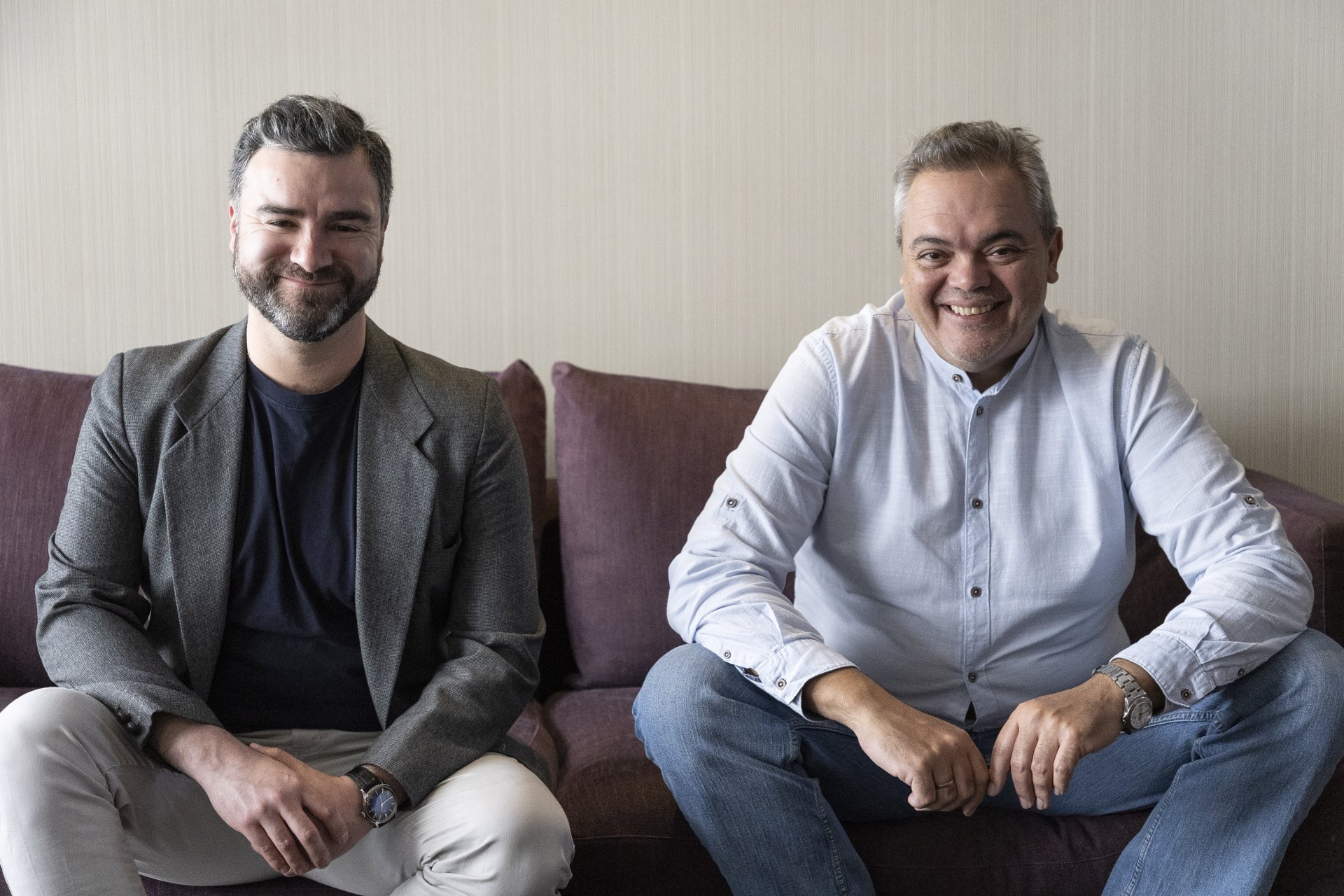
This returns the story to the person asking for help. In a physical shop, a customer can describe an occasion or a purpose without knowing the precise product name. The seller can interpret the request. Online, the words a visitor chooses may differ from the words in a catalog. Searchmind’s stated ambition is to make that mismatch less costly for both sides of the transaction.
The newer company concentrates on ecommerce search. Colla took the CTO role and Bernal became CEO, pairing product and technology experience with commercial leadership. That division gives Colla a role close to building the product again. The company that followed Tiendamia did not require him to repeat the same job.
“Facilitar la búsqueda.”
Mario Colla on his aim - make the search easier.
The mentor takes another turn
Colla and Bernal met through Endeavor. Their relationship began as mentor and mentee before becoming a business partnership. Bernal had been working with artificial intelligence and marketing; Colla suggested concentrating on search inside ecommerce stores. According to Bernal’s account, they formalized their combination in March 2025 and signed the agreement on April 1.
The path from advice to collaboration is a concrete example of what an entrepreneurial network can make possible. A mentoring conversation can remain a conversation. Here, it led to shared work, an allocation of responsibilities and another company to build. The overlap was practical: each had encountered a different part of the distance between attracting a shopper and completing a sale.
Mentoring also became a continuing part of Colla’s public work. He served on Endeavor Uruguay’s board, and in 2025 was among the mentors announced for its Mega Experiencia event at the LATU. He spoke about wanting to return some of the help he had received by assisting people starting out. Later, Endeavor thanked him for his board contribution as Edgard Barilas succeeded him as the entrepreneurs’ representative.
There is a clear direction to Colla’s stated ambitions: make purchasing easier, make searching easier, help another founder get past an obstacle. The businesses have changed size and shape. His own responsibilities have changed with them. The recurring task is specific enough to recognize across a shop counter, an international delivery and a software product. Someone has asked for something. There is still work to do before they can get it.