The parcel begins with a fantasy. A shopper in Montevideo wants a particular pair of running shoes. Someone in Lima has found a laptop configuration that local stores do not carry. A parent in San José spots an educational toy in a US catalog. The product is visible, priced and apparently one click away. Then the border materializes: an unfamiliar card rule, a foreign address, a freight quote, a customs category, a tax calculation and the lurking possibility that a small cardboard box may simply vanish into procedure.
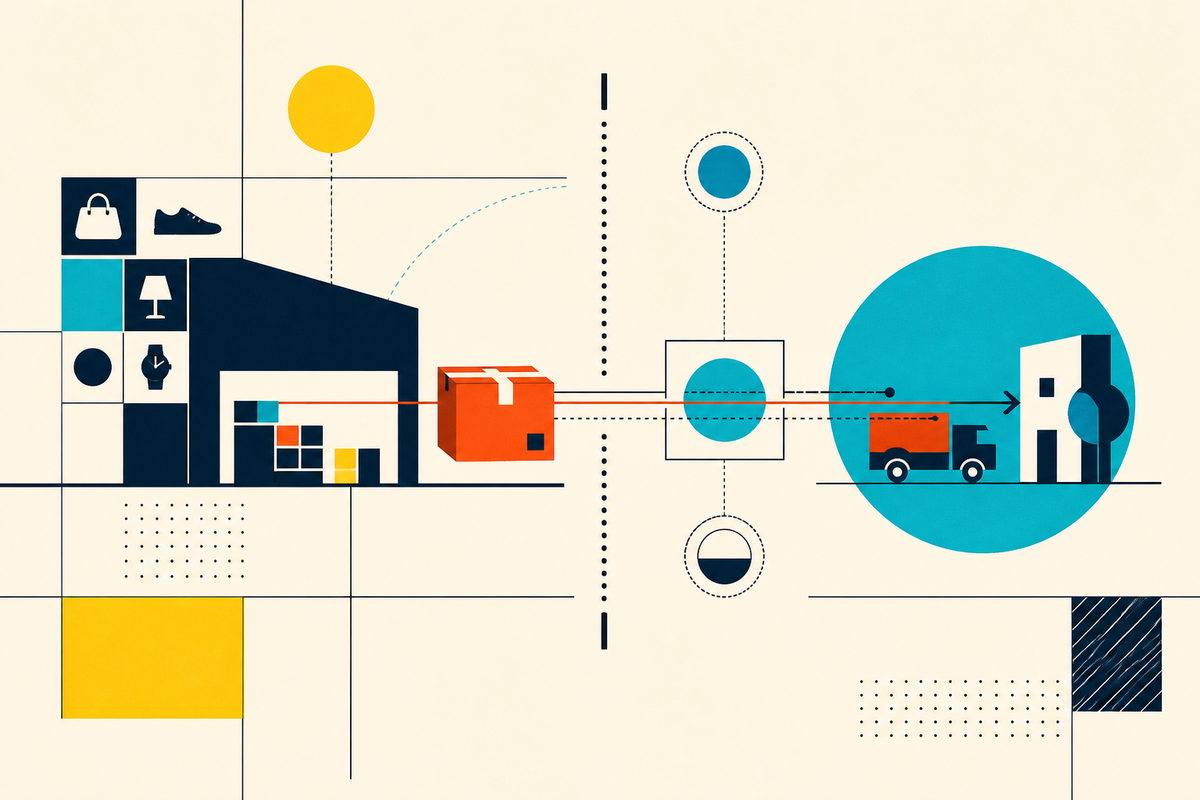
Tiendamia exists in that gap between seeing and receiving. On the surface, it resembles a large online store. It gathers listings associated with retailers such as Amazon, eBay, Walmart and Macy's into a Spanish-language marketplace. Underneath is a more complicated machine. The company coordinates the purchase, receives goods at a Miami warehouse, consolidates and ships them, navigates destination-country requirements, tracks the trip and hands the order into a local delivery network.
The arrangement is useful precisely because it is unromantic. Tiendamia does not need to invent the sneaker or persuade the world to make another blender. It makes distant inventory legible and attainable. The customer shops in familiar currency and, depending on the country and campaign, can use local cards or installment plans. The company takes responsibility for the stretch of commerce where a normal web purchase becomes international trade.
The origin story
A suitcase favor, industrialized
Founder Mario Colla has described the prompt in a sentence familiar to anyone who travels between the United States and Latin America: friends kept asking him to bring things back. In 2014, a small team in Montevideo began turning that informal favor into a platform. Juan Pablo Pereira, later chief executive and now associated with the company as a co-founder and adviser, helped build the operating model.
The first version was not grand. Pereira has joked in an interview that the minimum viable product was embarrassing. That detail matters. The difficult part was never drawing a polished storefront; it was learning which errors appear only after real money and a real package cross a real border. Every destination has its own thresholds, prohibited products, documents, delivery expectations and favored payment habits. Tiendamia expanded by learning those differences, opening Argentina in 2017, Peru and Brazil in 2018, Ecuador in 2020 and Costa Rica in 2021, followed by other regional markets.
“The catalog attracts the click. The choreography after the click earns the trust.”YesPress analysis
That choreography is the company’s practical expertise. Product data must remain searchable even though it originates elsewhere. Costs must be estimated before the buyer commits. Goods arrive from many sellers and need to be matched to the right order. Customs paperwork changes by category and country. A delayed item creates a support problem long before it creates a logistics problem. Tiendamia is a marketplace, but its daily craft is exception management.
The customer
Choice for people who live outside the catalog
The core buyer is not necessarily an ecommerce expert. It may be someone who wants a product, brand, color or size that is scarce locally and does not want to become an amateur import broker to get it. Technology, fashion, beauty, toys, books, home goods and sports equipment all appear in Tiendamia's assortment. Google Play shows more than five million downloads for the Android app, evidence that the problem reaches far beyond a small club of cross-border hobbyists.
There is also a second customer on the other side of the screen. Tiendamia's seller offering invites retailers and marketplace merchants to reach Latin American demand through one connection. The pitch is operational: ship orders to the Miami warehouse and let Tiendamia manage international payments, fraud exposure, customs, logistics, customer experience and local marketing. For a seller, the service is less a listing page than outsourced market entry.
The business model sits between retail and logistics. Shoppers pay the product price plus shipping, handling and applicable import costs. Tiendamia earns from the transaction and the services around it without needing to own the entire upstream catalog. That structure can offer enormous selection, but it also creates dependency. A third-party price can change. A seller can run out of stock. A weight estimate can be wrong. A customs officer can disagree with a category. The company’s guarantee and support operation exist because aggregation produces both abundance and loose ends.
The market
Not quite a courier, not quite a retailer
A shopper has alternatives. They can order directly from a global marketplace where delivery is available. They can buy from Mercado Libre or another local retailer. They can open an account with a Miami freight forwarder, copy a warehouse address into a US checkout and handle declarations themselves. Temu and AliExpress have also trained buyers to accept a long international journey in exchange for broad selection and price.
Tiendamia's distinction is the breadth of the wrapper. A conventional courier often enters after the customer has completed the purchase. Tiendamia begins at search and follows the order through payment, consolidation, customs, final delivery, support and, where its terms apply, a delivery guarantee. This is convenient, not magical. Customer reviews across app stores and discussion forums still mention cancellations, fees, delays and difficult cases. Borders can be hidden from the interface; they cannot be deleted from the route.
Editorial comparison of service scope, not a performance score. Actual coverage and terms vary by retailer, product and destination.
The strongest competitive advantage is therefore accumulated local knowledge. A product catalog can be copied; a working map of tax rules, bank promotions, delivery partners, fraud patterns and customer expectations is slower to assemble. Tiendamia’s country promotions make this visible. Black Week campaigns have paired US discounts with local benefits from institutions including BBVA, BCP, Diners Club, BAC and Banco del Pacífico. Global merchandise arrives wearing local payment clothes.
Operations software matters too. Brightpearl, one of Tiendamia's technology providers, reported that automation helped the company get orders out the door 50 percent faster. The claim is a vendor case study, but it points at the right battlefield. Cross-border commerce compounds small delays. A few hours lost matching an order in Miami can become days of uncertainty by the time the customer asks where the package is.
Growth without frontiers
Capital for a country-by-country puzzle
Tiendamia raised a reported $1.8 million in 2016. In January 2022, Cartesian Capital Group invested $20 million in a Series B. Contemporary reports placed the company's valuation at $80 million. The money arrived after pandemic-era ecommerce adoption had widened the audience for international shopping and was intended to support expansion. Tiendamia had already learned a sober lesson: placing a flag on a map is not the same as establishing a market. Payments, marketing and service still need to feel native.
Leadership has changed as the company matured. Colla moved away from the chief executive role, Pereira later handed the job to José Ignacio Guerra, and in 2024 Guerra announced that Ana Torrontegui would take the lead. The public company culture remained consistent through those handoffs: a remote international workforce, employees nicknamed “tigres,” and the phrase “without frontiers” used for both customer promise and employer identity. LinkedIn places the team in its 201-to-500-person band; supplied company data puts it near 390.
By 2025, anniversary materials described access to more than one billion products from US and Chinese catalogs. Product count is impressive and slightly beside the point. No shopper can meaningfully browse a billion things. What matters is whether the one desired thing appears at an understandable final cost, can legally enter the country and arrives when promised.
The storefront sells possibility. The warehouse sells proof.The two halves of Tiendamia
This is where Tiendamia fits in the market: at the seam between global abundance and local constraint. Large retailers are optimized to stock and sell. Freight firms are optimized to move. Customs agencies are designed to regulate. Banks are designed to settle. Tiendamia's job is to make those institutions behave, from the shopper's perspective, like one coherent store.
For consumers, the practical value is simple. They can compare products that may never reach a nearby shelf, see a fuller estimate of the landed cost, choose available local payment options, follow the shipment and ask one company for help. For sellers, the value runs in reverse: one operational connection can open demand across several complicated markets.
The border always gets a vote. Regulations change, currencies move and a package can still take an eccentric tour. Tiendamia's wager is not that these problems disappear. It is that enough software, logistics and patient service can compress them into a checkout ordinary people are willing to use. The company built a shop window. Its real estate is the difficult space behind the glass.