There is a sentence every mature brand should fear: “Oh, I know them. I haven’t been there in a while.” Former M&M Food Market chief executive Andy O’Brien heard versions of it after taking over in 2014. Familiarity was high. Urgency was gone. The Canadian chain still sold the freezer staples that had carried it from a single Kitchener shop to hundreds of stores, but the shopping experience had barely moved since shoulder pads were office wear.
The company then called M&M Meat Shops had a peculiar ritual. Products lived in plain white packages behind a service counter. A customer described what they wanted; an employee retrieved it. This worked when a narrow range of meat was the attraction. It became a liability after the assortment grew into appetizers, prepared meals, vegetables, seafood, bakery items and desserts. The boxes did not invite comparison. The counter made browsing feel like holding up a queue. Even the name hid most of dinner.
The first thing to fail, in other words, was discovery. Traffic and sales followed. Frozen food itself was not the villain. Research showed people of different ages still bought it. M&M had placed too much friction between a hungry person and the useful breadth of its freezers.
“Oh, M&M? I haven’t been there in a while.”The polite sentence that exposed an impolite problem
Dinner, minus the project management
What M&M sells is easy to describe and slightly more interesting to decode. On the label: frozen pot roast, chicken wings, lasagna, burgers, vegetables, shrimp, soup, cake and hundreds of other items. In the customer’s evening: fewer decisions, less knife work, predictable portions, a shorter path to the table and less food dying slowly in the crisper.
Its customers are busy families, solo diners, people hosting a crowd, older shoppers who know the brand, and anyone who wants a plausible dinner without turning dinner into a second shift. Vegetarian, vegan, halal and certified gluten-free filters make the assortment easier to navigate. The company says none of its food contains artificial colours, flavours or sweeteners. More than 80 percent of branded products are made in Canada from domestic and imported ingredients or qualify as Product of Canada.
That positions M&M somewhere between a supermarket freezer aisle, restaurant takeout and a meal kit. It lacks the fresh theatre and one-stop breadth of a grocer. It also avoids a meal kit’s subscription, chopping and deadline imposed by wilting ingredients. Its pitch is shelf life plus taste plus a Meal Advisor who can tell you what goes with the ribs.
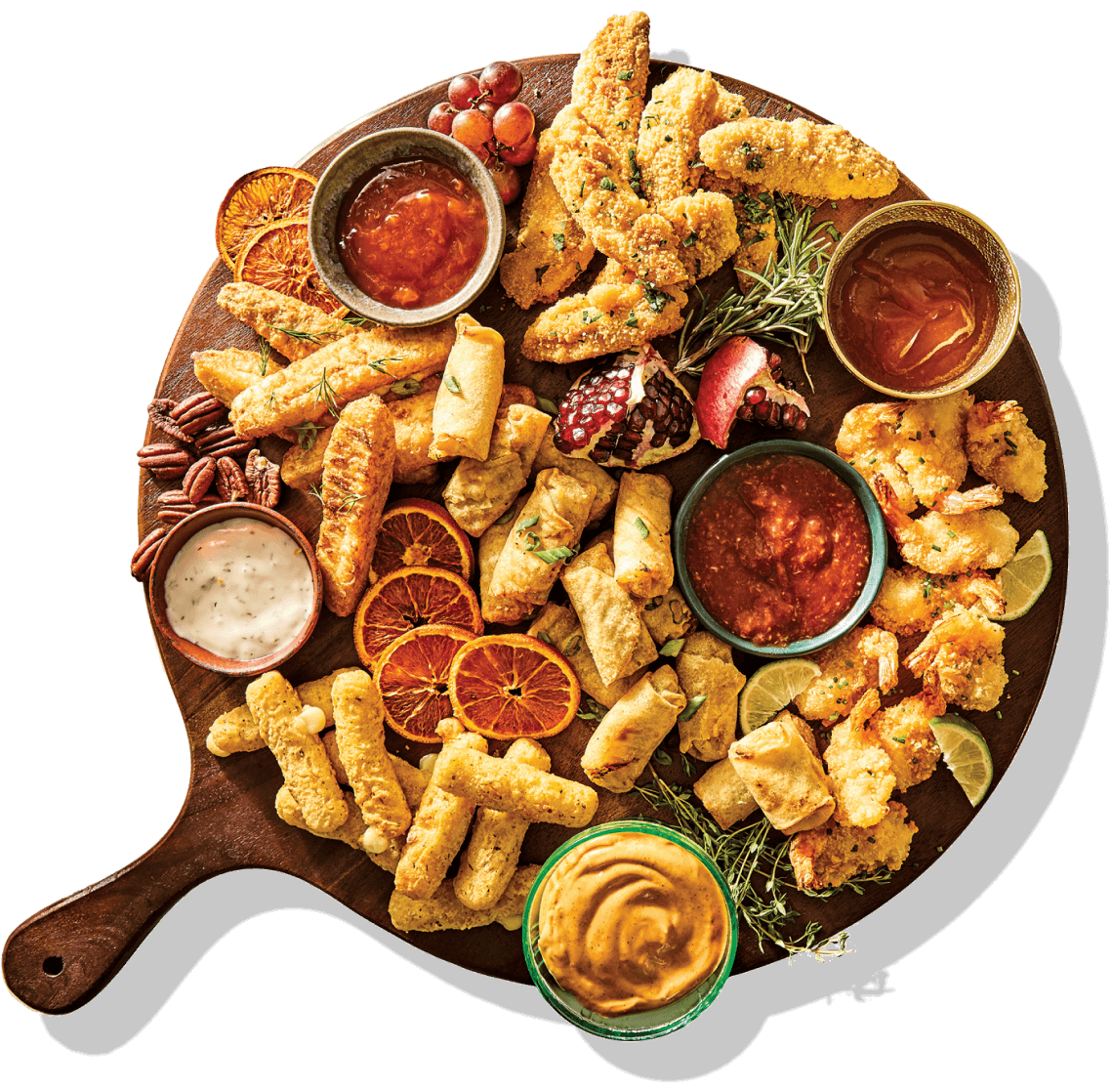
The turnaround began in the aisle
Searchlight Capital Partners acquired M&M in 2014 and installed new leadership. The tempting move would have been to commission a cheerful logo, buy television spots and call the work a transformation. Instead, the company and its advisers watched customers shop. They ran shop-alongs, one-to-one interviews and segmentation research. The findings were painfully physical: white packaging made choices harder; the counter was polarizing and overwhelming; the Meat Shops name misrepresented the range; products looked dated.
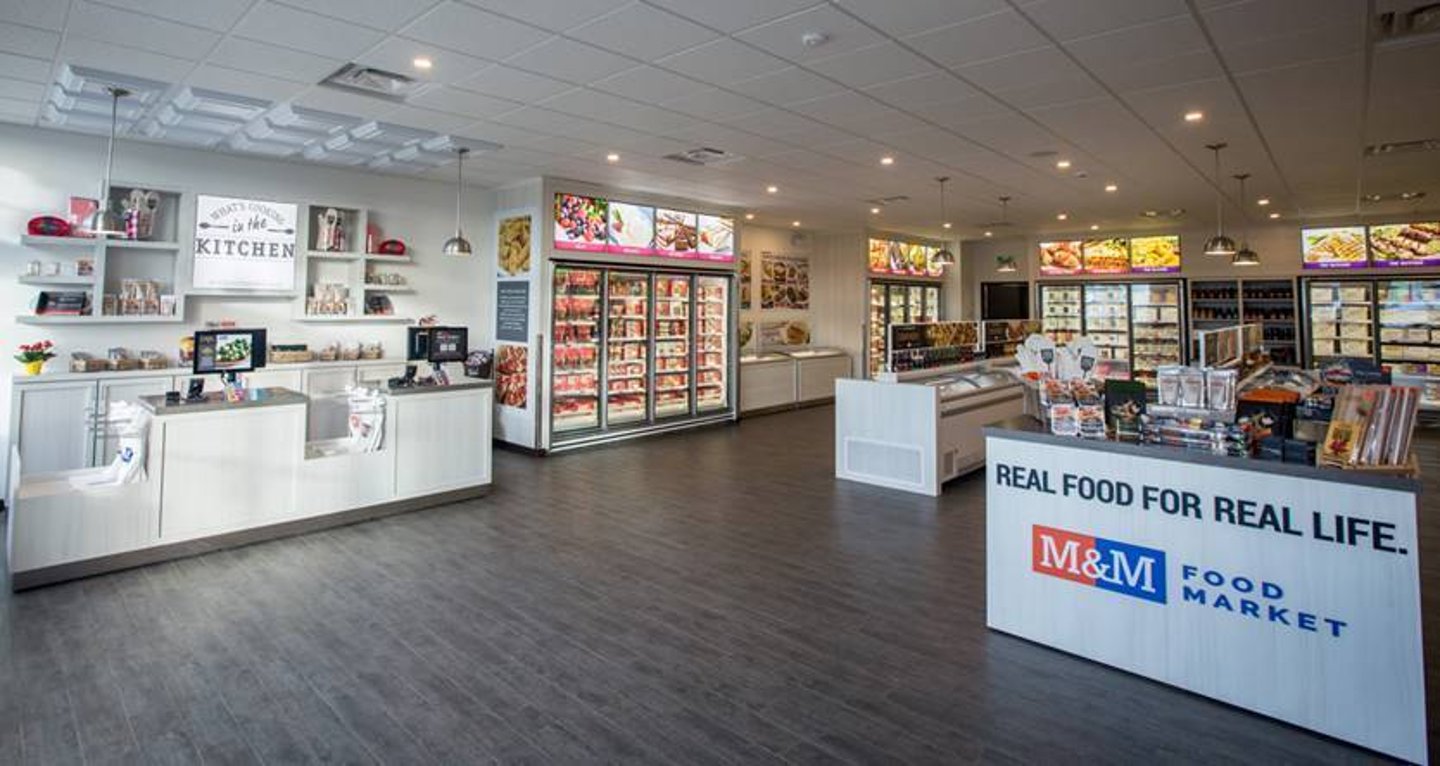
That evidence changed management’s mind about what needed fixing. This was not an awareness campaign. It was an operating-system rewrite across product, packaging, store design, digital shopping and staff behaviour. M&M created two prototype stores in 2015, measured them and adjusted before a national rollout. The counter lost its gatekeeping role. Customers could roam open-concept stores, read colour-coded packages and open freezer doors themselves. Meal Advisors remained, now as guides instead of human search bars.
Four moves, in the correct order
The portfolio received the same treatment. More than 400 packages were redesigned with recognizable food photography and clearer categories. More than 200 products launched, and over half the range became new or reformulated. In 2016, M&M Meat Shops became M&M Food Market. That modest noun swap did strategic work: the company was no longer asking “meat” to explain cheesecake, ramen and Portuguese-style custard tarts.
The reported results were material without becoming fairy dust: an 8 percent increase in new and reactivated customers and 4 percent same-store sales growth versus the pre-campaign trend. The lesson is not that orange packaging cures retail. It is that a brand promise, physical store and product must stop contradicting one another.
A freezer inside someone else’s store
The modern M&M is not only a chain of small specialty stores. Its more scalable trick is Express, launched in 2018. A partner retailer gets a curated M&M section inside its freezer aisle, plus help with placement, planograms, assortment, seasonal category management, equipment contacts, distribution and marketing. M&M says the model now reaches more than 2,226 partner locations. Current franchise material puts products in more than 2,600 locations overall.
This solves opposite problems at once. A rural or small-market shopper gets access without waiting for a full M&M store. A convenience or grocery partner adds a known food brand and repeat traffic. M&M adds distribution without signing a matching number of leases. The downside is control: an Express freezer carries less range, does not participate in every promotion and cannot reproduce the Meal Advisor experience.
The network is mostly borrowed floor space
Formats are not equivalent: Express is a curated partner placement; a franchise is a full specialty store.The standalone business remains franchise-heavy. Public franchise guidance estimates C$350,000 to C$450,000 to build a new store, or C$100,000 to C$500,000-plus to take over a refranchised location, with half the investment required as liquid capital. Combined royalty and advertising fees average 11 percent. This is not passive freezer income. The company explicitly looks for operators who will be present in the business.
Online ordering, curbside pickup and same-day delivery add another layer. M&M’s first delivery pilot began with Instacart in 18 stores in 2019. The company examined customer responses, franchisee feedback, returns, acquisition, basket size and profitability. Average delivery orders were reported at nearly twice an in-store purchase, with better-than-average margins. Only then did the program expand to 216 stores. Today, orders placed through M&M can be delivered by DoorDash where available for a stated flat C$9.99 fee, with no minimum.
Why a gas-station company wanted pot roast
Parkland Corporation paid approximately C$322 million for M&M in 2022. The acquisition sounds odd until the assets are translated. Parkland did not merely buy boxes of frozen appetizers. It bought a proprietary food-development engine, franchise royalty streams, a national cold-chain network, ecommerce capability, thousands of distribution points and roughly two million active rewards members at the time.
Parkland wanted to improve the food offer at its On the Run convenience locations and connect M&M customers with its Journie fuel loyalty program. It called M&M capital-light and targeted roughly C$55 million in annual run-rate adjusted EBITDA within three years. Whether every promised synergy lands is less interesting than the strategic logic: convenience retailers need reasons beyond gasoline for customers to visit, and dinner is a recurring reason.
Ownership shifted again when Sunoco completed its acquisition of Parkland in October 2025. Meanwhile, the loyalty connection is loosening. M&M says customers will stop earning Journie points at its stores on June 19, 2026, although M&M member pricing and personalized offers remain. Integrations are strategies, not marriages.
M&M does not sell frozen meals so much as it sells the relief of having already made six decisions.Plan, shop, prep, portion, cook, clean
What to steal - and when it breaks
The most copyable idea costs less than a national rebrand: ask customers to show you, not tell you. Watch the pause before they choose. Notice the product they cannot find and the social discomfort they route around. Then convert each observation into a testable change. M&M did not assume the old counter felt “premium.” It learned that some shoppers found it overwhelming and built a prototype where the product could explain itself.
Steal this
- Observe behaviour in context.
- Prototype the whole experience.
- Make packaging do sales work.
- Keep experts, remove gatekeeping.
- Measure before national rollout.
It fails when
- The product cannot survive less control.
- Partners lack economic upside.
- Franchisees hear about change last.
- Prototype markets are unrepresentative.
- The redesign outruns supply quality.
This playbook would not work unchanged for a regulated product requiring consultation, a luxury service whose ceremony is the value, or merchandise that becomes unsafe when self-served. Express expansion also fails if the assortment needs explanation, the cold chain is unreliable, partner traffic is weak or the margin cannot support two businesses. And a franchise transformation stalls when local operators must fund it without believing the research.
M&M’s older caution is useful too. It tested the U.S. Midwest under the MyMenu name beginning in 2008 and exited by 2013. Different branding, limited density and a new market created conditions unlike its Canadian base. The later domestic turnaround worked because it began with an existing customer problem, involved franchisees and employees, and staged risk through prototypes.
The company’s competitive problem has not vanished. Supermarkets have improved private-label meals. Restaurant delivery is frictionless. Price-sensitive shoppers can compare a specialty frozen product with a family tray at Costco. M&M wins only when its mix of dependable quality, long freezer life, specialized choice and human help is worth the premium. The store can no longer coast on familiarity.
That is why the open freezer door matters. It is a small physical detail that reveals the larger discipline: let customers see the value, remove the awkward step, keep the useful expertise, and earn the next visit. A company once stuck behind its own counter learned to get out of the way.