The most important thing in Pet Valu is not a golden retriever wearing a raincoat, though one is usually nearby. It is the bag of food the retriever will finish. Pet food is a recurring purchase disguised as an errand, and Pet Valu has spent 50 years arranging a Canadian retail system around that dependable fact.
What began with Geoffrey Holt's first store on Toronto's Queen Street East in 1976 now spans 877 corporate and franchised locations. The family includes Pet Valu, Bosley's by Pet Valu, Paulmac's Pets, Tisol, Total Pet and Quebec's Chico network. Inside are more than 10,000 products, from kibble and litter to aquarium filters and outfits that suggest a dachshund has dinner plans.
The merchandise is only the visible layer. Stores offer grooming, adoption events and self-serve dog washes. Online customers can choose home delivery, AutoShip or pickup, while selected locations appear on Instacart, Uber Eats and DoorDash. Store staff are trained as Animal Care Experts, or ACEs, because pet nutrition is confusing and a good recommendation can outlive a promotion.
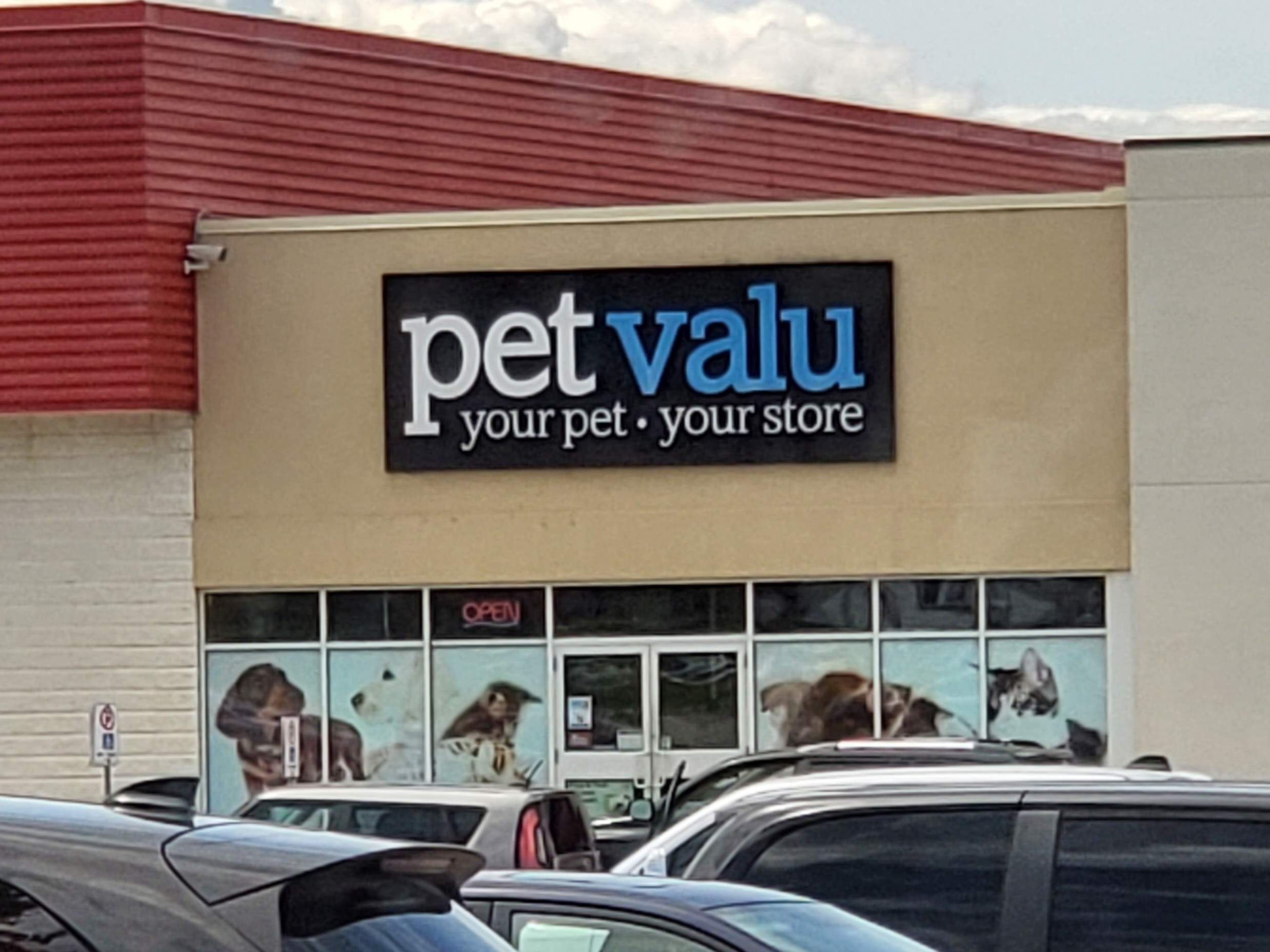
The local chain that behaves like infrastructure
Pet Valu's customers are Canadian pet parents, a category the company calls Devoted Pet Lovers. They shop across cities, suburbs and smaller communities, but their needs rhyme: reliable nutrition, help choosing among products, and somewhere close when the cat rejects dinner at 6:12 p.m.
The network gives Pet Valu a proximity advantage, while the franchise model supplies local ownership. A franchisee can know the rescue down the road, the regular with the elderly terrier and which food disappears fastest during a snowstorm. The parent company supplies banners, buying power, merchandise, technology, distribution and marketing. National scale handles complexity; the operator handles the neighborhood.
Loyalty makes the arrangement measurable. Pet Valu reported roughly 3 million active loyalty members at the end of 2024, responsible for 85 percent of system-wide sales. That is more than a coupon file. It is a record of life-stage changes, purchase cadence and product preferences that can inform stocking, offers and AutoShip.
The emotional promise happens in the aisle. The economic promise happens when the customer comes back before the bag is empty.The Pet Valu operating thesis, in plain English
What, exactly, does the company sell?
Food and treats are the anchor. National brands such as Acana, Orijen, Hill's Science Diet, Open Farm, Royal Canin and Kong sit beside Pet Valu's own labels. The proprietary portfolio includes Performatrin nutrition, Fresh 4 Life litter, Bailey & Bella accessories, Jump toys and Essentials. In 2024, proprietary brands accounted for about one quarter of system-wide product sales.
House brands do two jobs. They give customers products that are difficult to price-check elsewhere, and they give the retailer a better margin profile than a shelf filled entirely with national labels. Performatrin also carries history: variants of the food line have sold through the network for decades. That reduces the usual private-label problem of asking shoppers to trust an anonymous newcomer with an animal's diet.
Services make the boxes harder to replace. A C$15 self-serve dog wash is not a giant revenue line, but it creates a trip, solves a messy household problem and puts the owner near shampoos, towels and treats. Grooming adds appointments. Rescue partnerships add community relevance. Click & Collect turns every participating shop into a pickup point, often with orders ready in under two hours outside Quebec.
The $100 million bet nobody takes home
Pet Valu's most consequential recent product is not sold to consumers. Between 2022 and 2025, the company invested approximately C$100 million to replace nine company-operated and third-party warehouse facilities with three new, partially automated distribution centres. Brampton opened in 2023 at 670,000 square feet. Surrey followed in 2024 at 350,000 square feet. A 295,000-square-foot, LEED Gold facility near Calgary completed the project in 2025.
This was the largest investment in the company's history, delivered on time and on budget. The purpose was wonderfully unromantic: more capacity, fewer handoffs, better inventory flow and a network able to support another decade of store growth. Pet Valu says it sees room for more than 1,200 locations over the long term, with much of the white space in rural Canada.
Readers can copy the logic, not necessarily the cheque. First identify the promise customers actually notice - availability, freshness, speed, advice - then find the backstage constraint that breaks it. Pet Valu's shelves and franchisees cannot outperform an unreliable replenishment system. The warehouse work protects the front-of-store experience.
What failed first, and what changed
The Pet Valu name has a conspicuous scar. In November 2020, a separate U.S. affiliate announced that all 358 of its stores and warehouses would close after severe pandemic impact. The Canadian company was legally separate and continued through roughly 600 locations, but the shared brand makes the comparison useful.
The lesson is not that pet retail failed. It is that the same sign can sit above different economics. The Canadian business leaned heavily on local franchise operators, kept its geographic focus and emerged into a 2021 Toronto Stock Exchange listing that raised C$316 million. It acquired Quebec chain Chico in 2022 and kept adding stores. The U.S. closure did not automatically cause each Canadian decision, but it exposes the conditions that mattered: density, local ownership, repeat business and disciplined territory selection.
In early 2026, value-seeking customers bought more discounted goods. Q1 gross margin fell, and management updated its profit outlook. Pet Valu responded with sharper value programs, cost savings and controlled reinvestment. By Q2, revenue rose 3.6 percent and adjusted EBITDA rose 8 percent, even as same-store sales slipped 0.2 percent. Expansion helped; traffic remained the uncomfortable number.
That tension prevents a tidy victory lap. New stores can lift total revenue while existing-store transactions soften. Discounts can protect customer relationships while narrowing product margin. In Q2 2026, revenue reached C$290.7 million and the network reached 877 stores, but comparable sales declined slightly. The machine is growing while its shoppers count their dollars.
The business under the bow tie
Pet Valu earns money in two broad ways. Corporate stores and ecommerce produce retail sales. The franchise side produces wholesale merchandise revenue plus fees, royalties, rent and related charges. Because franchisees fund and operate most storefronts, network expansion can be more capital-light than opening every store corporately.
The arrangement also distributes risk with unusual precision. Pet Valu chooses locations, negotiates many head leases and subleases most franchised premises to operators. The franchisee brings capital, labor and daily judgment; the company earns from the goods moving through its network as well as the brand on the door. It is a partnership with guardrails, including store standards and franchise councils that represent operators. Done well, headquarters gets consistency without sanding away every local edge. Done badly, the operator absorbs neighborhood frustration while the parent still controls the assortment. The relationship is not a footnote. It is the operating system.
The company reported fiscal 2025 revenue of C$1.176 billion, adjusted EBITDA of C$257.1 million and net income of C$97.8 million. Those figures describe a scaled specialty retailer, not a software business in a fur coat. Inventory, freight, leases, labor and promotions remain stubbornly physical. The advantage is that food consumption is recurring and pet parents can be reluctant to switch a product that works.
Pet Valu sits between three alternatives. Big-box and mass retailers compete on breadth and price. Online marketplaces compete on convenience. Independent pet stores compete on intimacy and specialist credibility. Pet Valu's answer is to borrow from all three: central scale, digital ordering and a locally operated small-box experience.
Five ideas worth stealing
- Build around a recurring need. Repeat purchases lower the burden of inventing a new reason to visit every month.
- Keep expertise close to the transaction. Training staff around a confusing customer problem makes advice part of the product.
- Let local operators localize. Central systems can coexist with community partnerships and neighborhood knowledge.
- Add services the internet cannot box. Washes, grooming and adoption events create physical reasons to return.
- Fix backstage friction before polishing the stage. Reliable inventory is a customer experience, even when nobody sees the warehouse.
When the playbook does not work
This model is a poor fit when purchases are rare, products are easy to substitute, customers need no advice, or local stores cannot generate enough density for efficient replenishment. Proprietary food only helps when shoppers trust its quality. Franchise expansion only helps when unit economics leave enough for both operator and parent. A C$100 million distribution reset only makes sense when the network is large enough to use the capacity.
Pet Valu also faces a hard ceiling on sentiment. People love pets; they still compare prices. Quick-commerce partners can rescue an empty-food emergency, but marketplace markups and fees can make the basket less attractive. Services vary by store. Rural expansion offers white space but longer routes. The pieces reinforce one another only when availability, advice, value and proximity arrive together.
That is what makes Pet Valu interesting. The company packages affection through a system of leases, royalties, warehouse slots, nutrition formulas and grooming appointments. The pets supply the emotion. Pet Valu's job is to ensure the right bag is nearby when dinner is due.