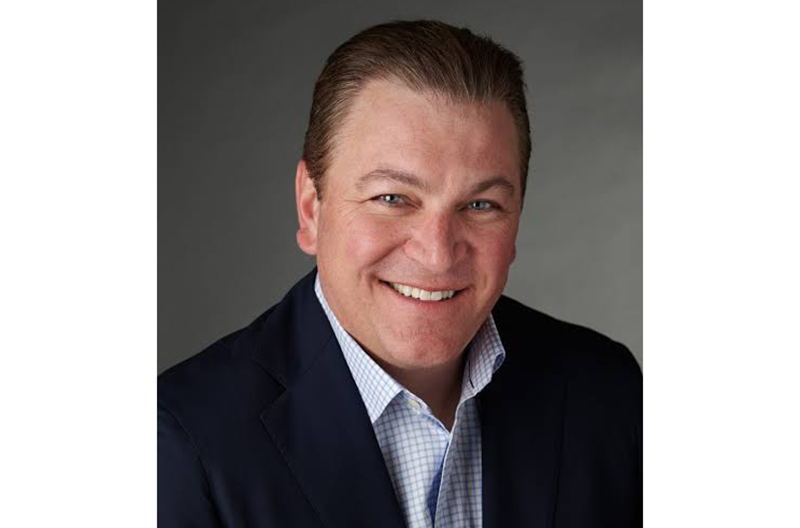
The lifer takes Emeryville.
On a Monday morning in February 2025, Jason Potter walked into 5650 Hollis Street in Emeryville and started running a company built around a peculiar promise: that bargain hunters and brand-name groceries belong in the same store, and that the people behind the registers should own the place. He had been on the job for less than a week when analysts started lining up earnings questions. He had been in a grocery store, in some capacity, for more than four decades.
Potter is Canadian. He grew up in Valleyview, a town in northern Alberta with a population that has hovered around 1,800 for most of his lifetime. The local grocery store hired him at 13. He bagged. He stocked. He came back the next day, and then for the next forty years.
In 1990 he joined Sobeys, the Empire Company-owned grocery operator that quietly runs an enormous chunk of Canada's food retail. He stayed for 26 years. The thing to notice is not the length but the variety. President of Sobeys West. President of Sobeys Atlantic. President of Multi-Format Operations. Executive Vice President of Operations, with full P&L responsibility for roughly 800 full-service and community stores under the Sobeys, Safeway, Foodland, and Thrifty banners. By the end, he was overseeing more than 1,500 stores and north of $12 billion in revenue. The trade press in Canada labeled him a Top 40 Under 40 leader. He chaired GIFT Atlantic Canada and sat on the Coca-Cola Research Council.
Then in 2018 he stepped out of Sobeys, and in March 2020 - the worst possible week to take a grocery job, or perhaps the best - he became CEO of The Fresh Market, the Greensboro-based specialty chain owned by Apollo Global. The world was queuing for toilet paper. He spent nearly five years there. By the time he handed the baton, The Fresh Market had a transformed customer experience, strong earnings growth, electronic shelf labels rolling out across the fleet, and a store count pushing into markets it had not previously cracked.
Which brings us to the present. Grocery Outlet, the chain his Apollo-adjacent network presumably watched closely, needed a new operator. Robert Sheedy stepped down. The board ran a search through Herbert Mines and landed on Potter. The announcement went out January 22. He started February 3. He joined the board the same day.
What he is actually being asked to do
Grocery Outlet is not a normal grocery chain. It buys opportunistically - surplus, overstock, last-of-season - and sells those goods at a steep discount through a fleet of stores run not by W-2 employees but by independent owner-operators who keep a share of the profits. The aisles change week to week because the inventory changes week to week. The marketing department calls it a treasure hunt. The economic engine is a Rubik's cube of national buying scale and hyperlocal merchandising autonomy.
"I could not be more excited to join Grocery Outlet," Potter said in the press release that announced his hire. "With a clear mission of saving people money and a unique model that combines national buying power with local independent operators for the ultimate treasure hunt shopping experience, Grocery Outlet is a differentiated concept with tremendous growth potential."
It is the kind of statement a CEO is contractually obligated to deliver. The interesting part is that, for once, the resume backs it up. Potter has run a multi-banner federation of Canadian stores. He has run a high-end fresh grocer in the American South. He has not, until now, run a discounter built on franchisee-like independent operators. But each previous role rehearsed pieces of the puzzle: the regional autonomy of Sobeys West, the format diversity of Multi-Format Operations, the perishables expertise of The Fresh Market, the buying discipline of all three. If you were going to draft a CEO for a chain that is half national buying machine and half neighborhood independent grocer, you would draft someone with this exact CV.
A long horizon
Three companies in 35 years. That is a CV that no longer exists in most industries. Software people change roles every 18 months and call it stable. Grocery is different. Grocery is patient. Grocery rewards the operator who has personally walked the cold case at 6 a.m. and noticed that the milk crates are stacked wrong, and who has done that for so many years that he can spot it from the parking lot. Potter is that operator.
His education tells the same story by a different route. A Bachelor of Management and an MBA, both from Athabasca University - the open Canadian institution that lets working executives study without leaving their day job. Then later, an Advanced Management Program credential from Harvard Business School, the short residential program that mid-career executives take when they are about to be handed a much bigger company. He did the night-school version of the MBA while running Canadian grocery regions, and the Harvard polish before stepping into the American CEO seat. The timing is suggestive. The work ethic is not in doubt.
The Grocery Outlet question
Grocery Outlet went public on the Nasdaq in 2019. It now operates more than 500 stores across the western United States, plus a growing footprint in Pennsylvania. Annual revenue runs in the neighborhood of $4.7 billion. The independent owner-operator model has been an inheritance from the company's family-run roots: the Read family built the business and still influences its culture. The challenge, periodically, is scaling that model without smoothing out the quirks that make it work. Treasure hunts cannot be planogrammed.
Potter is paid a base salary just over $1 million, with annual incentive bonuses and equity grants on top. The compensation package is calibrated to growth. The investor expectation is also growth. Grocery Outlet's stock, which has bounced through the post-IPO years, will move with the gross margin and unit economics that he and his team produce. The opportunity is large. The store count could plausibly double over the next decade if the model travels east. The risk is the model itself: opportunistic inventory is inherently unpredictable, and the independent operator structure can magnify either virtue or drift.
None of this is new territory for Potter. The store base he ran at Sobeys was a similar mosaic of company-operated and franchise-driven banners. The Fresh Market gave him a tutorial in high-touch perishable retailing. Grocery Outlet asks him to combine both: an emotionally engaging in-store experience with a buying engine that lives or dies on the next pallet of surplus shampoo.
The boy from Valleyview
Return to the kid bagging groceries in Valleyview. Imagine telling him that in roughly four decades he would be a Harvard AMP graduate, a public-company CEO, the trustee of an independent owner-operator network spanning the West Coast, and the subject of investor day decks parsed by Wall Street analysts. He would probably ask what time his shift ended.
The career has been long because the work has stayed the same. Move product. Train people. Watch margins. Notice the milk crates. Potter has been doing it since 1984. He will keep doing it from Emeryville.