Mahesh Singh has a fondness for visible things: cards on boards, work moving through columns, dependencies that can no longer hide behind a green status light. It is a practical taste acquired over a career spent inside software companies, where the distance between a promising plan and a shipped result can be measured in meetings, handoffs and mild despair. At NimbleWork, the Cupertino enterprise software company he co-founded, Singh has occupied enough seats to know the view from each one. Product management, professional services, consulting and marketing have all appeared on his business card. The title changed; the preoccupation remained.
His public argument is straightforward. Teams do better work when they can see what they are doing, why it matters and where it is stuck. The language now includes AI-assisted planning, adaptive work management and the connection between strategy and execution. The underlying concern is older than any of those labels. A plan that lives in one room and execution that happens in another will eventually produce a surprise. Singh's work has been about making the surprise arrive early enough to be useful.
The first systemsAn engineer walks into marketing
Singh studied electronics engineering at the Maharaja Sayajirao University of Baroda, graduating in 1984, then earned an MBA in systems and marketing from XLRI Jamshedpur in 1986. The pairing looks unusually neat in retrospect. Engineering offered the system; marketing offered the people who must understand and choose it. Singh would spend the following decades moving between the two.
Before NimbleWork, he spent 12 years across NIIT in India and HCL America. His responsibilities ranged from business development and project delivery to product management for PC-based CASE and project-management software. He later co-founded Aravali Technologies, a Silicon Valley e-consulting company, and served as its chief operating officer through an acquisition by a publicly owned Indian company. It was an early founder's education in the unglamorous verbs: deliver, manage, sell, integrate.
In 2002, Singh became a co-founder of Digite. The company made software for enterprise project and work management and eventually developed SwiftKanban, a visual work-management product. Singh's remit kept expanding across North America and Europe. One company biography contains his best joke about this wandering job description: he “hasn't held a steady job for a long time” and consequently has run product management, consulting, professional services and marketing. Corporate biographies rarely risk a wink. This one works because the underlying fact is serious. He learned the product from inside its delivery chain.
Our customers are our best source of inspiration and innovation - and we take listening to them and responding very seriously!Mahesh Singh, reflecting on the company's work
That breadth is particularly useful in enterprise software. A feature has to survive more than a demo. It passes through procurement, configuration, training, reluctant users, existing processes and the hard little compromises of implementation. A product leader sees capability. A consultant sees context. A services operator sees what breaks. A marketer must turn all three into a sentence that remains true after the contract is signed.
The board is a mirrorWhat visibility changes
Kanban gave Singh a vocabulary for that sentence. He became a Kanban Coaching Professional and Accredited Kanban Trainer, then an Accredited Kanban Consultant and Kanban Management Professional. Kanban University recognizes him as a Distinguished Fellow. The credentials matter, but his teaching tends to return to ordinary scenes: too much work started, an urgent item disrupting a queue, a process that exists differently in the handbook and on Tuesday afternoon.
The visibility loop
A board does not solve those questions. It removes several excuses for avoiding them. Once the queue is visible, overload has a shape. Once dependencies are named, a delay has an address. Once the team limits work in progress, starting a new task becomes a trade rather than an innocent addition. This is why Singh's writing moves easily between Kanban boards and management behavior. The cards are evidence. The conversation is the work.
His Stack Overflow activity shows the same practical streak. He has answered questions about urgent tickets, test work, Scrum, Kanban and digital status boards. In one product answer, he disclosed plainly that he worked for the maker of SwiftKanban. The exchange is small but revealing: offer an option, name the constraint, state the affiliation. Clarity is useful in process design and in a comment box.
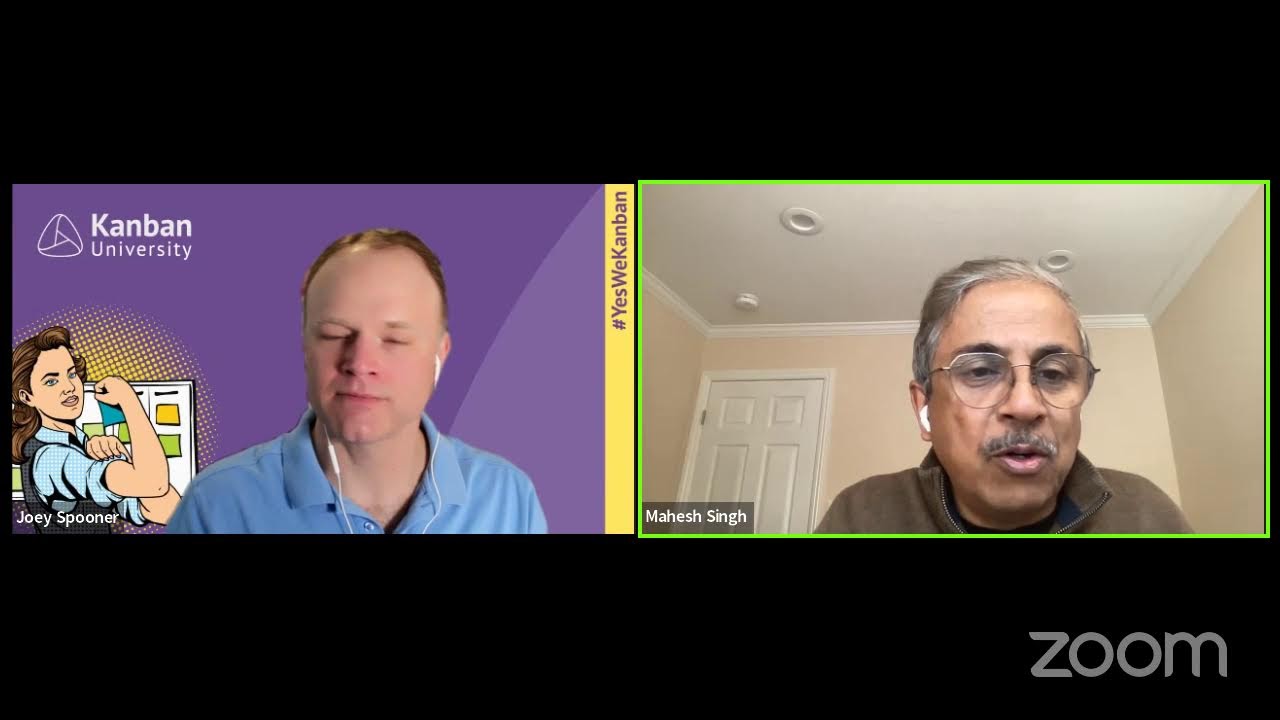
The most pleasing proof is recursive. NimbleWork used SwiftKanban to build SwiftKanban. In a 2022 demonstration with Kanban University, Singh walked through the multi-level system and described how the company managed team, portfolio and higher-level planning in the tool it sold. Software demos are normally polished tours of ideal conditions. This one had a more interesting premise: the maker had placed its own work inside the product and could observe the friction directly.
A name catches upFrom Digite to NimbleWork
For two decades, the company was called Digite, pronounced “Di-gi-tay - like cafe,” as Singh patiently explained it. Customers tried Digit, Digitech and other plausible variants. In 2023, Digite became NimbleWork. Singh wrote about the old pronunciation ritual with the affection reserved for a problem that has finally stopped occurring. “No one will be mispronouncing our company name for a long time to come,” he observed.
The new name also compressed the company's operating philosophy. Singh presented the phrase “Be Nimble! Work Nimble!” and connected it to agility, continuous improvement and a project-driven economy. NimbleWork launched AI-powered adaptive project and work-management products under the Nimble brand, while continuing SwiftKanban. The rename made the promise legible before anyone reached the product page.
We truly believe that businesses must adopt principles of agility and continuous improvement.Mahesh Singh on the NimbleWork rebrand
There is a humane clause inside the business language. Singh and his colleagues describe their aim as “Humanize Work,” meaning that people should understand the purpose of their tasks and have greater control over why, what and when they work. It is an ambitious thought for project software, a category with a historic talent for turning people into resource rows. The useful tension in Singh's work sits here: visual systems need enough structure to coordinate an enterprise without becoming another machine that people serve.
The next queueAI meets the messy middle
By 2026, Singh's public conversations had moved toward AI in project delivery. He joined NimbleWork colleagues for a panel on why AI projects fail, participated in implementation demonstrations and co-presented a July session on turning approved product roadmaps into delivery-ready plans. The technology changed. The operational question sounded familiar: how does an attractive idea become ordinary, trusted work?
During the AI discussion, Singh pressed on the large number of initiatives that attract executive attention but never reach production. The warning was not anti-AI. It was anti-theatre. A pilot can look sophisticated while remaining detached from a critical workflow. Weak historical data leaves no reliable baseline. Adoption fades when the system does not earn a place in how outcomes are delivered. The bottleneck is often the organization's ability to choose, govern and absorb the tool.
This is where four decades of varied roles become more than a busy resume. Singh has seen ideas as an engineer, promises as a business developer, obligations as an operator, requirements as a product manager, complications as a consultant and stories as a marketer. Each function supplies a different test. Does it work? Will anyone choose it? Can we deliver it? Does it fit? Will people use it? Can we explain it honestly?
Away from those questions, his own list of interests is winningly analog: music, writing, hiking, running, cooking and movies. He has written about public sanitation through the lens of paired programming and about the comic burden of a company name that needed phonetic support. Colleagues in the Kanban community have publicly described him as knowledgeable, communicative, amicable and attentive to detail. The portrait that emerges is less of a process zealot than a collector of connections, comfortable carrying an idea from a software team to a city street and back.
The recurring lesson is that visibility is not surveillance. At its best, it is shared context. A clear board allows a team to say no without hiding. A well-formed roadmap lets delivery challenge strategy while there is time to improve it. A useful AI system earns adoption because people can see where it belongs and what it changes. Singh's career has crossed industries, functions and vocabulary, but it keeps arriving at that same practical clearing: put reality where everyone can see it, then decide together what moves next.