An insurer needed twelve weeks to develop a product. In a published LTIMindtree engagement, that became six. The revealing detail sits beside the headline number: the team cut its regression test cases by 65%, while regression automation coverage rose from 35% to more than 90%. Fewer cases. More coverage by automation. The calendar moved.
- Build and check together. Product engineering meets software assurance.
- Follow the waiting. Test data and unavailable services can hold up releases.
- Read the scope. Client results belong to individual engagements.
LTIMindtree Digital Engineering and Assurance occupies this particular corner of enterprise technology: helping organizations build software, modernize what they already have, and establish whether the result works. Its customers include businesses where software must negotiate with old systems, industry rules and existing customers. A cheerful new interface gets only part of that job done.
Twelve weeks. Then six.
The insurer case is instructive because the work was so specific. LTIMindtree describes a transition covering more than 140 applications, including over 50 core applications. Knowledge had to become reusable: recorded sessions, documented understanding, product features connected to relevant testing scenarios. A life or annuity product brings coverage details that a generic software checklist can easily miss.
The intervention reached into the sprint itself. Acceptance tests helped define expected behavior early. Automated test-data provisioning reduced the effort of generating data by approximately 80%. Service virtualization allowed testing to continue while dependent services were unavailable. Regression testing dropped from 4.5 days to two. These are company-reported outcomes, and they describe a coordinated change in working methods.
The $8.4 million building block
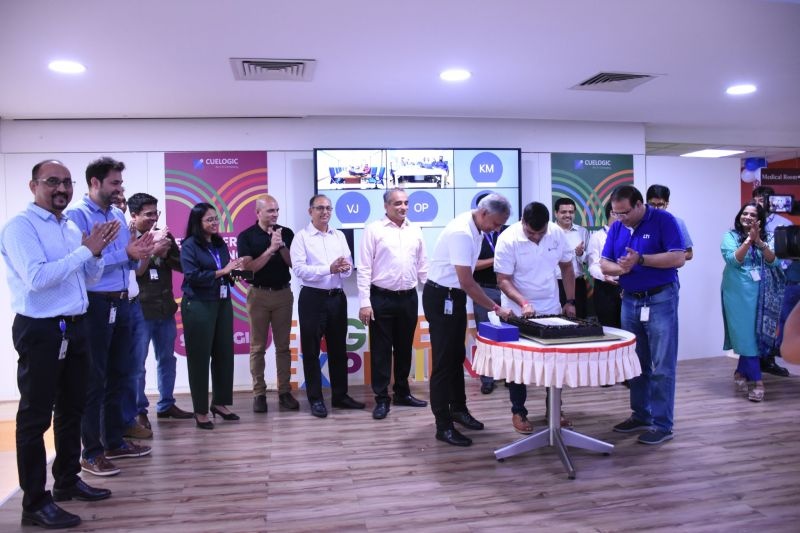
One strand of the practice’s history leads to Pune. In June 2021, LTI announced the acquisition of Cuelogic, a product engineering company with more than 300 employees and over 100 products developed. Its repertoire included cloud-native web and mobile applications, modernization, user experience and an Innovation Lab service. LTI wanted those capabilities inside its digital practice.
The reported enterprise value was $8.4 million, including upfront consideration, performance-linked earn-outs and retention payouts. That figure describes an acquisition. For LTI, the purchase offered a way to add a working product-development business, its people and its methods. In the announcement, then-chief executive Sanjay Jalona explained the attraction:
“We believe rapid productization is an essential requirement for accelerated digitalization across industries.”Sanjay Jalona / LTI acquisition announcement, June 2021
Cuelogic’s co-founders were Nikhil Ambekar, Vikrant Labde and Neel Vartikar. Labde later described anxiety about preserving the company’s character inside a larger organization. His 2024 departure reflection credited leaders with respecting its culture and supporting the transition. That is a founder’s assessment, but it identifies the human issue behind the transaction: engineering habits travel through people.
An airline puts a price on waiting
The assurance side has its own economics. For an unnamed US low-cost airline, LTIMindtree reports establishing a quality assurance center and transitioning 58 applications within eight weeks. It prioritized critical applications and trained testers in the airline domain. Reservation systems and flight planning do not become interchangeable just because both involve screens.
The case reports approximately $1.05 million saved over eight months after moving to a managed testing function. Automation coverage increased from 40% to 70%; a staffing model combining a core team with flexible capacity supported efficiency changes. Switching mobile testing tools to open source reportedly saved $125,000 in tool costs. The figures illustrate several distinct places where a testing budget can move.
One US airline managed-testing engagement
This is a business built around contracted expertise and delivery: consulting, engineering projects and managed services for other businesses. A buyer brings a product roadmap, an application estate or a testing problem. The provider supplies teams, methods and tools. Engagement scope matters because maintaining an airline’s release process is a different purchase from building an experimental app.
The tools behind the timetable
For an earlier-stage idea, the Innovation Lab as a Service offers a different starting point. Its public description uses the lean startup approach: build an MVP, investigate unknowns and validate a product vision. A buyer can use that exercise to decide what deserves a full engineering commitment. It also reveals another side of the practice’s expertise: helping frame the problem before a development team inherits it.
CosmosQE makes that delivery machinery easier to see. Its modules address orchestration, automation, data validation, resilience and quality intelligence. qOrchestrate connects automated execution with delivery pipelines. qData handles migration and transformation checks. qResilience addresses performance and chaos engineering. The platform is designed to integrate with customers’ existing frameworks and third-party products.
The wider ecosystem matters, too. LTIMindtree’s FY2025 reporting names Tricentis, OpenText and LambdaTest among quality engineering partners. The current engineering portfolio also names AWS, Microsoft Azure and Google Cloud. A customer’s technology choices therefore shape the work. The practical appeal is the combination of product development, industry knowledge and assurance within one services relationship.
Copy the sequence
For a reader running an engineering team, the insurer case suggests a useful sequence: connect product rules to test scenarios, prepare usable data, remove dependency bottlenecks, then expand automation. That is an editorial lesson from the engagement. Measure elapsed time and customer-facing defects alongside automation coverage; a larger percentage alone cannot tell you whether releases became better.
Conditions matter. Reusable scenarios need clear business rules. Automation needs maintained environments and data. Product owners must settle what acceptable behavior means. If those foundations remain confused, scripts can reproduce the confusion at speed. An internal team or a specialist firm may suit a narrower job; integrated providers such as Wipro also compete on digital assurance. Integration earns its place when dependencies demand it.
The name changes. The question stays.
The parent introduced the LTM brand in February 2026 and changed its legal name to LTM Limited in March. Its FY2026 engineering portfolio groups modernization, product development, full stack applications and end-to-end quality engineering under AI-led Engineering. AI now helps produce software and tests, while AI systems themselves require assurance. Across those changes, the buyer’s useful question stays wonderfully concrete: what must happen before we trust the next release?