Yashu Kapila’s advice to her younger self contains an admission that might surprise anyone who has paid her company to check the details: “We control way less than we think we do.” She has built a professional life around preparation, repeatable processes, and finding mistakes. Yet her advice leaves room for the part of life that declines to read the project plan.
That tension makes her interesting. Software testing asks people to anticipate trouble. Running a company asks them to do something similar with teams, budgets, clients, and changing technology. Kapila has spent years moving between those two kinds of responsibility. A test can be repeated. A conversation generally requires a little more tact.
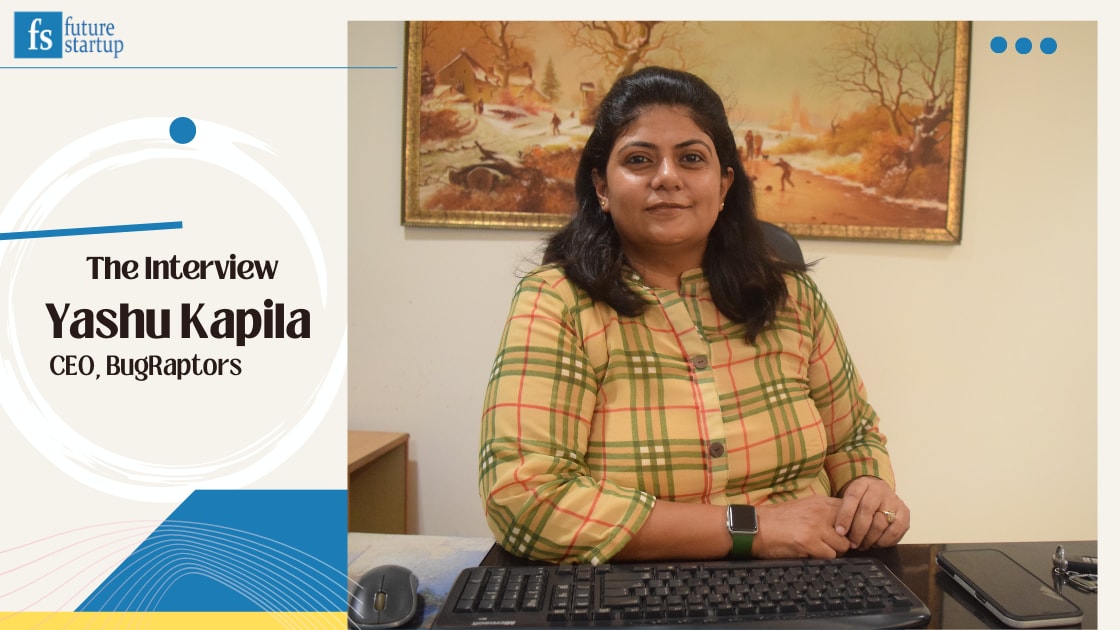
Today she is the founder and CEO of BugRaptors, the software testing business established within Seasia Group in 2016. Her public LinkedIn profile also identifies her as the group’s Chief Quality Officer. The titles come after a long stretch of technical work. To understand her choices as a founder, it helps to start there.
Two years of doing it by hand
Kapila began her career as a quality consultant in 2006. She spent two years working in manual testing before moving into automation. That progression took her into performance testing, application programming interfaces, test data, and the configuration of testing environments. It also brought her into work that involved moving test scripts and choosing tools.
These are the less photogenic ingredients of a technology career. They are also useful training for a future executive. A tool has to suit the job. A plan has to reflect the product. Somebody has to understand why the result on the screen differs from the result everyone expected. Enthusiasm alone rarely supplies the answer.
As her responsibilities widened, Kapila began managing client relationships and working on international projects. Technical decisions acquired a second audience: the people paying for them. She helped teams select testing tools and develop test plans, combining knowledge of the machinery with an understanding of what the customer needed it to accomplish.
- 2006Begins in quality consulting
- Manual → automationBuilds technical and client experience
- 2016Establishes BugRaptors within Seasia Group
A company needs its own test plan
The launch came with an existing organization behind it. BugRaptors emerged as part of Seasia Group, and Kapila credits group CEO R. P. Singh with backing her idea. His support helped get the business established. It gave her a different starting position from the familiar founder story in which every early chapter concerns finding enough money for the next month.
There was still an organization to assemble. The work included establishing operating procedures, testing methods, laboratories, and benchmarks for measuring performance. Hiring people who understood the company’s aims was another early challenge. Funding could support those decisions; it could hardly make them on her behalf.
The resulting business sold testing and quality-assurance services to companies building websites, mobile applications, software, and enterprise systems. Her job involved decisions about strategy and operations, with accountability to the board. The founder who understood test environments now had to help create an environment in which other people could do that work reliably.
By 2022, she described four ways clients could engage the company: fixed-price work, time and materials, managed testing, and staff augmentation. The variety acknowledged a practical reality. Customers arrive with different budgets, available people, and levels of technical support. A testing business needs to make room for those differences before it can begin solving the product’s problems.
The conversation before the code
Ask Kapila about keeping customers satisfied and she returns to listening. Her advice is to establish what a client needs through clear questions, keep communication going during development, and act on feedback. It sounds straightforward. Anyone who has sat through a meeting in which five people agreed to five different things will recognize the amount of work concealed inside it.
Her customer relationships extend beyond the first delivery. She has described trust, honesty, and responsiveness as foundations for continuing work. In her account, the testing company needs to understand a business closely enough to remain useful as its requirements change. A completed project can therefore become the beginning of another conversation.
Her account of internal leadership has a similarly practical emphasis. In 2023, she reported that women occupied 70 percent of BugRaptors’ top leadership positions, including responsibilities in marketing, operations, and quality assurance. The date matters: this is a snapshot she gave then. The responsibilities matter too. They put the discussion of women in technology inside the business’s decision-making structure.
Share of top leadership positions held by women, as Kapila described it at the time.
There is a connection between the two sides of her work. Customers need enough clarity to explain their concerns. Colleagues need enough room to surface a concern before it becomes a delivery problem. For a company paid to notice what could go wrong, making it easy to speak is part of the job.
New tools, experienced hands
Kapila has welcomed automation and AI in testing. She also makes a pointed case for the people using the platforms. In 2021, she argued that experienced testing teams remain essential to making those systems useful. Platforms can accelerate work, improve coverage, and shorten feedback cycles. People still have to understand the product and decide how to test it.
That position fits the service range she describes. BugRaptors handles manual and automated testing, with work on performance, security, mobile applications, and other requirements. The choice depends on the problem. Repeating a test across many data sets presents one kind of task; interpreting an unclear customer requirement presents another. A company offering both needs people able to make the distinction.
Six stages Kapila uses to describe the work
- 01Understand requirements
- 02Plan the tests
- 03Develop test cases
- 04Set up the environment
- 05Execute the tests
- 06Close and review
A process diagram, rather than a measure of time or performance.
Her 2024 plans put more specialized testing for AI, connected devices, and blockchain on the agenda, alongside proprietary automation tools and technology partnerships. She also wanted a stronger international presence. She described scaling the team, investing in training, and adjusting processes as responses to the difficulties of growth. The expansion required attention to the people delivering it.
A stage, a certificate, and the work between
At the Women in Tech Global Conference in 2024, Kapila spoke about adaptability. She used the changing practice of software testing to explain her argument: manual work, automation, new frameworks, earlier testing in development, and the arrival of AI had repeatedly asked the industry to learn again.
Her recommendations were concrete. Keep learning. Seek feedback from peers and junior colleagues. Let teams make decisions. She also acknowledged the obstacles: people can prefer familiar ways of working, resources may be limited, and new circumstances introduce uncertainty. Her talk treated adaptability as something leaders have to practice with others, including when change feels inconvenient.
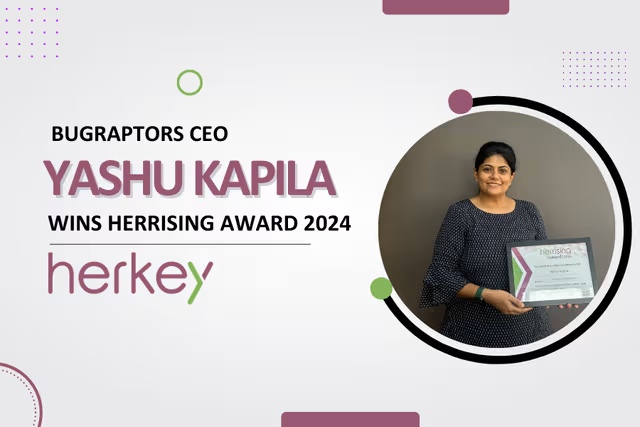
Recognition had begun to give that work a more public face. She received the Indian Achievers’ Award for CEO of the Year in 2023. In October 2024 came the HerRising Award in the Women in Tech/Product category. Both belonged to a career whose earlier chapters were filled with testing assignments and growing managerial responsibility.
The distinctions continued in 2025. She received an honorable mention for QA Innovator of the Year at Test Drive & Awards. Great Companies also included her among its International Women Entrepreneurs award recipients in information technology. Each recognition has its own scope; together they mark the growing visibility of her work.
A September 2026 company announcement brought the focus back to delivery. BugRaptors reported Clutch recognition across automation testing, performance testing, and software testing in India. Kapila credited the engineers and clients behind the milestone. The work she emphasized concerned understanding live-system risks and applying technical care to releases.
Some things refuse to follow the plan
Away from work, Kapila enjoys travel, reading, and spending time with family. She is a mother of two. She also tends a home garden. It is a pleasing detail in the life of someone whose profession involves spotting undesirable behavior: a garden offers ample opportunity to discover that conditions have changed since yesterday.
Her reading recommendations include books about habits, execution, business, and relationships. The interests sit comfortably beside her preference for preparing ahead and dividing a plan into smaller milestones. Her approach to productivity gives attention to intermediate steps, the points at which a large intention becomes something a person can actually do.
“Always showcase integrity”
Yashu Kapila on management
And then there is her advice about the limits of control. After years of creating processes, she still allows for people and circumstances to surprise her. The observation gives her professional story a useful looseness. Preparation matters. So does the willingness to revise a decision when the facts change.
Kapila’s career has required both. She learned to examine software closely, then took on the harder-to-standardize work of building relationships and directing a company. The tools keep changing. The obligation to pay attention remains. For the customers about to press a button and expect something to happen, it is a fairly consequential habit.
Keep the conversation going
Her work, her interviews, and a talk worth watching.