An easy change is a seductive thing. The screen looks better, the demonstration works, and a business team can imagine getting on with its day. Geraint Waters has spent much of his career considering the less photogenic part: what that change might do to everything connected to it. First in investment banking, then at Provar, the software company he co-founded, he has made a business of checking what happens after the good first impression.
His latest version of the problem concerns AI. Adjust a prompt, try an example, admire the improved response. In a recent public post, Waters warned that this familiar shortcut can carry failures into production. An agent might miss an escalation or give a plausible answer that is wrong. His prescription is consistent evaluations before release. The technology is new enough to draw a crowd; the habit he wants to change has been around considerably longer.
A skyline before a software company
There is a quieter entry point to Waters’s story. He grew up in Meols on the Wirral, where he could see Liverpool’s skyline every day. Recently, hearing the city discussed in connection with AI investment brought him back to that view. He wrote about his pride in Liverpool and its football, and his pleasure at seeing attention return to a place he felt had suffered from a lack of investment.
The detail is useful because a professional biography can make a person seem to have emerged fully dressed from an organisation chart. Waters’s connection to Liverpool predates the founder title. His company biography also describes a Liverpool supporter living with his wife and two children in Beckenham, Southeast London. The geography has changed; the allegiance has travelled. Football has a convenient way of refusing to be left behind when everything else fits into a moving van.
The apprenticeship in things that must work
His education and early career took a route through engineering and technology. He studied mechanical engineering at Cardiff University from 1991 to 1994, then computer integrated manufacturing at Cranfield University in 1995 and 1996. The subjects place physical systems and computer-controlled processes in the same early chapter, before the consulting and banking jobs that would give his later business its practical context.
In 1999, Waters joined PwC as an IT consultant. He moved to UBS Investment Bank in 2004, working as a project manager in Prime Services, and then to Barclays in 2009 as Global QA Manager for Equity Derivatives. Those titles locate him in a particular corner of enterprise technology: projects with connected processes, complicated systems and a strong reason to take testing seriously.
Waters’s own account of the period emphasises an API-first approach to testing integrated with the software delivery process. APIs are the interfaces through which systems exchange requests and data. Checking those connections gave teams earlier feedback about quality and helped deliveries move faster. That is the experience he describes bringing to Salesforce. The appeal lay in allowing change to proceed with useful evidence about its consequences.
- 1999PwCIT consulting
- 2004UBSPrime Services
- 2009BarclaysGlobal QA
- 2014ProvarCo-founder
An idea over beers, a business built around change
Provar’s community interview series introduces its beginning as an idea discussed over beers. It also gives Waters the name used around the company: “G”. The informality makes a pleasant counterweight to an enterprise-software biography. A founder can spend his working life discussing release processes and still have a one-letter name. The April 2021 interview catches him explaining the company while he was its CEO.
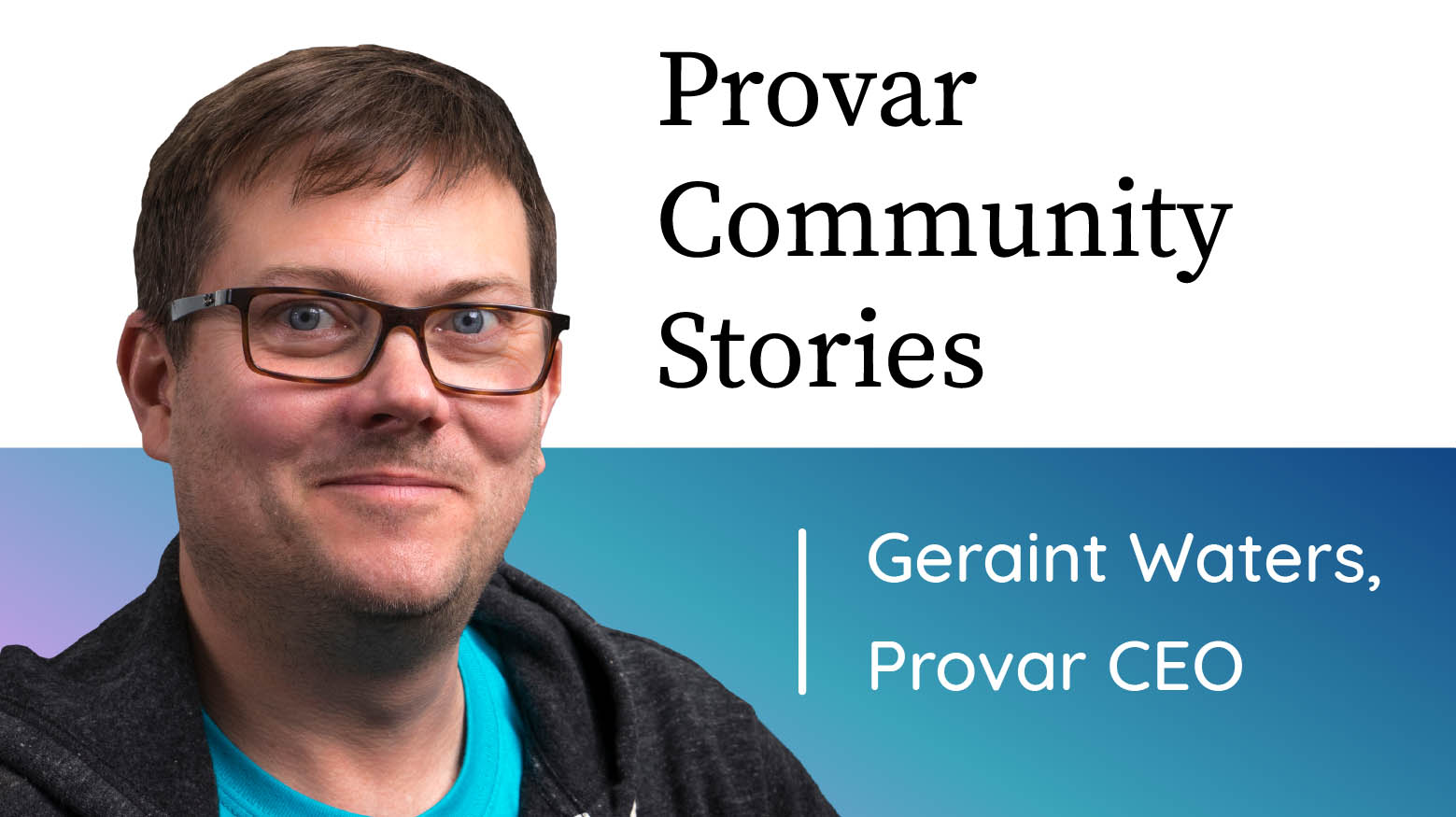
The company’s leadership biography dates its founding to 2014. The problem was specific. Salesforce could give organisations considerable freedom to configure software, while its evolving interface made automated tests difficult to maintain. Waters describes using the platform’s metadata, its information about how things are defined, to help identify elements reliably. A test should remain useful when a platform changes the machinery behind the screen.
In 2021, Provar announced $17 million in Series A funding led by Kennet Partners. By then it had customers internationally and offices in the UK, North America and India. The announced plans were to invest in the platform, expand operations and grow the team. The plans show how far the business had travelled from its early conversation.
Led by Kennet Partners, with plans to invest in the platform and expand the team.
In his conversation with Ben McCarthy about the round, Waters gave a fairly grounded account of the next step. More resources would support the product, customer ideas and the people delivering support. He described expertise, service and usability as connected parts of Provar’s offering. Money could help the team act on ideas it already had. There is something refreshing about a funding conversation in which the product remains recognisable after the cheque arrives.
Making room for people who know the business
Another part of his argument concerns who gets to participate. In a 2022 interview with Swapnil Bhartiya, Waters discussed the meeting of technical and non-technical teams. Salesforce allows people with business knowledge to configure applications. Integrations and deployment still demand specialist skills. His interest was in making those groups work together, rather than expecting one person to know every layer of the system.
He also mentioned Provar’s sponsorship of Supermums, which helps mothers return to work. The detail fits the practical question he was discussing: how people acquire skills and contribute in a platform ecosystem. A low-code tool has little meaning in isolation from the person using it. Someone has to understand the business scenario, construct the check and recognise why the result matters.
“The skill is in putting those pieces together.”
Geraint Waters, on enabling less technical teams to test
That line appears in Provar’s account of the interview. Waters’s advice to teams starting out was to identify the important end-to-end risks in their workflows. It is a sensible discipline: deciding what needs protection before accumulating checks. The satisfying number on a dashboard is useful only if the tests behind it address something the business actually depends on. A crowded checklist has no special talent for choosing the right question.
There is a human counterpart in a public recommendation from former colleague Sydnie Mulcahy. She describes Waters as empathetic, approachable and available for advice, and values his mentorship. It is a colleague’s account, with the limits that implies, but it gives the founder some texture beyond his job history. The name “G” seems less surprising when set beside that description.
His professional connections also include Richard Clark, whom he met in 2013. When Clark returned as Chief Product Officer in 2022, Waters welcomed someone who had helped develop the product from its beginning. The appointment put an early collaborator back into the executive team. A growing company’s story is partly a record of these relationships: people leaving, learning elsewhere and sometimes finding a reason to return.
The founder changes his own job
During Waters’s later years as CEO, the product and distribution kept expanding. Provar Grid launched in July 2023, offering cloud-based planning, scheduling and execution of tests. It addressed the operational work around running them, including the infrastructure teams would otherwise need. The distinction matters in everyday use: designing a good test and making it available when a release needs it are related jobs.
In 2024, ADOC International agreed to distribute Provar in Japan, with sales scheduled to begin on June 1. Waters’s statement focused on testing tools for companies implementing Salesforce. International expansion here meant working through a local partner. For the founder, the concern about dependable releases was becoming a conversation conducted across more markets, with different teams responsible for putting it into practice.
Then, on December 10, 2024, Provar announced that Tony Sumpster would become CEO. Waters had led the transition. He became Chief Evangelist and stayed on the board; Sumpster brought experience that included leading automation company Worksoft. The announcement presented the change as a decision about the company’s longer-term development. It gives Waters’s career an unusual hinge: the founder helping arrange his own succession, while keeping a role in the business.
A title change does not tell us someone’s private feelings. It does change the public account of their work. Waters’s subsequent appearances have put him in front of practitioners discussing testing strategy, changing platforms and AI. Chief Evangelist can sound rather grand for a job concerned with test maintenance. In practice, his calendar supplies the translation: talks, workshops and technical conversations.
The same question, now with AI
At the June 2025 London event, Waters presented on strategic agent testing. He also joined a workshop with Deloitte and Salesforce on Agentforce testing. In October, he participated in a session on maintainable user-interface testing with colleagues including Sukhdeep Gill and Nick Waple. The subjects connect newer AI concerns with the platform-testing work on which Provar was built.
The range extended beyond Salesforce. On March 11, 2026, he spoke to the Manchester D365 and Power Platform User Group about moving Microsoft Dynamics testing from manual work towards automation. A global reseller agreement with Cognizant also put him publicly behind broader enterprise testing collaboration. The systems grow more interconnected, and the original concern follows them into the new room.
In June 2026, Waters’s London talk addressed test debt in AI-assisted development: the risk that delivery accelerates while checking and maintaining tests falls behind. By the autumn, his prompt-change argument made the issue concrete. A single good response offers a narrow view of an agent’s behaviour. Repeating established scenarios after a change gives a team something more useful to compare.
Conceptual sequence based on Waters’s public argument for prompt evaluations.
That brings the story back to the easy change. Waters has worked through different employers, platforms and responsibilities, including the responsibility of giving another person the CEO job. His public argument keeps returning to the consequences beyond the immediate result. The demonstration finishes. Other people still have work to do. A release earns their confidence when someone has taken the trouble to check what reaches them.
Continue the conversation
Interviews, company news and Geraint’s public profiles.