A software team can own a perfectly good test and still dread running it. The test works on one laptop, then sulks on Safari, fails on an older phone, or waits behind a crowded pipeline. LambdaTest made a business of renting teams the browsers and devices they could not reasonably keep on their desks. Its new name, TestMu AI, suggests that the next bottleneck sits one step earlier: someone has to decide what to test, write it down, and keep it alive when the product changes.
- TestMu AI is LambdaTest under a new name, announced in January 2026.
- Its cloud runs web and mobile tests; KaneAI helps teams write them in natural language.
- Existing LambdaTest accounts, scripts and subscriptions carried over at the rebrand.
- The value to measure is usable feedback, not the number of tests an agent can generate.
There is a pleasing irony here. The company’s old name described the work with admirable bluntness. The new one comes from TestMu Conf, its testing community conference. The change gives the company room to talk about agents, planning and diagnosis, but the practical story is less theatrical. Its cloud still supplies browsers, operating systems and real phones. The AI products now sit on that foundation.
First, they built the place where tests run
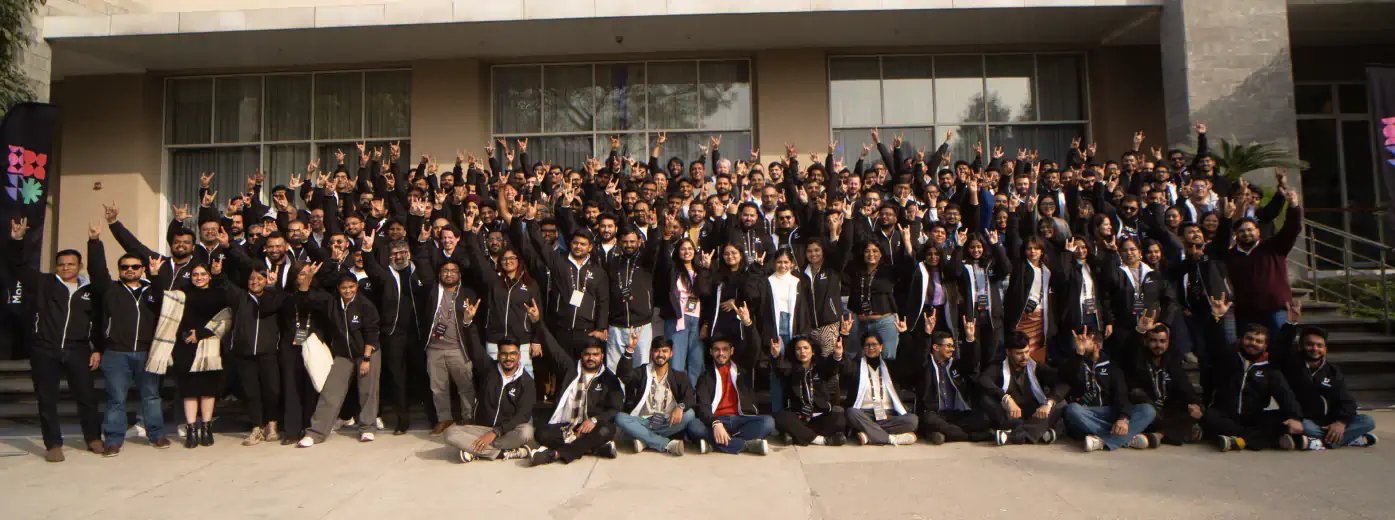
Four co-founders - Asad Khan, Jay Singh, Mayank Bhola and Mudit Singh - built LambdaTest around a familiar engineering nuisance: browser and device combinations multiply faster than a QA team’s budget or patience. A checkout that passes in Chrome may behave differently on an iPhone, a regional configuration, or a slower connection. Renting access to that matrix is easier than owning it. The platform now advertises more than 3,000 browser and operating-system combinations and more than 10,000 real mobile devices. Those are company-reported catalog sizes, not a promise that every combination is available in every plan.
The original answer was execution capacity. Give a developer a remote browser, put automated suites into parallel sessions, capture the results and return evidence to the pipeline. HyperExecute later made the queue itself part of the product: splitting tests, prioritizing jobs, retrying failures and collecting logs. The company markets execution as up to 70 percent faster in certain comparisons. That figure belongs in a pilot, not in a budget forecast; a team’s actual gain depends on suite design, concurrency and the slowness of its application.
Then the test itself became the queue
Better infrastructure exposes a different kind of waiting. Someone still translates a product requirement into a test case. Someone edits selectors after a redesign. Someone reads a failure log to decide whether the application broke or the test did. The company’s answer, KaneAI, launched in 2024: a testing agent that accepts a plain-English objective, drafts steps, runs the flow and helps revise it. Inputs can include tickets, documents and images. Engineers can export tests to established frameworks; the cloud supports Selenium, Playwright, Cypress and Appium.
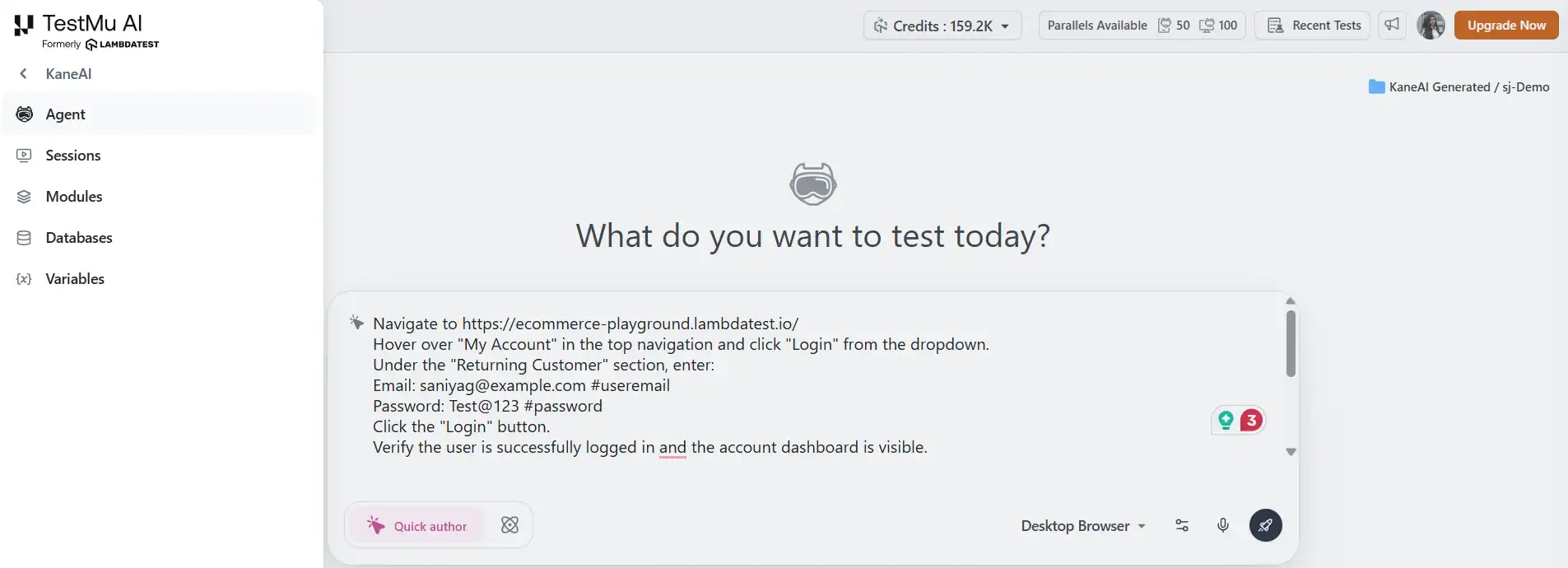
This is the distinctive sequence: intent, executable steps, cloud run, evidence, revision. It is more persuasive than a stand-alone “AI writes tests” pitch because TestMu AI already has the machinery to run those tests across actual environments. Test Manager collects cases and results; SmartUI checks visual changes; accessibility tools test another class of failure. The products form a loop, though teams still need to define the assertion that matters. “The page loaded” is a very cheap substitute for “the customer can finish checkout.”
“For current customers, nothing breaks. Nothing resets.”TestMu AI, on its rebrand
That promise is more commercially important than the fresh logo. On January 12, 2026, LambdaTest became TestMu AI while saying customer accounts, credentials, scripts, integrations and contracts would continue. A testing vendor cannot casually break its own customers’ CI pipelines while selling release confidence. The company’s decision to keep the grid and the old workflows gives the new AI products a real adoption path: try them beside existing tests, then expand if they improve coverage or maintenance time.
The price of letting an agent help
TestMu AI is a subscription software business with several meters. KaneAI’s public Starter plan was listed at $19 per agent each month in September 2026, or $17 per month with annual billing, and includes a monthly credit allowance. Test Manager prices by user; automation and HyperExecute plans price around parallel sessions, with enterprise contracts quoted separately. This matters because a generated test can be inexpensive while the capacity to run it repeatedly across many devices is not. A team should count the whole loop: authoring credits, concurrent runs, real-device access, debugging time and the human review that prevents false confidence.
The 2024 $38 million funding round, led by Avataar Ventures with Qualcomm Ventures participating, was announced as support for KaneAI and the broader AI push. The company said the round brought its announced total to $108 million. Its customer pages name organizations across retail, travel and media, while its own scale claims exceed 18,000 enterprises and two million users. Those figures describe the size of its commercial ambition; they do not tell a buyer whether one more automated test will save a release.

A bot needs a different examiner
TestMu AI has also moved beyond testing conventional screens. Its Agent Testing product targets chatbots and voice assistants, where a response can be grammatical, quick and wrong. The product describes multi-turn conversations, simulated user personas and risk scoring. That is a sensible extension of the testing business: if an application now speaks, a click script alone is an incomplete witness. It also sets a higher bar. Conversational correctness depends on context and judgment, so test scores should be checked against real user failures, not accepted as self-evident truth.
There are plenty of alternatives. BrowserStack and Sauce Labs sell cloud browser and device access. Teams can maintain their own Playwright, Selenium or Appium setup. AI-native QA tools compete for the authoring job. TestMu AI’s wager is that joining authoring to execution, test management and failure analysis inside one cloud reduces handoffs. That is strongest for teams with enough browsers, devices and releases to make those handoffs expensive. A small product with one target environment may find a lean local suite entirely adequate.
The lesson a reader can copy is almost boring, which is why it is useful. Start with one costly user journey. Write down what success means, including the failure you fear. Run the existing script and an agent-authored version on the same environments. Compare time to first reliable result, the number of false alarms and the work required after a UI change. TestMu AI’s story is a reminder that test creation is only a beginning. The customer does not buy more tests. The customer buys a better reason to ship.
Product sizes, customer counts and speed claims above are company-reported. Plan prices are those publicly listed in September 2026.