A regression test is an exercise in suspicion. Change one part of a program, then check whether something elsewhere has quietly stopped working. In a supply-chain case study published by Quarks, that exercise required 320 staff-hours. Manual testing consumed time, release cycles dragged, and a continuous delivery pipeline was missing. The interesting question was how much of that work could become a repeatable system.
Quarks reports bringing the regression effort down to five staff-hours. Read that as a vendor-reported case result, specific to one engagement. Even with that qualification, it offers a useful way into this company: follow the awkward handoff.
- Custom software, quality engineering, cloud delivery and enterprise integrations sit under one roof.
- Customers can buy a defined project, ongoing managed services or additional engineering staff.
- Its own tools now tackle test maintenance, performance testing and post-acquisition data migration.
The five-hour clue
The supply-chain customer, unnamed in the case-study text, served more than 29,200 active customers of its own. Those are the client’s customers, rather than Quarks accounts. For a logistics platform, a defect can travel: from an order to a warehouse to a delivery promise.
Quarks describes a common automation approach spanning web, mobile and APIs, using Selenium, Appium, Rest Assured and TestNG. It organized tests in Azure Test Management and added a GitHub Actions pipeline. The reported outcomes include 95% test coverage, six-times-faster test runs and a ten-minute feedback loop.
The first weak point was the testing process. The intervention joined tools, test organization and release infrastructure. That distinction matters to a buyer: adding developers would not, by itself, have created the missing feedback loop.
Regression effort per cycle. A case result, not a delivery guarantee.
An auction needs more than a bid button
A property-auction engagement reveals another kind of gap. The client’s existing third-party software was generic. Quarks lists missing payment integration, weak digital traceability and absent capabilities needed for government-property bidding. A working interface was only part of the assignment.
The team built a CRM for property details, reserve prices, bid rules and earnest-money deposits, alongside a platform for registration, digital certificates and bidding. The company says the client sold approximately $40 million in property on launch day. That figure measures property transactions, not Quarks revenue or the project’s price.
“The auction portal required navigating a regulatory maze.”
Subodh Kumar · Technology Head
Customer testimonial published by Quarks
Kumar’s testimonial also discusses a content portal and a legacy database migration. The recurring problem is continuity: carry old information, business rules and permissions into a new system without dropping something consequential.
The business between the boxes
Quarks’ service menu runs from product design and application development to quality engineering, Salesforce, data engineering, cybersecurity and cloud operations. It serves sectors including insurance, financial services, retail, healthcare and manufacturing. Its website displays customer logos including CaratLane, Cars24, Physics Wallah and Delhivery; the published engagements and testimonials provide a more useful view of individual assignments.
CaratLane CEO Avnish Anand’s testimonial concerns a mobile site. Cars24 CTO Marut Singh discusses web development and managed quality assurance. These are recognizable buying situations: a retailer needs a usable mobile experience; an engineering organization needs testing capacity without pulling every developer into regression work.
Its market position is an engineering-services partner with reusable tools. A buyer might otherwise hire internally, engage a specialist testing or Salesforce consultancy, or commission a broader digital-engineering firm. Quarks’ proposition is the ability to connect several of those jobs through one engagement.
Turning repeat work into tools
The product lineup makes that proposition more concrete. AutonixQ generates Playwright tests from requirements or user stories and proposes repairs when interface changes break scripts. It connects with Jira and development pipelines. PeakoQ addresses load testing, generating scripts from API collections and tracking response times, throughput and errors.
MergeBridge tackles the mess after an acquisition. It normalizes source data into a common model, maps it into destination systems and sends ambiguous matches or transformation conflicts to people for review. Audit history and quality checks are built into the advertised process.
These tools suggest a direction for the business: package recurring engineering chores so each assignment starts with more than a blank editor. That is an interpretation of the current portfolio. Product pages describe capabilities and targets; buyers should establish what works on their own systems during evaluation.
Choose the commitment before the code
The commercial choices are straightforward. Fixed-scope projects suit work with agreed boundaries. Managed services cover continuing operations and support. Staff augmentation adds skills to an existing team. Quarks also offers global capability center services, including build, operate, transform and transfer arrangements.
AutonixQ and PeakoQ advertise tiered licensing and seven-day evaluations. Paid editions require a pricing conversation. For a prospective customer, the practical step is to define the unit being purchased: a deliverable, ongoing operational responsibility, engineering capacity or software access. Those choices assign different responsibilities when requirements change.
The broader lesson is portable. Measure the current bottleneck, connect the feedback loop, and agree who owns the exceptions. Automation earns its place when the process around it becomes clearer.
People still handle the exceptions
Founder and CEO Vipin Vindal is an IIT Delhi graduate. Quarks’ own origin account dates his founding effort to 2012. Today the company reports more than 800 employees, 400 delivered projects and 225 clients. These are company figures, not audited operating disclosures.
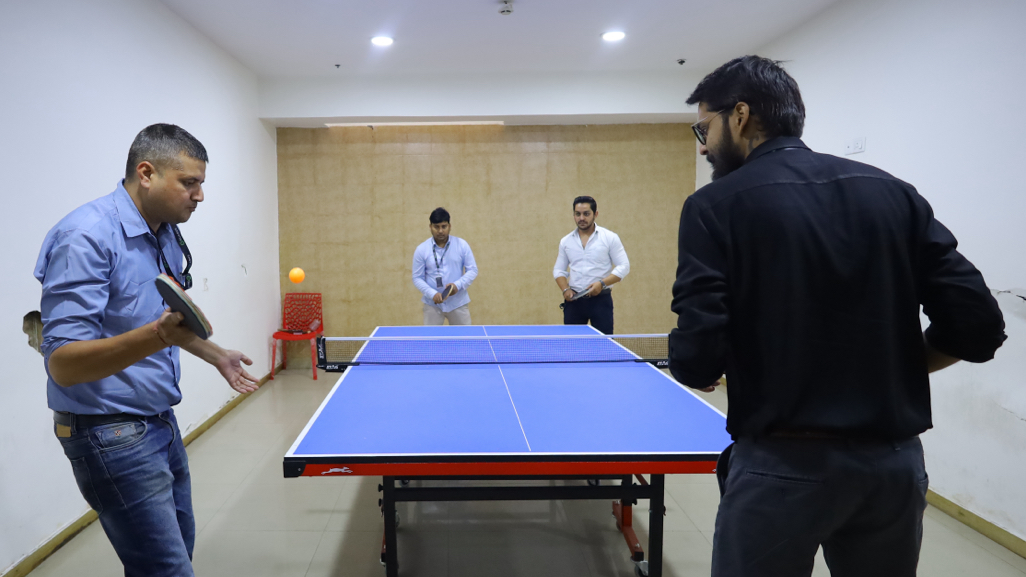
Its careers page advertises flexible hours, meals, transport, retreats and talent development. The workplace gallery supplies a less abstract detail: colleagues gathered around a table-tennis table, tracking a very small, fast-moving problem.
For buyers, the fit depends on access to systems, clear acceptance criteria and someone empowered to resolve business questions. An ambiguous requirement remains ambiguous after outsourcing. Quarks is most interesting where a company can name the awkward crossing - between testing and release, acquired and existing data, or a bid and a valid transaction - and wants help making it dependable.