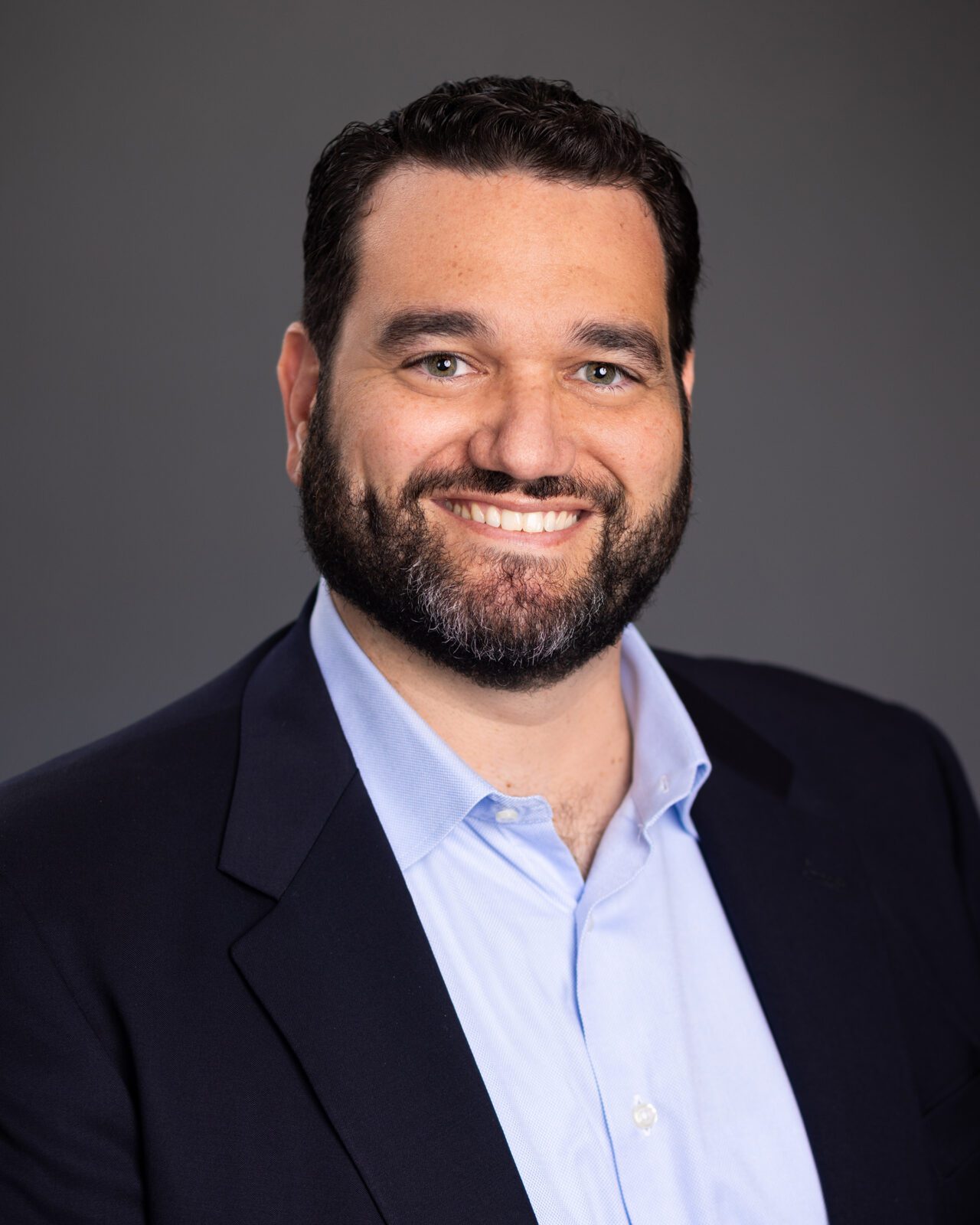
The Data Scientist / Bloom Science
Louis Licamele
He writes code and clinical trials in the same breath. At Bloom Science, that combination is trying to bottle the ketogenic diet.
He writes code and clinical trials in the same breath. At Bloom Science, that combination is trying to bottle the ketogenic diet.
On February 24, 2026, a patient in Australia swallowed the first dose of BL-001. It looked like nothing - a capsule of living bacteria. Behind that capsule sat two decades of data work, much of it run by a man whose first degree was in computer science, not medicine. Louis Licamele designed the machinery that decides whether the thing inside actually works.
Licamele is Chief Development Officer and EVP of Clinical and Data Science at Bloom Science, a San Diego biotech chasing an unusual idea: that the metabolic benefits of the ketogenic diet can be delivered by the gut microbiome, packaged as an oral drug, taken without giving up a single meal. BL-001 is a live biotherapeutic - bacteria engineered into medicine - being developed for both obesity and severe childhood epilepsies.
Most biotech founders come up through the lab bench or the boardroom. Licamele came up through the database. He is the person in the room who asks what the numbers can actually prove, and then builds the study that answers.
Chief Development Officer at Bloom Science. Founding team member. Runs biostatistics, clinical data management, and data-driven trial design for a first-in-class microbiome drug.
President of The Licamele Group, advising healthcare companies on data science, AI, machine learning, and regulatory strategy.
The path started at Georgetown University with a double major in biology and computer science - a hint at everything that followed. He went to the University of Maryland for a master's and a PhD in computer science, working as a graduate research assistant and publishing with names that carry weight in data mining, including Lise Getoor and the interface pioneer Ben Shneiderman. His Google Scholar account is still verified with a cs.umd.edu address. The wet lab was never his home. The dataset was.
His first big industry chapter came at Vanda Pharmaceuticals, where he served as Vice President of Informatics. There he worked at the crossroads of genetics and clinical outcomes. His most-cited papers come from this era: whole-genome association studies tying gene variants to how patients respond to the antipsychotic iloperidone, and to QT prolongation on the drug. He also contributed to the SET and RESET Phase 3 program for tasimelteon, a first-in-class treatment that helped totally blind people whose internal clocks drift out of sync with the 24-hour day. That work reads like a thesis statement for his career: use data to find the patients a drug can actually help.
Next came REGENXBIO, a gene-therapy company, where he was Vice President of Biometrics. He led biostatistics and clinical data management and pushed on clinical innovation - the unglamorous plumbing that determines whether a trial produces a clean answer or an expensive shrug. Along the way he built methods for data-driven patient identification, using analytics to solve one of the quietest, hardest problems in medicine: finding the right people to enroll.
Then Bloom Science, and a founding-team seat. The company's thesis - that the gut-brain axis and the microbiome can be engineered into therapy - needs exactly his kind of rigor. Microbiome science has a long history of dramatic claims and thin data. Licamele's job is to make sure Bloom's claims come with the receipts.
Citation counts, Google Scholar. Bars scaled to top paper.
Lise Getoor • Ben Shneiderman • Mihael Polymeropoulos • Steven Lockley • Mustafa Bilgic - a roster that straddles machine learning and clinical medicine.
The obesity market is dominated by GLP-1 drugs. BL-001 aims at the same problem from a different angle - the gut - promising durable weight loss without the diet. Whether that holds up is, in the end, a data question.
Think of the ketogenic diet as a set of instructions the body follows when it burns fat instead of sugar. Those instructions produce effects that reach well beyond the waistline - they have long been used to calm severe, drug-resistant epilepsy. The catch is that the diet is brutally hard to keep.
BL-001 is an oral live biotherapeutic product - a defined preparation of living microbes - designed to reproduce key metabolic effects of that diet without the dietary restriction. Bloom is developing it on two fronts at once: metabolic, for obesity, and neurological, for developmental and epileptic encephalopathies including Dravet syndrome. One capsule, two very different battlefields, both routed through the gut-brain axis.
Licamele's fingerprints are on the part you cannot see in a press release - the trial design, the endpoints, the statistics that turn a hopeful idea into a defensible result. In the completed Phase 1 study, the reported weight loss was durable and statistically significant. The Phase 1b now under way will enroll up to 48 adults across two Australian sites over twelve weeks.
Obesity on the metabolic side; developmental and epileptic encephalopathies on the neurological side. The connective tissue is the microbiome.
Bloom frames BL-001 as a differentiated approach that works through the gut rather than the GLP-1 pathway behind today's blockbuster weight-loss drugs.
Somewhere in Australia, a trial is running. Its answer will not come from a pitch deck or a press release. It will come from a spreadsheet, a statistical plan, and a person who has spent twenty years making sure the numbers cannot lie.