Louis Beryl needed $8,000 to get to Wall Street. He had graduated from Princeton in 2003 and was heading to Morgan Stanley to trade energy derivatives. His employer would reimburse the move to New York. First, though, he had to pay for it. A thin credit history made a bank loan difficult. Princeton’s financial aid office lent him the money instead. He paid it back six months after graduation. The future had arrived on schedule; the credit system had wanted a longer record of the past.
Six years later, the problem returned with better credentials attached. Beryl was going to Harvard for graduate study. He had worked, saved and paid his bills. Private lenders still wanted expensive terms and his mother’s signature. She ultimately helped through her home equity. For a person trained to examine financial decisions, it was an unusually personal case study. The résumé said one thing. The loan application seemed to hear another.
The bank preferred his mother
There is a particular indignity in being sophisticated enough to understand a financial product and insufficiently established to qualify for it. Beryl’s frustration supplied the origin of Earnest, which he co-founded with Benjamin Hutchinson in 2013. He wanted a lender to examine more of the applicant’s financial life: the habits, resources and circumstances that could disappear inside a conventional assessment.
The distinction mattered. Someone who had managed money carefully could have relatively little borrowing history. An application organized around previous debt might give that person few opportunities to demonstrate anything else. Beryl saw room for a different conversation. The company would ask for more information and try to make that information useful.
His own case came with advantages, including an education and family help that many borrowers lack. That makes the origin more specific than a universal tale of exclusion. He understood a particular kind of mismatch: a borrower with promising prospects who was awkward to evaluate using the usual signals. Earnest began by pursuing people it considered creditworthy and underserved by traditional banks.
A different set of questions
Beryl’s education brought several ways of looking at the problem. At Princeton, he studied operations research and financial engineering. At Harvard, he completed an MBA and a master’s in public policy in 2012. Between the mathematics, the management and the policy, a loan could be examined as a calculation, a product and an institutional choice. His career would keep moving among those perspectives.
He was already trying to turn ideas into companies. A 2012 Harvard Kennedy School account placed him at the university’s innovation lab working on SolidEnergy, a battery venture attracting corporate interest. Batteries and student loans make an unlikely pair on a business card. Both, however, required carrying an idea beyond its promising explanation and into something another party would support.
At Andreessen Horowitz, his work included internal data science: studying companies, their teams and how resource needs changed as they grew. He also examined financial technology investments. This was useful preparation for a founder who would soon need to make hiring decisions as well as lending decisions. Understanding a model does not automatically supply the people required to run it.
Earnest launched publicly with personal loans in 2014 and introduced student loan refinancing in January 2015. Its early approach drew on information including income, savings, education and employment alongside conventional credit information. Linked financial accounts could supply a more detailed picture of how money moved through someone’s life. The application asked for trust while proposing a different way to extend it.
A conceptual illustration of Earnest’s early approach, not a current eligibility guide or a claim that every applicant qualified.
The money behind the money
A more accommodating application still needs a business behind it. Lending requires money to fund loans, people to evaluate them and a way to keep doing both. By November 2015, Earnest announced $275 million in financing. The components tell the story better than the combined figure: $75 million in Series B equity, led by Battery Ventures, and $200 million in institutional lending capital from New York Life and others.
The equity supported the company’s expansion, including technology and engineering. The lending capital helped fund customers’ loans. It is an essential distinction when reading the history of a financial startup. Money raised to build the machinery and money supplied for the machinery to distribute have different jobs, however comfortably they fit in the same headline.
$75mCompany equity
Led by Battery Ventures
$200mLending capital
New York Life and others
Beryl was cautious about treating a funding round as an achievement in itself. In January 2016, he emphasized the work still required to satisfy customers. His language was markedly less festive than the customary financing announcement. A large balance in the company account could buy an opportunity. It could not perform the work.
“$75 million in funding is just the opportunity to build something great.”
Louis Beryl / January 2016
He also extended the company’s obligations beyond its office. Partners and families, he argued, shared the demands of startup life. The people accepting those demands were part of the undertaking too. That is a more crowded picture of entrepreneurship than the founder alone at a desk, and a more plausible one. Long hours have a way of appearing on several people’s calendars.
A sale with another chapter
On October 4, 2017, Navient announced an agreement to acquire Earnest for $155 million in cash. The buyer expected Earnest to originate nearly $1 billion in student loan refinancing that year. Beryl described the combination as a way to extend the company’s impact using Navient’s reach and resources. The announcement said the founders would continue leading the business under a distinct brand.
The transaction closed in November. It joined a young lender’s technology and customer acquisition capabilities to a larger institution’s financial resources. S&P Global estimated that Earnest had originated nearly $1.9 billion in loans through the second quarter of 2017. Whatever the early application had begun as, it now sat inside an operating business with substantial financing needs.
The promised continuity did not last for Beryl. Navient terminated his employment on January 24, 2018. He challenged the handling of his employment and severance arrangements. A jury later found that Navient lacked cause under the applicable terms. In April 2023, the district court awarded $920,666.33 in severance-plan benefits and waiting-time penalties. Appeals followed. The sale and the departure belong to different chapters, even when a short biography squeezes them into one line.
That history gives his earlier caution about success some weight. An acquisition can be a completed transaction while the relationships and obligations around it remain unsettled. Beryl had built a company to improve the way an institution understood an individual. After the sale, he was arguing over what another institution owed him under its agreements.
The businesses behind businesses
He continued working with Hutchinson. Their next company, Rocketplace, initially appeared as a professional-services marketplace. In his Product Hunt introduction, Beryl described the recurring requests he received for recommendations: a design firm, developers, someone to help with a launch. A founder could have a wide network and still struggle to compare the names that came back.
It was an appealingly ordinary problem. Starting a company quickly creates a shopping list of things its founders cannot do alone. Recommendations help, but they are difficult to calibrate. Rocketplace proposed a more organized way to find outside firms. Beryl was applying his attention to another decision in which useful information arrived unevenly.
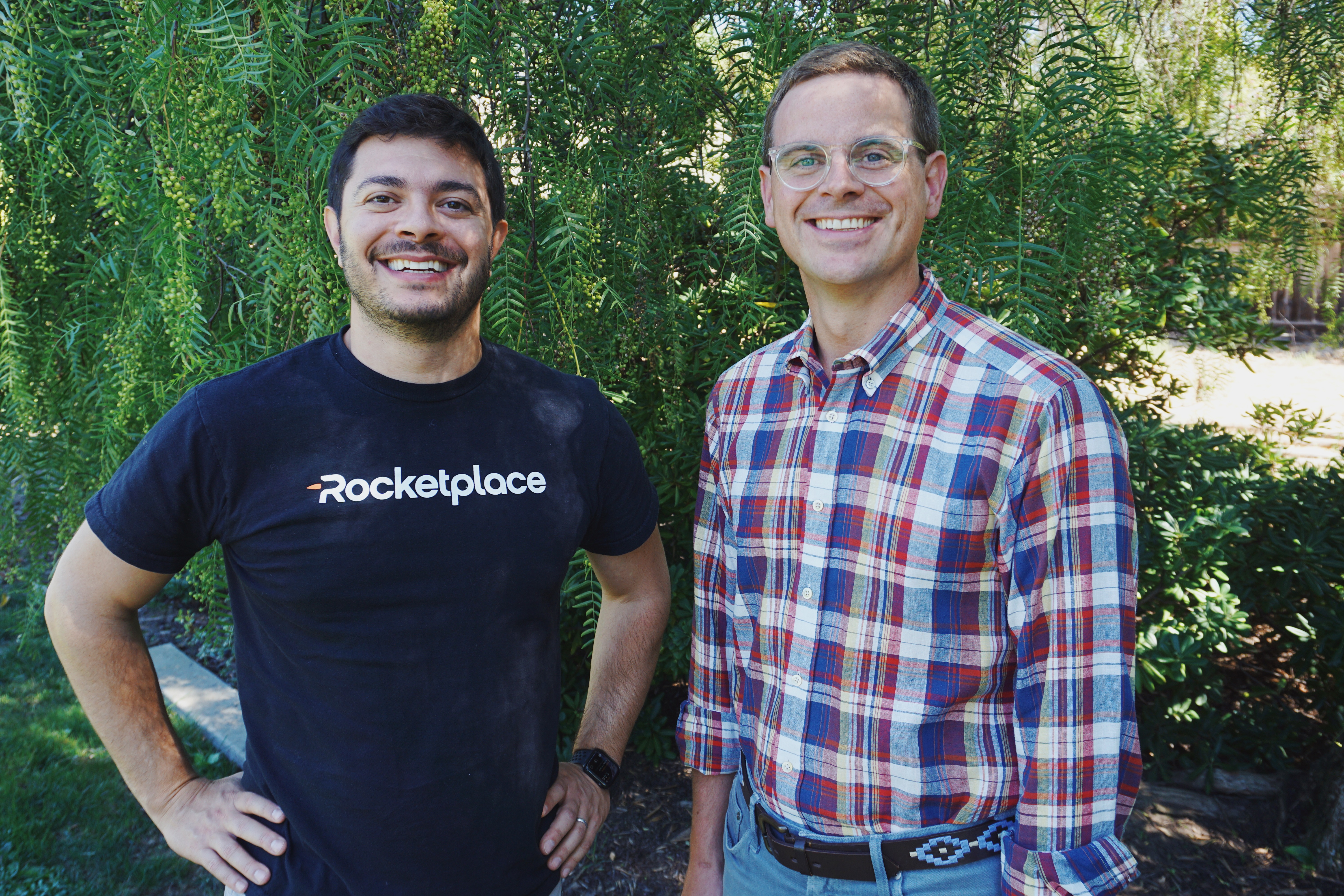
By August 2022, Rocketplace was pursuing crypto asset management and had raised a $9 million seed round led by Launchpad Capital. Its plans included fund distribution, alongside commission-free token trading. The same name now belonged to a substantially different proposition. That change is part of the record; a founder’s career rarely follows the clean route that a finished résumé suggests.
Beryl also hosted The Startup Stack, talking with people who supplied services and expertise to young companies. A 2021 conversation with AE Studio’s Greg Buckner ranged through agency selection and product building. It suited someone who had spent time studying teams, assembling them and seeking help from beyond them. The supporting work had become a subject in its own right.
Back on the other side of the table
Today, Four Cities Capital lists Beryl as a general partner, alongside George Davies and Hutchinson. The collaboration that began with Earnest has continued into investment work. His public career now includes both asking institutions to support a venture and helping decide which ventures should receive support.
He had written about that relationship years earlier. In a 2014 essay, he advised founders to consider an investor’s fit and availability, rather than relying on the prestige of a firm’s name. He also argued for investing in the company once funding made it possible. The advice reflects an operator’s concern with the next practical requirement: who has time, what is missing and what can be done about it.
There are quieter details beside the transactions. Princeton lists him among its Outdoor Action leaders. His personal profile calls him a technology enthusiast, a father and a foodie. They are brief reminders that the person occupied more settings than a boardroom, and that the interests behind a career need not all come with a financing announcement.
The line from the $8,000 relocation loan to venture investing contains several turns, a sale and a dispute. It also contains a recurring act of judgment. Someone has an incomplete record and a proposed future. Someone else controls the resources. Beryl’s first experience was asking to be understood. Much of his working life has concerned what the person across the table should ask next.
Follow the thread
Public profiles, conversations and further reading.