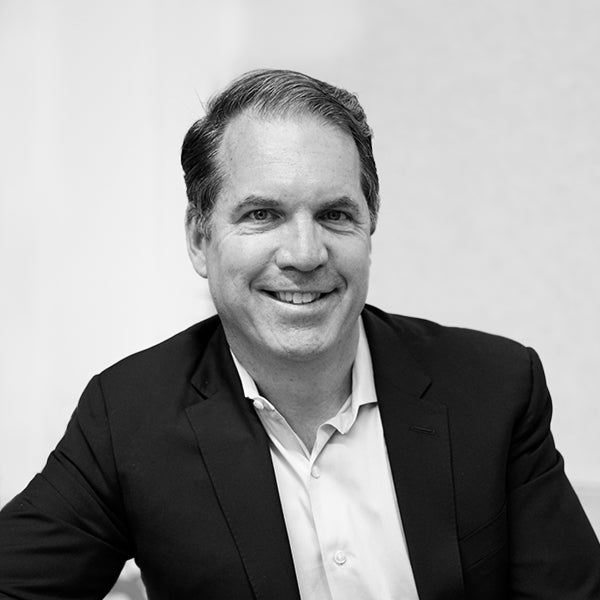
Nasdaq Private Market · Chief Executive
Tom Callahan
He is building a stock market for companies that have not gone public - and may never need to.
He is building a stock market for companies that have not gone public - and may never need to.
Twenty years ago there were 8,000 public companies. Today there are about 3,000. The money did not vanish. It went private.
Tom Callahan runs the market for stock you cannot buy at your brokerage. As CEO of Nasdaq Private Market, he sits on top of a platform that has moved roughly $40 billion in shares of companies that have not held an IPO - the late-stage names every investor wants and almost no one can touch.
His pitch is disarmingly unglamorous. The private market, he likes to say, looks like the bond market in 1970: enormous, essential, and running on infrastructure that barely exists. No central price. No clean data. Trades stitched together by lawyers and spreadsheets. To most people that sounds like a problem. To Callahan, who has spent three decades building exchanges and trading desks, it sounds like the whole opportunity.
He calls it a four-trillion-dollar asset class hiding in plain sight - four times the size of the crypto market, roughly the size of U.S. municipal bonds. And he is convinced the plumbing he is laying now will matter the way the plumbing of public markets mattered a century ago.
The bet underneath all of it: companies are staying private longer, employees and early investors still want to cash out, and the old answer - wait years for an IPO - no longer holds. Callahan thinks the tender offer is quietly becoming the new exit. NPM is the venue where that happens.
It's a four trillion dollar asset class hiding in plain sight - four times the size of the crypto market and about the same size as the U.S. municipal bond market.Tom Callahan, on the private market
It looks like the bond market in 1970, or maybe the public equity markets in 1920 - the infrastructure is primitive and there's no data.Tom Callahan
U.S. publicly traded companies. Callahan's shorthand for why capital migrated private. (Approximate figures cited in interviews.)
For decades the deal was simple: join a startup, take options, and wait for the IPO to turn paper into money. The wait kept getting longer. Companies that once went public in four years now stay private for a decade or more, and a generation of employees has been left holding shares they cannot sell.
Callahan's answer is the tender offer - a company-sponsored window where employees and early backers sell a slice of their holdings to incoming investors, at a set price, on a regulated venue. NPM runs the auction, the matching, the settlement, and the paperwork that used to take months. He told Axios in 2025 that tender activity is on track to overtake IPO volume, as late-stage companies pick structured liquidity over the public spotlight.
The part Callahan returns to most is information. Public markets drown in it; private markets starve. There is no ticker for a company that has not listed, no closing price, often no agreed valuation between funding rounds. NPM's longer game is to become the source of that missing data - transparency, price discovery, and analytics for a corner of finance that has run on rumor and relationships.
Transparency, liquidity, efficiency. He has repeated the three words since the day he joined. They are less a slogan than a description of everything the private market currently lacks.
Three eras of Wall Street, one habit: show up where markets get built.
I am thrilled and honored to be joining NPM at this exciting growth phase as we continue to help private companies deliver transparency, liquidity, and efficiency.
As a global platform, NPM is helping to bring much-needed innovation and development to the fast-growing but complex private market ecosystem.
Public markets are shrinking and private companies are growing.
It looks like the bond market in 1970 - the infrastructure is primitive and there's no data.
He has run markets across three eras of Wall Street: prime brokerage and money markets at Merrill, a futures exchange at NYSE, and a $700B cash desk at BlackRock.
His favorite analogy for today's private market is a 55-year-old bond market. He treats primitive infrastructure as the point, not the problem.
NPM was incubated inside Nasdaq and spun out independent the year before he arrived - backed by Citi, Goldman, Morgan Stanley, and Allen & Company.
Sources: NPM Leadership · GlobeNewswire (2022) · FIA MarketVoice · Axios · Markets Media