Open the refrigerator at Raylu's office in Midtown Manhattan and you will find a single beer nobody is allowed to drink. The rule is simple. The day the company collapses is the day the three founders crack it open and toast the thing they built. Until then, it sits there cold and untouched, a small dare against failure and a reminder that the friendship comes first.
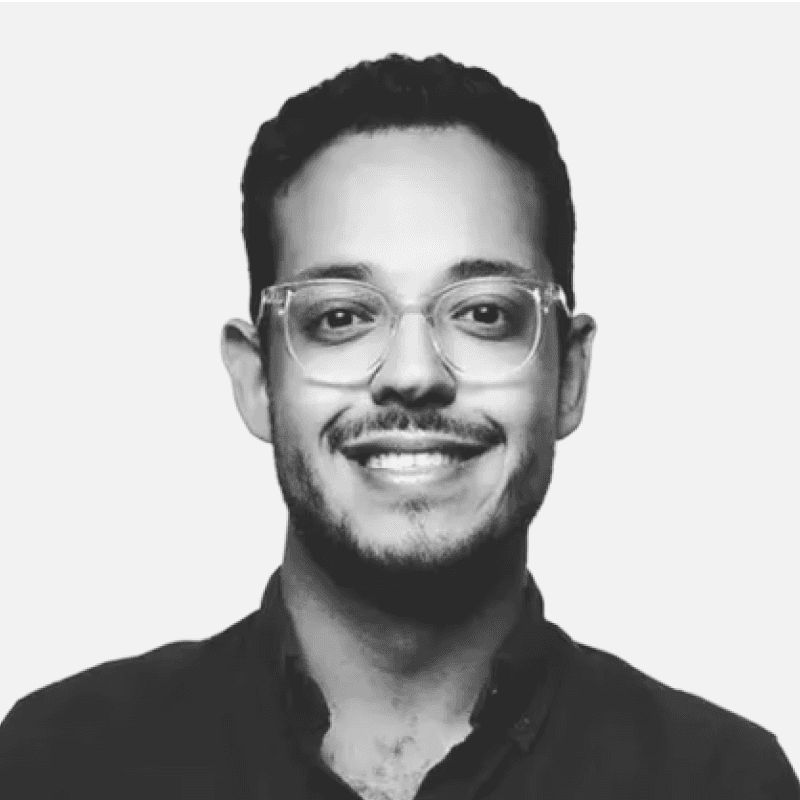
The man who keeps that beer on ice is Ali Dastjerdi, co-founder and chief executive of Raylu, an AI company that has quietly become the sourcing brain behind a chunk of private markets. The pitch fits on a napkin: type in an investment thesis, and Raylu hands back a map of every company that fits, a dossier on each one, and a draft email to the founder. Work that used to eat an analyst's week now takes minutes. More than 45 funds, together steering north of $500 billion, run on it.
What makes the story land is where Ali sat before he built it. He was on the other side of the table. From 2019 to 2022 he was an investor at Insight Partners, one of the most active growth-stage firms on earth, writing checks into data, machine-learning tooling, security, fintech and vertical software. He had a front-row seat to companies like Weights & Biases, Anjuna and ZenGo. He watched how the best investors moved through fast markets, and more usefully, he watched where they got stuck.
Smart people were spending their days aggregating and synthesizing data. He decided that was a job for a machine.
The stuck part was always the same. The brilliant, expensive, highly caffeinated people he worked alongside were spending enormous slices of their week on grunt work: pulling lists, copying numbers into spreadsheets, googling founders, stitching together a picture of a market one tab at a time. The judgment was human. The drudgery in front of the judgment was not. GPT-3 arrived right around then, and Ali could see the shape of what came next.
Three friends, one company
Raylu is not a solo-founder story dressed up with a team. It is, almost literally, three best friends. Ali met Nathan Ondracek in 2015 when the two were assigned as freshman roommates at Harvard. Nathan went on to engineer at Amazon Web Services, where he met Sam Ilkka and the two became roommates again, this time in Seattle. In 2022 all three walked away from stable, well-paid jobs to build Raylu together. Ali took CEO, Nathan took CTO, Sam took COO.
That much shared history changes how a startup argues. Ali has described the founder dynamic as something closer to siblings: the disagreements get loud, and then they are over, with no residue. The hard part, he admits, is the toggle. Switching from friend to co-founder and back again, sometimes inside a single meeting, does not come with a manual. Nathan puts the whole philosophy in five words. Nothing works if the people don't work.
It is a tidy summary of why the beer exists. The company is the bet. The friendship is the thing being protected.
Deal Engineering, and the war on hallucination
Raylu calls its approach Deal Engineering, which is a deliberately unglamorous name for something investors find a little magical. Feed it a thesis and it builds a custom market map, generates roughly 72 data points per target company, scores fit, and drafts outreach that actually gets answered. The company claims research that runs 1000 times deeper than a stock chatbot at 97 percent accuracy, drawing from more than 40,000 sources: SEC filings, patent registries, conference attendee lists, trade publications, industry forums. The database covers 57 million-plus companies.
Ali is unusually willing to talk about the part of AI that should scare anyone selling it into finance. In an essay titled "The Real Cost of Hallucination in Financial AI," he treats a confidently wrong answer not as a quirk to apologize for but as the central risk of the entire category. When the output feeds a multi-million dollar decision, a plausible fabrication is worse than no answer at all. Building trust, in his telling, is not a feature you bolt on at the end. It is the product.
"See what others will see, before they see it."
That line is the whole company in seven words. Raylu is not trying to replace the investor's gut. It is trying to get the right twelve companies in front of that gut before a competing fund has even finished pulling the list. In a market where the best deals are won by whoever shows up first with a credible point of view, a head start measured in days is worth real money.
The customer who became the boss
The cleanest evidence that the thing works showed up in the cap table. HighlandX, the firm that led Raylu's $8 million Series A in December 2025, was a Raylu user before it was a Raylu investor. The fund tried the product, kept using it, and then decided to lead the round. Alongside that Series A, Ali revealed a previously quiet $4 million seed led by Conversion Capital and Unusual Ventures, with angels including Dropbox co-founder Arash Ferdowsi, Algorithmia and DataRobot founder Diego Oppenheimer, and Pylon's Trent Hedge. Total raised: $12 million.
The money has a job. More engineers, more product, and a heavy investment in the enterprise-grade plumbing that finance demands before it trusts a young company with its deal flow: security, compliance, SOC 2, the unglamorous scaffolding that turns a clever tool into infrastructure.
Before all of it
Ali's instinct for running things showed up early. At Harvard he studied computer science, statistics and machine learning, and served as president of Harvard Student Agencies, billed as the largest student-run business in the world. Long before he was managing a venture-backed startup, he was managing a sprawling operation staffed entirely by undergraduates. The throughline from that job to this one is obvious in hindsight: someone who likes systems, likes people, and likes turning chaos into something that runs.
His advice for would-be founders carries the fingerprints of someone who has watched a lot of companies up close and built one himself. Do not fall in love with your first idea. Hold it loosely as the market shifts. And do not start a company simply because everyone around you is doing it, a caution his co-founder Sam adds for good measure. Coming from three people who bet their friendship on a single unopened beer, it reads less like a platitude and more like a house rule.
For now the beer stays cold. The fridge hums. And the company that started as a roommate's hunch about wasted hours keeps booking meetings nobody else saw coming.
#ai-for-private-equity
#deal-sourcing
#raylu
#fintech
#founder