Lisa Nichols’s first business had a supply-chain problem. The supply belonged to someone else. At seven, growing up in rural Kentucky, she admired the flowers in her neighbors’ garden, picked their yellow jonquils, added straight pins, and sold the resulting corsages for a quarter apiece. She remembers being rather pleased with the enterprise. Her father was less impressed. He sent her back to the neighbors to apologize.
It is a compact beginning for someone who would spend decades balancing the appeal of a business opportunity against the obligations that come with it. There was demand. There was initiative. There was also the inconvenient matter of whose garden she had emptied. A margin can look lovely when someone else has supplied the inventory.
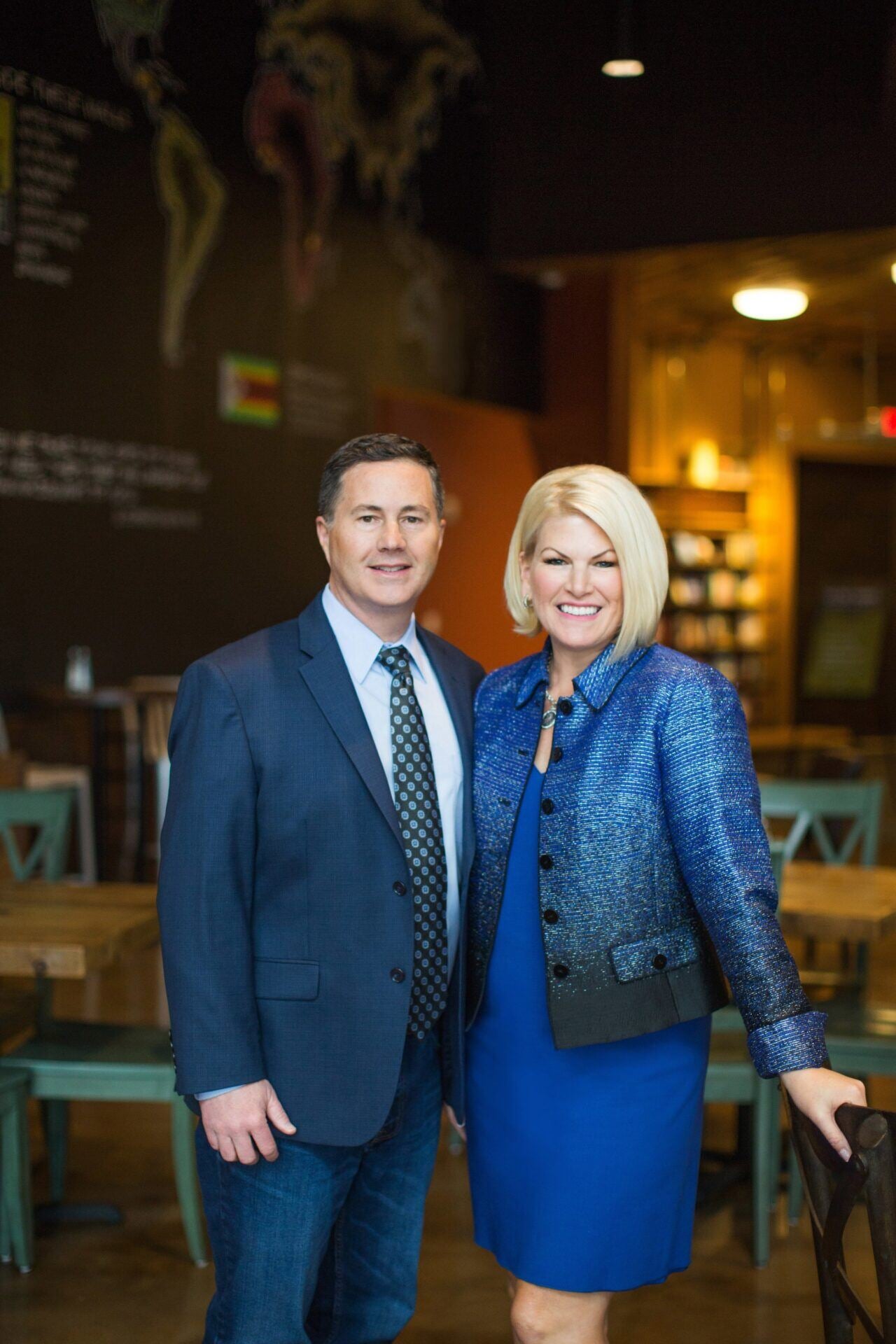
Today, Nichols is the co-founder and CEO of Technology Partners in Chesterfield, Missouri. She and her husband, Greg, started the company in 1994. She is also an author and the host of Something Extra, a leadership podcast. Across those jobs, she keeps returning to people’s strengths and the responsibilities of the person in charge. The flower story makes that interest feel less abstract. Long before there was an executive title, there was a knock on a neighbor’s door.
A two-year stop that became a life
Nichols was born in Paducah, Kentucky, and graduated from Murray State University. Her degree was in accounting. She and Greg had known each other since childhood, growing up around the same country church. They became high-school sweethearts and stayed together through college. Their shared history predates both the marriage and the company by a comfortable distance.
McDonnell Douglas recruited them both to St. Louis. Lisa worked in corporate accounting and internal audit; Greg was a software engineer. She later moved into sales at Ceridian. The combination gave her experience with both the arithmetic of a business and the conversation required to persuade someone to buy from it. By the time they became founders, each had spent roughly a decade in large companies.
The move was initially supposed to be temporary. They imagined a couple of years in St. Louis, then perhaps somewhere else. Instead, they put down roots and raised their family there. That small revision in the plan would eventually become a business employing hundreds of people. The proposed stopover acquired a payroll.
Their corporate years supplied training they continued to value. There is an appealing absence of the instant-founder myth here. Nichols learned inside established organizations, changed functions, and brought that experience into an enterprise of her own. The decision to start was a change in who carried the responsibility, with useful preparation already behind her.
- 1994Lisa and Greg co-found
Technology Partners - 2018Something Extra
goes on air - 2025Hundreds of conversations
become a book
Two founders, one long conversation
One early step toward working together came when Greg developed software as a side project and asked Lisa to help market it. He had a product; she knew sales. Technology Partners followed in 1994, combining their different skills in a business that would become known for IT staffing and technology services.
The founding date sat in a busy family calendar. Their son, Jordan, arrived in 1992, their daughter Paige in 1993, the company in 1994, and their youngest daughter, Ally, in 1995. Nichols has joked about having four babies in four years. The company was the one with invoices.
Her initial plan was to work three days a week. That soon became five, while Greg combined consulting work with the demands of building the business. These are useful details because they restore the logistics to a story that might otherwise sound inevitable. A shared vision still needs someone to make the next call and find enough hours in the day.
The partnership continued as the company grew. In 2021, Technology Partners recorded $58.5 million in revenue and more than 450 employees. Nichols has described the pleasure of working toward a common goal with Greg and the satisfaction of extending their impact beyond their family. The figures belong to that year; the joint work has lasted much longer.
The money had to make sense for everyone
Technology Partners built its staffing proposition around a transparent margin. In a business connecting technical specialists with clients, the intermediary’s share of the money was something the founders chose to make visible. The stated aim was to offer value to clients while supporting consultant compensation and career control.
That model gives a concrete meaning to Nichols’s emphasis on relationships. A consultant and a client both have to find a reason to continue. The firm sits between them, depending on the quality of their experience together. Transparency puts part of that relationship into terms people can inspect.
By the end of 2013, the business had nearly $41 million in revenue. Its clients included Monsanto and MasterCard International, and its work had expanded from staffing into broader technology solutions. Nichols explained the approach in terms of accepting a lower margin and making the business work through volume and a wider range of services.
The numbers show the scale the idea reached. They also expose the operating question beneath it: how do you keep the arrangement useful as the business grows? A founder can personally know the people in a small firm. A larger organization needs practices that carry the same attention beyond the founders’ own conversations.
Technology Partners revenue, alongside a reported team of more than 450 employees.
The question that became a microphone
Something Extra began in 2018. Its inspiration was Ally, whose kindness, joy, and ability to connect with people helped shape her mother’s interest in the distinctive strengths each person brings. Nichols took that curiosity into conversations with leaders from business, education, technology, sport, and nonprofit organizations.
The format gave an operating executive a regular reason to listen. Guests arrived with different careers and experiences; the recurring subject was what had shaped the way they influenced others. One conversation could examine collaboration, another purpose, another the decisions behind a change of direction. The questions gave those differences room to emerge.
In January 2025, for example, Nichols spoke with former Procter & Gamble executive Tom Muccio about relationship building and collaboration. They already had a connection: they had spent three years in the same Spiritual Leadership Institute cohort through CEO Forum. Her network includes people she has learned alongside as well as people she interviews.
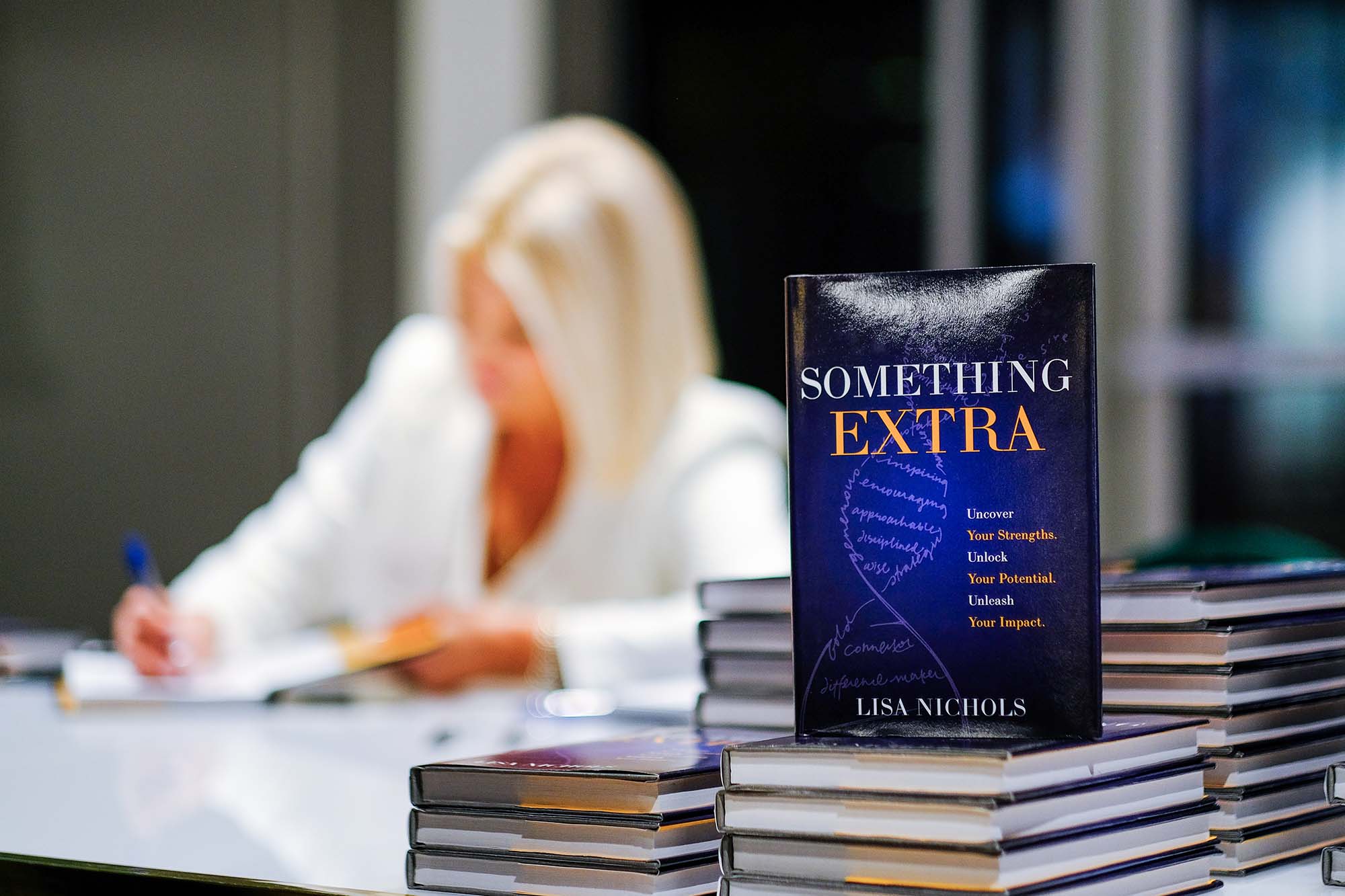
The podcast eventually fed a book. Something Extra: Uncover Your Strengths. Unlock Your Potential. Unleash Your Impact. was released on September 30, 2025. It brought together insights from more than 300 interviews, with reflection questions and exercises addressing qualities such as humility, resilience, generosity, and joy.
Greg wrote the foreword. After all those years of sharing a household and a company, he had another assignment: introduce his wife’s work to the reader. The detail suits a career in which professional and family stories keep meeting. Ally helped inspire the question. Lisa kept asking it. Greg supplied the opening pages.
Culture happens on an ordinary Thursday
Nichols’s stated mission is to leave people better than she finds them. It is a generous ambition, and one that becomes interesting when it meets the routine machinery of work. Recognition, professional development, and the way colleagues acknowledge each other offer more frequent tests than an annual speech.
A 2021 account of Technology Partners’ involvement with the St. Louis Mosaic Project described internal “High Fives” and Nichols’s role in highlighting employee and leadership diversity. The company also supported the project’s international spouse and mentoring programs. Those activities connected the workplace with the experience of people building a life in the region.
Her public thank-you to the company’s HR team had a more domestic texture. She enthusiastically showed off an employee jacket, its pockets, and a roomy bag, crediting the people who had selected them. For a moment, the CEO’s subject was branded outerwear. It was also a clear acknowledgment of work that could easily have passed without comment.
In a July 2026 interview, she described culture as a daily, shared responsibility and discussed real-time recognition tools that let colleagues celebrate one another. She also spoke about the difficulty of protecting a culture under pressure. The concern was practical: growth changes the organization, and someone has to keep paying attention to what the change feels like inside it.
“Be a student your whole life.”
Lisa Nichols
More technology, the same human question
The business now works across technology talent, modern applications, AI, and leadership development. Nichols has spoken about geographic expansion and the challenge of keeping pace with digital transformation. The services have moved a considerable distance from the staffing business the couple began in the 1990s.
Her view of the coming years places character and emotional intelligence alongside the advancing technical tools. As software becomes more widely available, she expects the people using it, and the way they work together, to matter greatly. That is her forecast, and it makes the leadership side of the business a direct part of its future plans.
Recognition followed that work into 2026. She was named a St. Louis Titan 100 honoree, and Something Extra received an International Impact Book Award in the Business / Motivation & Inspiration category. Her community commitments have included CEO Forum, The Rooted Sisters, and the company’s LIFT initiative, which connects business growth with service.
The career has accumulated titles, but its recurring question remains quite approachable. Who is in front of you? What can they do? What responsibility comes with their trust? For Nichols, answering has meant building a company with her husband, listening to hundreds of other leaders, and turning those conversations into something people can use. The seven-year-old had an eye for a sale. The years since have given her rather more people to think about.