Stephanie Wittels Wachs had a useful confession for someone opening a performance venue: going to the theater could feel like work. The evening stretched out. There might be an intermission. You had to make a commitment, sit down, and behave. She and her collaborator Matt Hune were theater people, which made their impatience rather inconvenient. In 2016, they opened Rec Room in Houston and began designing around it.
Their answer included performances inspired by My So-Called Life, music, comedy, and permission for the audience to be a little less ceremonial. The room could accommodate people who wanted to see something and people who wanted to see one another. The founders had identified an obstacle that an excellent script alone would struggle to remove: the evening had to sound appealing before anyone bought a ticket.
Wachs now runs Lemonada Media, the podcast company she co-founded with Jessica Cordova Kramer in 2019. The scale and machinery have changed. Yet her early complaint still offers a way into her work. Across a theater, a classroom, and a microphone, she keeps returning to the relationship between the person making something and the person being asked to pay attention.
A theater for people with other plans
Rec Room’s name offered a clue. Recreation was allowed. Hune and Wachs had known each other since Houston’s High School for the Performing and Visual Arts. When they opened the venue, they looked at places such as Upright Citizens Brigade and Joe’s Pub: rooms with regular programming, a social life, and an identity that extended beyond a single production.
That made programming an invitation. A familiar television show could bring someone through the door. An unusual performance could give that person a reason to return. The format let the founders experiment with what an evening might contain, without requiring every visitor to arrive with a developed interest in experimental theater. One could simply be curious, thirsty, and free on Monday.
By 2017, Rec Room Arts was presenting a season that moved among dance, opera, and plays. A version of The Rite of Spring occupied its small performance space. A family show, Garbage Island, found an audience of children and parents. The variety gave the room more than one public. It also made the founders answer the practical question of who each performance was for.
The residency program made that question material. A $10,000 Houston Arts Alliance grant supported six resident artists. Alongside rehearsal space and technical help came public relations, marketing, and lessons in box office operations. The artists would receive a stipend. A promising idea needed time and support, but it also needed somebody to understand how the doors opened and the tickets worked.
- 2016Rec Room opens in Houston
- 2018Her first memoir is published
- 2019Lemonada Media launches
- 2025She takes the CEO role in December
The work that traveled with her
Her preparation began well before she had a company to name. Wachs studied acting and directing at New York University’s Tisch School of the Arts, then earned a master’s degree at the University of Houston’s School of Theatre and Dance. She spent years teaching high-school theater. She also worked as a voice actor, building a career in a medium where the performance has to reach someone without the performer’s face.
Teaching adds a particular complication to performance: the room contains people who are still learning how to be in it. A director can prepare a scene; a teacher has to help somebody else discover how to perform one. Reading her subsequent career through that work makes the accumulation of titles less surprising. She had spent years helping other people speak, and helping an audience follow.
There was comedy along the way, too. Her podcast Hands Off Parents gave parenting an informal airing. She appeared on Who Charted? and Comedy Bang! Bang!, rooms where conversation can become a performance before anybody has agreed on the rules. A guest learns something there about timing: when to enter, when to let somebody finish, and when a ridiculous detour is the reason to listen.
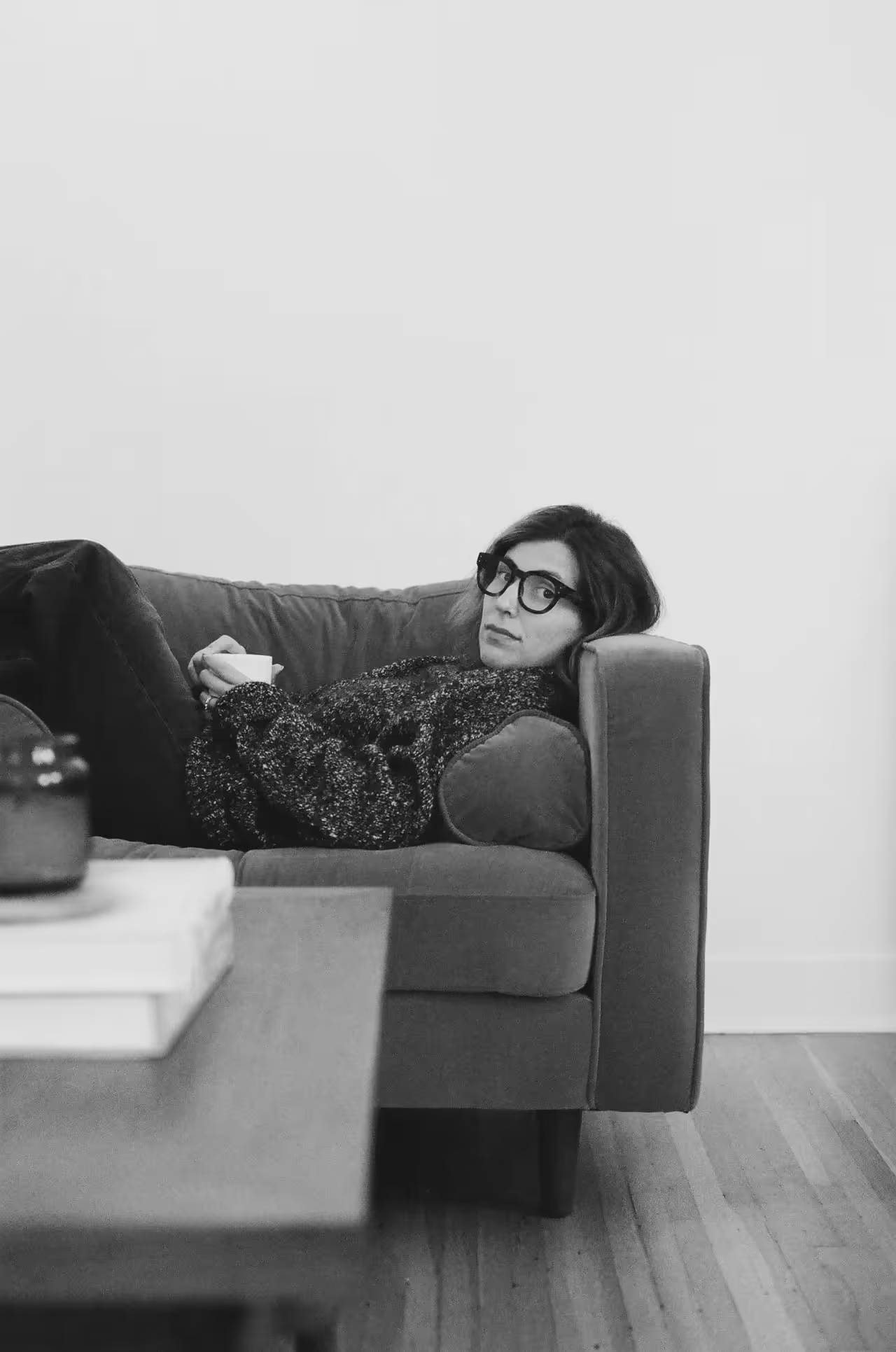
She also published Everything Is Horrible and Wonderful in 2018. A book asks for a different kind of endurance from its audience: the voice must keep somebody company across pages. Her public appearances placed that voice in yet another setting, answering questions as herself. By the time Lemonada arrived, she had worked on both sides of an interview and in formats that demanded quite different versions of attention.
The microphone came with a business partner
Lemonada began with Wachs and Cordova Kramer deciding to make a podcast together. Their original pitch met resistance from companies that considered it too narrow. They went ahead themselves. The show became Last Day; the company became a place to develop more than one kind of conversation. Wachs took the creative role, while Cordova Kramer served as founding CEO.
Their partnership matters to the way Wachs describes entrepreneurship. She has pushed back on the romance of the solitary founder and emphasized the help involved in building anything. In her telling, collaboration belongs at the center of the job description. There is an ensemble in the company’s origin, just as there had been in the theater.
“Our superpowers come from collaboration.”
Stephanie Wittels Wachs
The company’s own debut supplied a less polished lesson. After extensive preparation for the launch, Wachs posted the announcement video around 10 p.m. the night before it was meant to appear. She later retold the mistake with amusement. It is a small incident with an appealingly specific villain: the person who has worked on the plan and then presses the button.
A question sturdy enough to carry a show
Listen to Wachs discuss production and the director comes back into view. She wants an episode to have a central question. The reporting may change it; revision may finally reveal it. Without that organizing curiosity, interesting material can remain a pile of interesting material. A listener needs a reason to move from one part to the next.
Her hosting style leaves room for an ordinary speaking voice. In an early interview about podcasting, she recalled an NYU program director pointing out her frequent use of “like.” The observation stayed with her. So did the word. The polished broadcaster’s voice was never the only option available to her, and she had enough experience performing to recognize the difference between technique and a personality scrubbed smooth.
“I keep it human. I keep it casual,” she has said. That casualness sits alongside production. Producers help shape the work, and Wachs has credited their encouragement in preserving her approach. An episode can sound conversational because people have listened to it closely afterward. The ease is something the team works on.

Julia, Jane, and a different kind of attention
Wiser Than Me makes a useful example. Julia Louis-Dreyfus interviews older women about what experience has taught them. Its first season included Jane Fonda, Isabel Allende, Amy Tan, Darlene Love, and Carol Burnett. Wachs serves as an executive producer across Lemonada’s slate, including the series. Here was a recognizable performer making room for other people’s experience, with the time to ask another question.
The first season ran for ten episodes. In 2023, the show spent 29 consecutive days at number one on Apple Podcasts in the United States. Apple named it Show of the Year. Those are specific measures of attention for a program built around extended conversations. The audience was willing to stay with women whose stories had taken decades to accumulate.
Each mark represents one consecutive day at No. 1.
Apple’s year-end lists offered another view of that response. The show appeared among the most shared programs, and the Jane Fonda conversation appeared among the most shared episodes. Sharing is an interesting part of the listening experience: somebody hears an exchange alone and then chooses another person who might want to hear it. The room acquires another occupant.
The series also gives the conversation a second setting. After an interview, Louis-Dreyfus calls her mother, Judith, to continue talking. The exchange lets an episode move from a public encounter to a family one. It is a modest structural choice with an audible effect: the guest’s experience becomes something to turn over together. The program leaves space for the host to be a daughter as well as an interviewer.
The room gets bigger
By the time PodX’s majority acquisition was announced in 2025, Lemonada had launched more than 50 original podcasts alongside nearly 40 partner shows. Its slate included Fail Better with David Duchovny and Confessions of a Female Founder with Meghan, Duchess of Sussex. The transaction brought the company into a group based in Stockholm and marked PodX’s entry into the American market.
She has argued that a company’s working culture should leave room for family life. Founding Lemonada alongside another working mother made that ambition practical: the person across the table understood that caregiving and work could collide. She wanted employees to work hard and still have lives outside the company. It is an aspiration with consequences for the schedule, as well as the company’s public voice.
In December 2025, Cordova Kramer passed the CEO role to Wachs. In 2026, Inc. included her among its Female Founders honorees for her creative and editorial work. The title now joins the practical responsibility of running the company to the work of shaping what it makes. Her résumé contains plenty of experience with both the performance and the arrangements that permit it.
The small Houston venue remains a revealing place to start. Wachs and Hune wanted people to enjoy coming, to feel welcome, and to discover something they might not have sought out on their own. Running an audio company raises that task at a different scale. Before a conversation can change somebody’s afternoon, it has to persuade them to listen. She has been working on the invitation for years.
Keep the conversation going
Explore the work, hear her speak, or follow along.