Twenty-six percent is an awkward number to put in a founder’s story. It offers very little room for a victory lap. Dan’l Mackey Almy had built a marketing agency, attracted clients and assembled a growing team. Then the people working for her supplied an assessment that sales figures could not soften: a 26% approval rating for her leadership.
In her account of the experience, Almy describes a business that was growing and a team of around 20. Miscommunication and mismatched expectations were accumulating underneath the work. She places the evaluation in 2015. The uncomfortable discovery was that a company could be succeeding commercially while its founder still had a great deal to learn about leading it.
Almy’s own account of her team’s leadership evaluation. A turning point, rather than a measure of DMA’s commercial performance.
A Texas girl with one college application
Long before the evaluation, there was a small Texas town and a local 4-H club. Agriculture gave Almy an early setting in which to practice leadership. It also gave her an attachment to the people behind food production, an attachment that would eventually become the organizing idea of her working life.
She applied to one university: Texas A&M. Her loyalty came through 4-H rather than a family tradition. Once there, she initially entered the business school, imagining herself in business without necessarily attaching the word agriculture to it. She felt lost, transferred into agricultural economics and found a direction that made more sense to her.
An economics class in her sophomore year helped focus her interest on fresh produce. By her junior year, she was pursuing opportunities in that industry. She graduated in December 1994. Looking back, her advice to students would be to choose an industry they wanted to serve, thinking beyond the first job or the first employer.
Her first produce employer was Standard Fruit & Vegetable in 1995. She advanced to director of marketing, then became a vice president at Fresh Del Monte Produce after its 2003 acquisition of Standard. Her responsibilities included the Walmart and Sam’s Club business in North America. Before she asked growers to think differently about marketing, she had worked inside the business of selling their products.
Something beyond the price of a box
Almy founded DMA Solutions in March 2004. The opportunity she saw was easy to describe and harder to execute: fresh produce companies could build a relationship with shoppers around the people, stories and work behind their crops. A supplier needed ways to be remembered beyond the day’s price and availability.
Her thinking became particularly clear in a piece separating commodities, trade names and brands. A commodity competes mainly through the transaction. A trade name earns recognition among buyers. A brand also has a place in the consumer’s mind. Those distinctions describe different relationships, each requiring different work.
Commodity
Price and availability shape the sale.
Trade name
The buyer recognizes the supplier.
Brand
The shopper has a relationship, too.
It is a useful distinction in an aisle where competing products can look remarkably alike. A company may be familiar to a retail buyer while remaining almost anonymous to the person taking its fruit home. Almy’s argument asks executives to consider both audiences, and to make marketing part of the work of earning future demand.
In her writing about digital marketing, she translated that argument into agricultural language. Executives accustomed to investing in the field were being asked to invest in their online presence with comparable seriousness. She wanted a company’s underlying purpose to remain recognizable while its story reached people through different channels. The crop could stay the crop; the conversation needed more places to happen.
The dining table had colleagues
For all the talk of brands, the early agency had a very domestic piece of infrastructure. Almy has recalled working with Marci Allen, DMA’s first team member, at her dining room table with toddlers underfoot. It is a more useful founding image than a photograph of an immaculate boardroom. There was work to do, and life was already occupying the premises.
In a later public tribute, she credited Allen with sustained work on brands and client relationships over 21 years. She also recognized Hena Husain’s social media work and Wanda Lightbody’s financial stewardship. Her account of Lightbody was especially recognizable to anyone who has built a small business: a part-time arrangement became an enduring relationship.
Almy’s university connection continued beyond recruiting. She and fellow Texas A&M graduate Drew Almy established the Aggies for Fresh excellence fund with a $35,000 gift in 2013. Its purposes included connecting students with the produce industry and supporting relevant student organizations. Returning to campus, advising students and hiring interns gave her attachment to agriculture a practical route into other people’s careers.
A better listener gets a microphone
By 2022, Almy was willing to discuss the leadership evaluation publicly. She wrote about having concentrated on the quality of the work and assuming that the team was getting along reasonably well. The evaluation challenged that assumption. Her response was to keep learning, with a more searching view of what people needed from her.
“There is no finish line.”
Dan’l Mackey Almy, on becoming a better leader
That short sentence is an unusually useful qualification for a leadership venture. It leaves room for the person holding the microphone to remain a student. Almy’s account does not end with a new score or a declaration that she has solved leadership. She describes an ongoing commitment, with consequences for colleagues and for relationships outside the office.
In February 2022, DMA announced Megan Zweig’s promotion to president. Almy continued as founder and CEO, responsible for culture, vision and values. The plan also expanded the agency’s intended reach into adjacent sectors, including restaurants, floral businesses, nonprofits and associations. The company was making room for a broader business while giving its leadership structure more definition.
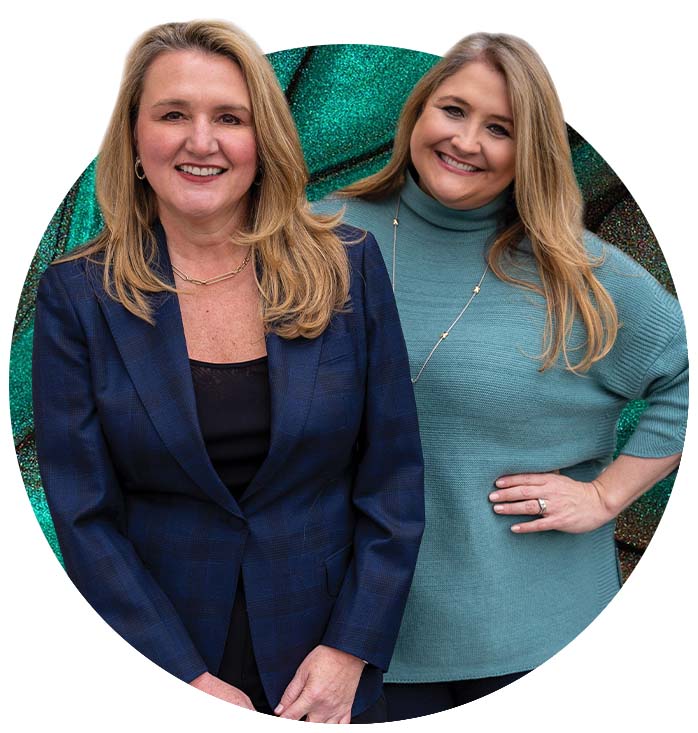
The two became co-hosts of Self Smarter, whose launch DMA officially announced in April 2022. Its subject was the person doing the leading: self-awareness, personal growth and the everyday business of working with others. For a founder whose professional life had centered on helping clients communicate, there was a fitting change of audience. Now the conversation could turn toward the leader’s own habits.
Self Smarter subsequently grew beyond a podcast. In September 2023, it introduced an Improving Team Dynamics coaching service, delivered virtually and tailored to individual teams. Its stated focus included communication, connection and understanding colleagues. By September 2024, Almy and Zweig were discussing self-discovery and personal development at the Southeast Produce Council’s Southern Roots Women’s Luncheon, where the topic had returned by popular demand.
First, the latte. Then, the lesson.
Almy had been finding small ways to make learning public long before the podcast. In a February 2013 post, she described a morning ritual: a latte brought to her by Drew and an email from marketing author Seth Godin. She had been reading his books since 2004. A quiet quarter-hour with coffee and a challenging idea was a routine she valued.
For 2013, she decided to turn that reading into a daily creative exercise. She selected a thought, made an image, added her own comment and posted it to Instagram and Twitter using #365ofSeth. Forty-five days into the project, she wrote about enjoying the connections it was making. Her husband, she observed, had no interest in opening a coffee shop. Sharing the reading was the more practical offering.
There is another side to that enthusiasm for gathering people. In 2020, she turned a virtual birthday celebration into a fundraiser for restaurant and artist communities in Dallas-Fort Worth and New York City. Friends from produce and the arts joined the musical event. The birthday supplied the invitation; support for other people supplied its purpose.
Her industry recognition had already included Produce Business’s 40 Under Forty in 2004, a United Fresh leadership alumni award in 2009 and the 2012 Woman in Produce honor. Yet one smaller distinction offers an amusing companion to the plaques: in 2016, she won AndNowUKnow’s first timed Quiz Quix challenge, identifying produce marketers from their faces. A relationship business apparently has its own pub quiz.
Still explaining what comes next
At DMA’s twentieth anniversary in 2024, the company reported having served more than 200 businesses. Almy spoke about expanding her New York network and wanting the agency to support food, arts and cultural organizations. The ambition followed her existing interests: people growing things, people making things, and the work of helping an audience care.
Her newer educational project, dmAI Learning, brings that explanatory instinct to artificial intelligence. It is an education and consulting initiative aimed at fresh produce professionals. Almy’s stated goal is to improve their AI literacy through useful information and tools. The audience is familiar even as the technology changes.
Her 2026 writing also remains close to the practical friction of the business. Summer posts examined feedback between sales and marketing and the use of shared scorecards. In September, she addressed preparing those teams together for the IFPA Global Show. There is a consistent interest underneath these subjects: getting people with different responsibilities to understand one another well enough to act together.
The founder at the dining table, the produce executive learning new technology and the podcast host talking about leadership are recognizable as the same person. Almy keeps returning to the work of communication. The most revealing turn in her career came when the message arrived from inside her own company, and she gave it her attention.