The senior team liked what it saw. In April 2020, leaders in a Bausch + Lomb Surgical region completed a collective leadership assessment and gave themselves strong marks. Four months later, the exercise reached 72 people in the next management tier. Their verdict was less flattering: scores came in 10–20% lower. The people running the business and the people experiencing its leadership were describing different places.
- Leadership Circle makes assessments, trains coaches and works with organizations.
- Its central question: how does your leadership land with other people?
- The useful output is a development goal that colleagues can actually observe.
That discrepancy is the territory Leadership Circle occupies. The Draper, Utah company sells tools for examining leadership, plus the people and programs that help interpret them. Its customers include executive coaches, internal development teams and organizations trying to change how their managers behave. The interesting product is the conversation an executive might otherwise manage to avoid.
01 / The mirror has colleagues in it
The flagship Leadership Circle Profile gathers ratings from a leader and people around them: bosses, peers and direct reports. It overlays self-perception and aggregated feedback on a circular chart. Twenty-nine dimensions feed into eight summary dimensions. A leader can see agreement, disagreement and the habits that deserve a closer look.
The upper half maps Creative Competencies, including relating, authenticity and achieving. The lower half maps Reactive Tendencies: patterns associated with complying, protecting and controlling. The company links those patterns to underlying assumptions. Consider a hypothetical manager who equates being useful with supplying every answer. Colleagues might experience that helpfulness as a shortage of room to think.
Editorial illustration of the development process; not an assessment result.
This is Leadership Circle’s distinguishing proposition in a busy assessment market: put capabilities and potentially limiting patterns into one developmental picture. Buyers can also consider alternatives such as Center for Creative Leadership’s assessments. The choice should follow the question an organization needs answered, rather than affection for a particular chart.
02 / The tool that escaped the living room
Bob Anderson, the Profile’s creator and a company co-founder alongside Bill Adams, originally expected to become an engineer. His published history recalls managing a livestock and pet-food plant before turning toward organizational development. Working late, he heard himself say, “I am not becoming who I am.”
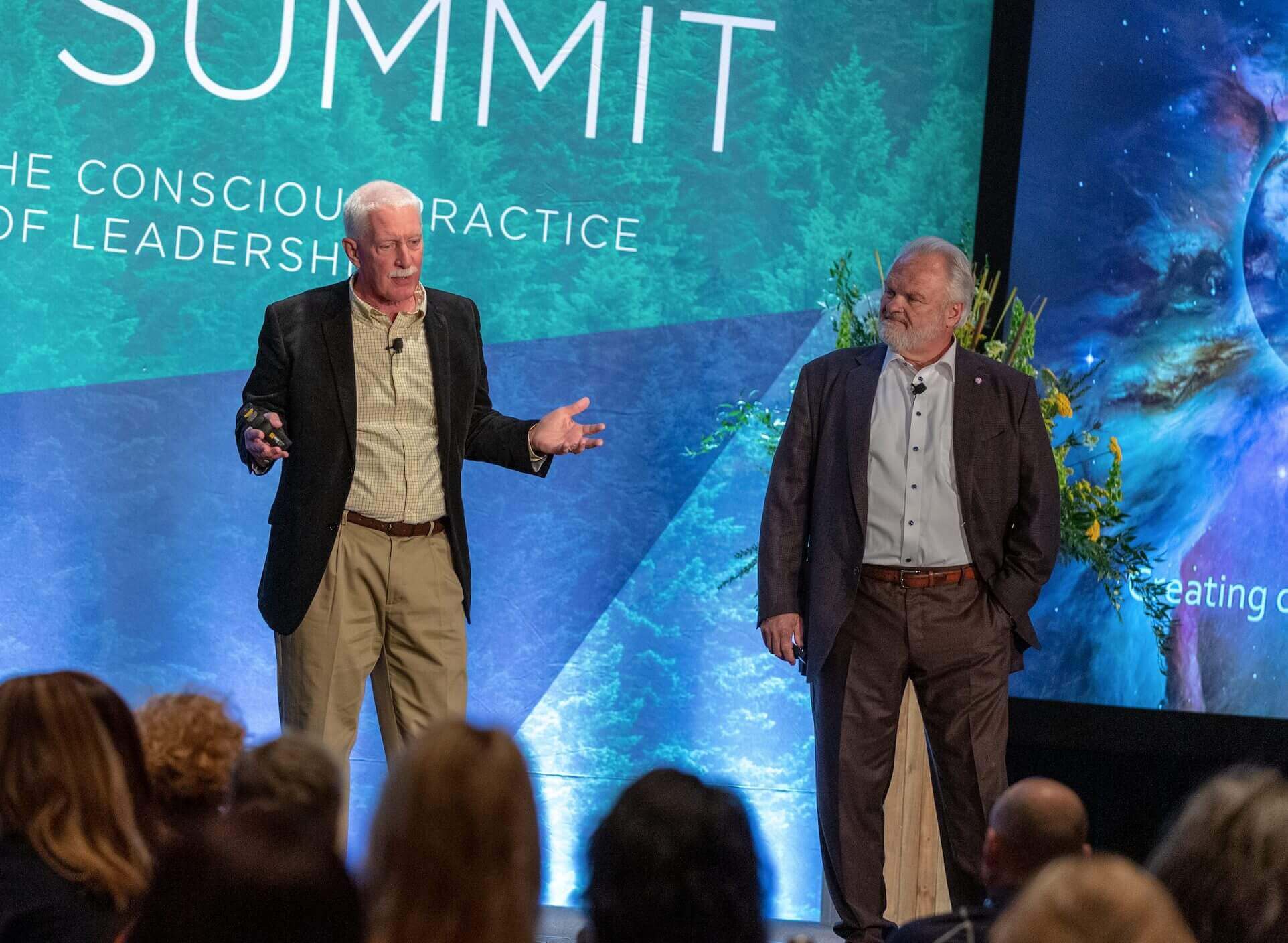
Anderson’s frustration with existing assessments was practical: he was stitching together disconnected tools. He wanted one that matched the integrated framework he used with clients. The first certification training happened in his Toledo living room. Teaching other practitioners gave the instrument a distribution system beyond its inventor’s consulting calendar.
That pattern still explains the business. Leadership Circle sells assessments, practitioner education, coaching and organizational consulting. A certified coach can bring the tools into an existing client relationship; an enterprise can buy a broader development engagement. The network carries both the product and the method. Inc. ranked the company No. 188 on its 2020 Inc. 5000 list.
Certification makes that method teachable. The LCP program is designed for people with coaching education or experience and takes approximately 29 hours over three to five days. Participants complete their own assessment and a coaching debrief as part of the process. There is a sensible idea here: the person interpreting somebody else’s feedback should first experience receiving it. Training the interpreter is part of the product.
03 / A score is the opening move
The Bausch + Lomb example shows what the method looks like at work. Leaders first identified a shortfall in customer focus. The wider assessment then exposed the difference between senior leaders’ self-image and the next tier’s experience. Country reports and individual coaching helped turn that information into local discussions. This is a vendor-published case study, not a controlled experiment.
“The next tier of management rated the team 10-20% lower than it rated itself.”Bausch + Lomb case study · Leadership Circle
The Collective Leadership Assessment, used in that engagement, compares current and desired collective leadership. BRITE asks a related but different question: how well does an intact team work together? It examines five areas, from shared mindsets and structure to safety, information processing and results. Its focus is interaction, where individual talent can get tangled up in group habits.
PULSE supplies the return visit. A leader chooses a goal; an accountability circle, typically five or six coworkers, provides feedback. A baseline is followed by an interim survey around three to four months later, then a final survey roughly three to five months after that. Evaluators can finish each pulse in under five minutes.
The copyable idea is modest. Choose one behavior, describe it so another person could recognize it, and ask the same people about it later. “Become more strategic” gives colleagues little to watch. “Invite competing proposals before stating my preference” gives them something observable. That example is an editorial suggestion, not a prescribed Leadership Circle exercise.
04 / The economics of asking again
A published Australian reseller list, effective July 2023, priced an electronic Profile at A$425 to practitioners and A$550 retail, excluding GST. Those historical figures show the assessment economics, not today’s worldwide cost of a coaching engagement. The current China certification page separately lists a standard US-dollar fee of $3,516. Geography and scope matter.
In 2022, Leadership Circle announced $20 million in financing from RF Investment Partners to expand its technology and services. Its stated plans included asynchronous coaching, self-service options and SaaS capabilities. The broader commercial ambition is understandable: keep development going between expensive, scarce human conversations.
For organizations, the Leadership System packages development into workshops, coaching and leader cohorts. More than 20 Leader to Leader modules provide topics for repeated sessions, with peer coaching alongside individual work. This gives the company a place between an assessment vendor and a consulting firm: it supplies the diagnostic, teaches a shared vocabulary and offers a structure for practicing over time.
The evidence deserves careful handling. A published IPRA evaluation associated with Bowling Green State University supports the Profile’s psychometric properties for developmental feedback. That does not establish that purchasing an assessment causes business growth. Respondents describe perceived behavior, and the interpretation still requires judgment.
My reading is that the method depends on colleagues feeling able to answer candidly and leaders being willing to act. A workplace that punishes unwelcome feedback will undermine the exercise. So will a manager who treats the report as the completed assignment. Leadership Circle’s useful challenge is beautifully inconvenient: return to the people who work with you and find out whether anything changed.
Keep the conversation going
Leadership Circle · Explore the Profile · Customer stories · Company blog
LinkedIn · X · Facebook · YouTube
▶ Watch: Barossa Hills Fleurieu leadership case study