In 2015, Hewlett-Packard split in two. HP Inc. inherited more than 50,000 employees and an unusually awkward management assignment: deciding what sort of company those people should become. Employees wanted to keep the collaboration and innovation. The bureaucracy had fewer admirers. A new corporate identity would need something more useful than fresh stationery.
The NeuroLeadership Institute entered that assignment in September 2016. One detail from its account deserves attention: HP tested more than 300 possible leadership principles before settling on three. Imagine the future. Inspire the team. Make it happen. Three hundred possibilities had become nine words. The interesting part was the subtraction.
- Sells: consulting, learning, coach education and AI coaching.
- Buyers: talent teams, leaders and coaches.
- Copy: choose observable habits, practice them and reinforce them daily.
The nine-word management experiment
NLI says the work reached 4,700 managers over one year. Its HP case study reports a 22% jump in employee engagement between 2016 and 2018. That is a reported change in internal company data, not a controlled experiment establishing that a consultancy caused the improvement. It is nevertheless an unusually concrete illustration of what NLI wants to sell: principles people can carry into a meeting.
The assignment captures a problem familiar to anyone who has attended a corporate values launch. A principle can be perfectly agreeable and almost impossible to use. The practical question is whether a manager remembers it while making a decision. For NLI, memory and repetition belong near the center of organizational design.
Employee engagement, 2016-2018
Internal company data; causation not established.
“The science gives people permission to open their minds to learning.”
Mike Jordan / HP, Global Head, Talent and Learning
An institute with a consulting business
David and Lisa Rock founded NLI in 2007, following earlier work in coaching and leadership development. Its first summit brought business practitioners and brain scientists together in Asolo, Italy. The NeuroLeadership Journal followed in 2008. The company began with executive education, then expanded into consulting as customers asked for help applying the ideas.
Today, the work spans culture and leadership, talent and performance, and inclusion. Companies, government bodies and nonprofits are customers; individual professionals can enroll in education programs. NLI describes its purpose as making organizations more human through science. Its commercial opportunity lies in translating research into something a busy manager can actually rehearse.
That puts it in the leadership-development market alongside firms such as FranklinCovey and Korn Ferry. NLI emphasizes neuroscience, named behavioral frameworks and repeated practice. Buyers are paying for interpretation and implementation, with research supplying the organizing logic. A journal article alone cannot redesign a performance conversation.
Five reasons a meeting goes sideways
Consider an ordinary workplace puzzle: a manager offers advice, and the employee becomes defensive. NLI’s SCARF model supplies five places to look: status, certainty, autonomy, relatedness and fairness. Advice might threaten someone’s standing. An unexplained decision might remove their sense of control. An apparently reasonable policy might feel unfair.
The model is a heuristic for interpreting social situations. It does not read minds or diagnose employees. Its attraction is that a manager can remember five categories while a conversation is happening. A practical application might be to explain the decision process, offer meaningful choices, or ask for the employee’s perspective before delivering a verdict.
NLI makes a similar compression with SEEDS, introduced in 2015: similarity, expedience, experience, distance and safety. These categories organize common biases. The point is to make errors easier to notice and mitigate. A hiring team, for example, can gather independent judgments before everyone anchors on the most confident person’s opinion.
A slogan needs a system
Microsoft provides a second useful case. NLI worked with the company on leadership principles during its growth-mindset transformation. NLI’s 2018 account describes manager conversation guides, learning activities and changes to people processes. The work extended into how employees developed, received feedback and contributed to others’ success.
The lesson for a reader is architectural. If an organization praises learning but rewards only individual certainty, employees receive conflicting instructions. NLI’s priorities, habits and systems approach asks leaders to connect the desired culture to everyday behaviors and the mechanisms that reinforce them. That connection is also a condition for success: a workshop has limited reach when promotion, workload and management behavior push the other way.
Learning design follows the same logic. NLI’s AGES framework means attention, generation, emotion and spacing. People need opportunities to make connections themselves and revisit material over time. What fails in the conventional training story is the transfer from an engaging session to a different action at work. NLI designs its offering around that gap.
What the habit costs
The business combines advisory engagements, licensed learning, education fees, memberships and software subscriptions. Products include LEAD for management development, TEAM for psychological safety and IMPROVE for feedback. Brain-Based Coaching programs serve people developing coaching skills, including professionals pursuing an accredited training pathway.
For an individual buying coach education, the distinction between completing training and earning a professional credential matters. NLI offers accredited training pathways, while requirements depend on the program and region. A prospective coach should compare live practice, mentoring and assessment alongside price. A manager simply seeking better conversations may need a different level of commitment.
Prices make the different entry points tangible. An October 2026 EMEA Brain-Based Design and Facilitation workshop listed three 90-minute sessions at £500 plus applicable VAT. NILES, the company’s AI coaching product, advertises an individual plan starting at $29 a month and a 30-day trial. Enterprise plans use negotiated pricing. These are product-specific examples, not an estimate of a company-wide culture project.
NILES moves the same proposition closer to the moment of need: a leader can seek help before a difficult conversation instead of waiting for a scheduled course. It is marketed as an AI thinking partner drawing on NLI’s research and coaching methods. That positioning is a product claim, not proof that automated coaching matches a human coach.
Keep the thinking in the room
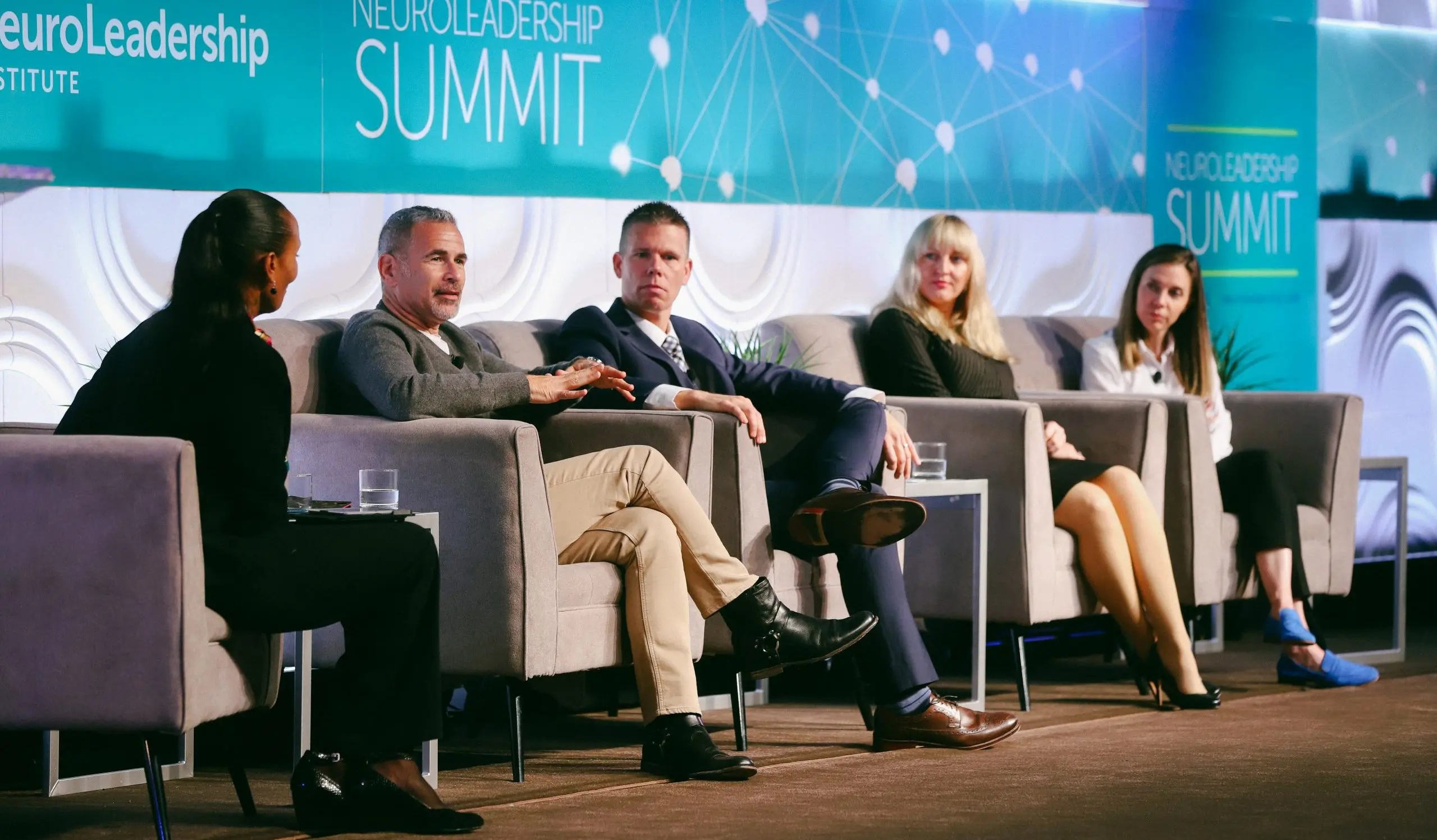
At its October 2026 summit, NLI returned to a timely tension: organizations are buying AI while worrying about employees surrendering their judgment to it. The company’s proposed response emphasizes clarity, flexibility and vigilance. Selling an AI coach while arguing for independent thought gives NLI a demanding standard for its own product.
For a team considering NLI, a useful first move is small: identify one recurring conversation that goes badly, name the behavior you want instead, and decide how to observe it. Then give people time to practice. The most portable idea here is wonderfully unglamorous. A company’s culture becomes tangible in the next thing someone does.