The Startup That Read the Fine Print So Risk Managers Don't Have To
Commercial insurance runs on documents nobody wants to read. LineSlip built the software that reads them - and handed risk managers back control of their own numbers.
Somewhere in every large company is a filing cabinet, physical or digital, full of documents almost nobody reads cover to cover: insurance binders, broker proposals, policy wordings running to hundreds of pages. They govern how a business survives a fire, a lawsuit, a hurricane, or a data breach. And for years, the person responsible for all of it - the risk manager - often couldn't easily see what was inside them. The data lived with the broker. LineSlip Solutions was built on the quiet absurdity of that arrangement.
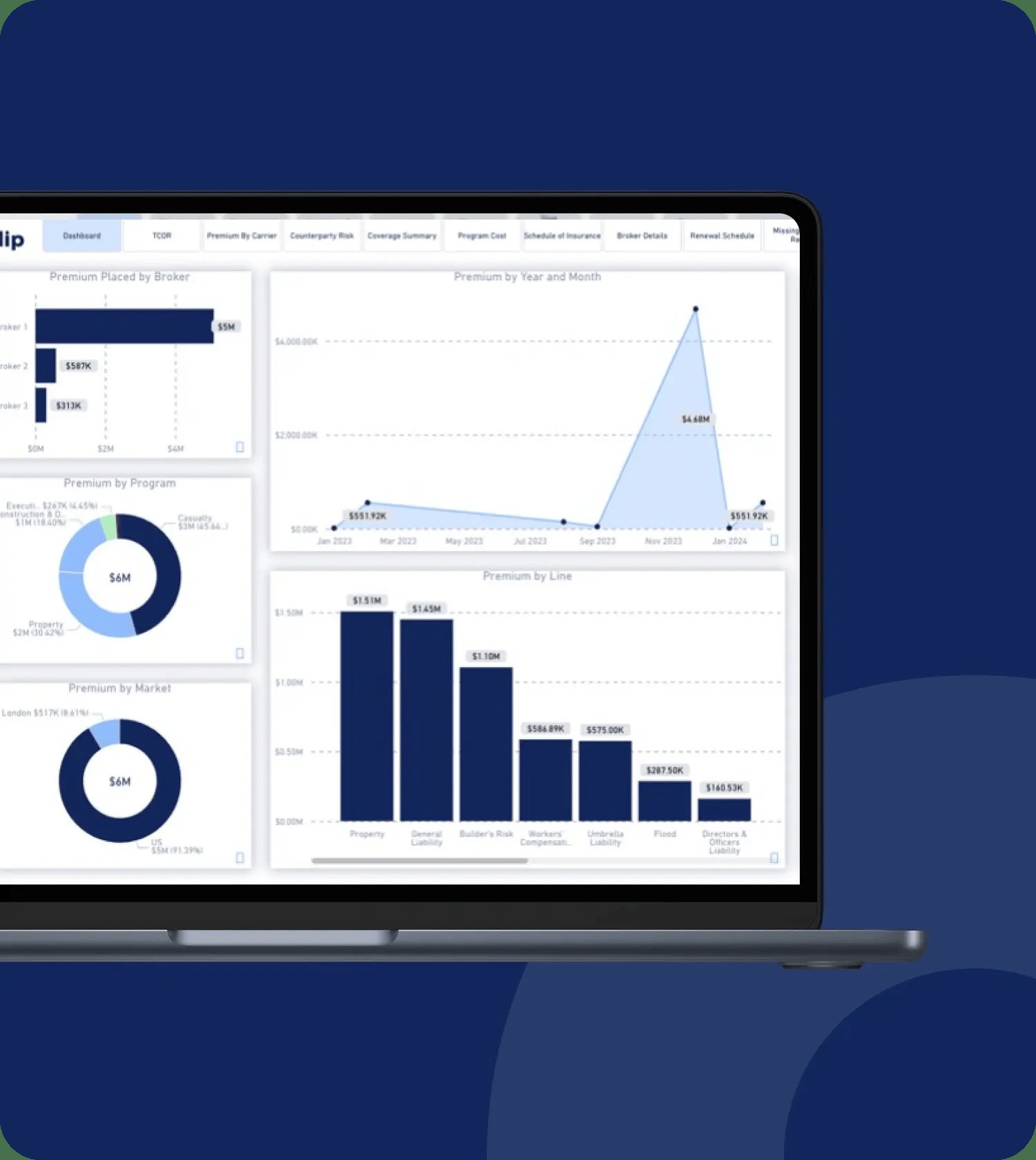
Founded in New York in 2016 by a team with more than 40 years of combined commercial insurance experience, LineSlip is an insurtech company with a narrow, stubborn mission: get a company's own insurance data out of the documents and back into the hands of the people paying the premiums. It does this with natural language processing and machine learning that read binders, proposals, and policies, extract the numbers that matter - premiums, limits, carriers, retentions - and organize them into dashboards a risk executive can open in one click.
What it actually does01Turning paper into a single source of truth
The core product is an enterprise Insurance Intelligence platform. Corporate insurance programs are messy by nature: a single large company might buy dozens of policies across property, casualty, cyber, directors-and-officers, and more, placed through multiple brokers with multiple carriers, renewing on different dates. LineSlip pulls all of that into one place, extracting the data directly from source documents so there is a single, validated version of the truth rather than a patchwork of spreadsheets each broker maintains separately.
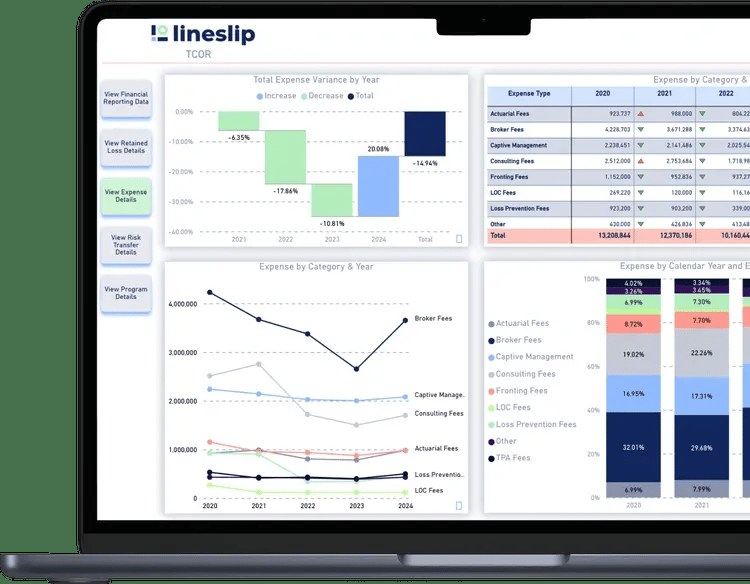
On top of that data sits the analytics: multi-year premium trend analysis, broker performance comparisons, carrier relationship mapping, and modeling for the perennial risk-management question of whether to retain a risk or transfer it. The company has branded parts of this as Commercial Insurance Risk Intelligence (CIRI) - the layer that converts program documents into data-rich dashboards.
Before LineSlip
- Data locked in PDFs & binders
- Manual keying into spreadsheets
- Ask the broker, then wait
- Renewals negotiated half-blind
After LineSlip
- NLP extracts data automatically
- One-click dashboards
- Buyer owns the numbers
- Data-backed negotiation
The whole pitch, in one diagram: move the data from the broker's inbox to the buyer's dashboard.
02The problem hiding in plain sight
Co-founder and CEO Leo Bernstein has put the problem bluntly.
Risk managers lack access to their own insurance data, leaving them blindly negotiating renewals and making suboptimal risk-financing decisions. Leo Bernstein, Co-Founder & CEO
That is a strategy insight disguised as a complaint. The most valuable B2B products often solve a problem the incumbents quietly profit from you having. Brokers sit between the buyer and the carrier, and historically the buyer's view of their own program flowed through them. LineSlip's answer was to make itself deliberately broker-agnostic: the platform is the buyer's data layer, independent of whoever placed the coverage, so a risk manager can walk into a renewal with their own numbers instead of borrowed ones.
03Fortune 1000 risk desks, CFOs, and private equity
LineSlip's customers are the organizations with the most tangled programs and the most to lose from not understanding them: Fortune 1000 corporate risk teams, CFO and finance organizations, and private equity firms. Publicly referenced customers include Viasat and Macy's. For a risk executive, the appeal is credibility - being able to answer the board's questions from a dashboard rather than a promise to follow up. For a CFO, it is the ability to see insurance spend as a managed line item rather than an annual mystery.
Private equity is a natural fit for the model. A PE firm may hold dozens of portfolio companies, each with its own insurance program, brokers, and renewal calendar. LineSlip's private equity solution gives a firm centralized, real-time visibility across the entire portfolio at once - the kind of view that matters both for diligence and for squeezing cost out after the deal closes.
04Complement the RMIS, don't fight it
Plenty of software touches corporate risk. The big category is the Risk Management Information System, or RMIS - operational platforms like Riskonnect and Origami Risk that handle claims, incidents, and workflows. LineSlip made a deliberate go-to-market choice that is worth stealing: rather than trying to rip out and replace those systems, it sits on top of them and adds a policy-intelligence layer they lack.
The proof that the strategy works is that a major RMIS player didn't compete with LineSlip - it partnered. In 2022, Riskonnect integrated LineSlip's AI document-extraction technology directly into its own RMIS, so policy information gets read, extracted, and organized without manual keying. When the giant in your category chooses to embed you rather than build around you, you have found real distribution.
The real incumbent LineSlip displaces isn't another vendor. It's the spreadsheet, and the habit of asking someone else for your own data.The product line
05From Total Cost of Risk to real estate
Around the core platform, LineSlip has built a set of purpose-specific tools. Its Total Cost of Risk analysis won a Business Insurance Innovation Award in 2022, partly for a detail that sounds small but matters: it folds administrative overhead into the total-cost calculation, giving a truer picture of what risk actually costs a company. In 2024 the company shipped a real estate enhancement, adding views and reporting built for property schedules and real estate insurance programs, where the number of insured locations can be enormous.

06A B2B subscription with a moat made of context
LineSlip is a straightforward B2B SaaS business: risk teams, finance organizations, and PE firms pay for subscription access, and the company extends its reach through RMIS integrations and partnerships. The harder-to-copy part is not the software - it is the domain. This is a team of former insurance and risk professionals building for other insurance and risk professionals, in an industry that runs on relationships, jargon, and paper. Reading a policy correctly is not a generic document-parsing problem; it requires knowing what a sublimit is and why it matters.
That expertise has been recognized: LineSlip is SOC 2 certified, has won multiple Business Insurance Innovation Awards, was named a Best Place to Work in Insurance in 2022, and appeared in PropertyCasualty360's list of RiskTech companies to know. Its culture reflects the same practical bent, organized around five stated values - Client First, All In, One Team, Transparent, and Agile.
The money07Patient capital for a patient market
LineSlip has raised over $13 million across seed and Series A rounds, backed by Chartline Capital Partners and BIP Ventures. It closed a Series A of roughly $5.57 million in March 2023, and in 2026 filed an SEC notice of an exempt offering to raise up to about $7.76 million more. These are not the eye-watering numbers of consumer insurtech; they are the pace of a company selling into a deliberate, relationship-driven corner of the market - and building durable revenue rather than chasing headlines.
- Founded
- 2016, New York
- CEO
- Leo Bernstein
- Team
- ~55 people
- Total funding
- $13M+ raised
- Category
- Insurtech / risk intelligence
- Model
- B2B SaaS, broker-agnostic
08The empty seat in insurtech
Most of insurtech chases the flashy seats: the consumer buying a policy on their phone, or the underwriter pricing risk with new models. LineSlip went for the seat everyone else left empty - the corporate buyer's back office, the risk manager and the finance team who have to live with the program all year. It is unglamorous work aimed at the least glamorous documents in the building. It also happens to be where a lot of leverage was sitting unused.
The honest caveat: this only works for organizations complex enough to have the problem. A small business with one policy and one broker does not need a program-intelligence platform. LineSlip's value scales with the messiness of the program - which is exactly why the Fortune 1000 and private equity are its home turf. For everyone in that range, the promise is simple and, for once, literal: read the fine print, so you don't have to.