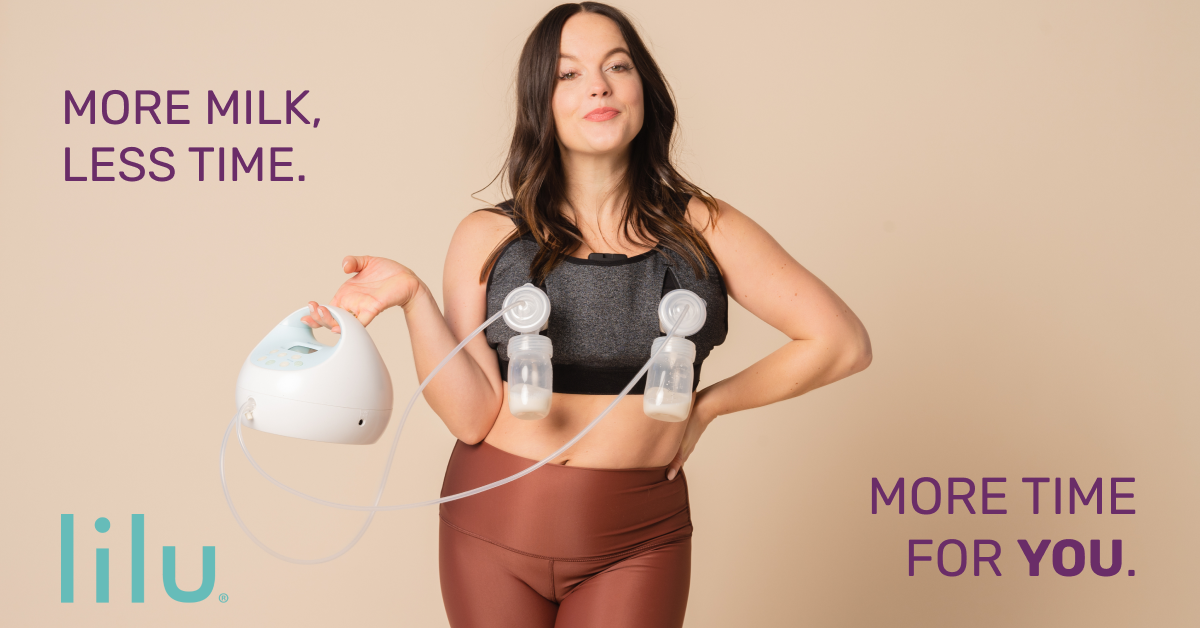
Here is a fact that should be more famous than it is: the breast pump, as a category, is old, awkward, and mostly unloved - and for decades nobody with an engineering degree seemed to care. Lilu is what happens when two people with engineering degrees finally do.
The breast pump occupies a strange corner of the medical-device world. It is a product millions of people depend on, that insurance often pays for, that gets used at 3am in a dark room by someone running on ninety minutes of sleep - and that, functionally, has coasted for a very long time. The pitch for most of them is roughly: it suctions, it works, please stop asking questions. This is the kind of market that looks boring from the outside and, on closer inspection, turns out to be boring only because everyone agreed not to look. Lilu looked.
Lilu, Inc. is a New York femtech company - Brooklyn, per its filings - founded around 2016 by Adriana C. Vazquez Ortiz and Sujay Suresh Kumar, two engineers who met as labmates in a robotics group at the University of Pennsylvania. Adriana studied Math with Computer Science at MIT before a master's in Integrated Product Design at Penn; Sujay did his master's in electrical engineering there. They came from Mexico and India, respectively, ended up in the same lab building creative robotics projects, and eventually turned that toolkit toward a problem most robotics people never think about: helping mothers express milk.
Pumping is a second job. Lilu wanted to shorten the shift.
The founding insight is almost embarrassingly practical. Hospitals and lactation consultants have known for years that if you massage and compress the breast while you pump - a technique with the very unglamorous name "hands-on pumping" - you tend to get more milk, faster, with less discomfort. The problem is in the name. It requires hands. You have two of them, and pumping already occupies your attention, your posture, and quite often your ability to do anything else. The clinically recommended best practice is, in practice, nearly impossible to sustain.
So Lilu built the third and fourth hands. The Lilu Massage Bra is a hands-free wearable with pneumatic cushions built in. You put it on over a standard breast pump, and the cushions inflate and deflate in a rhythm meant to mimic the compression a baby - or a diligent pair of hands - would apply. It is registered as an FDA Class I device and built on patented technology. The point is not novelty for its own sake. The point is that a machine can do the tedious, physically awkward thing consistently, session after session, so the human wearing it does not have to.
The best products solve a problem you didn't realize was engineering. Massaging while you pump is one of them.
To get there, the founders did the unglamorous work first. Before building much of anything, they surveyed thousands of mothers and interviewed hundreds - not a tidy focus group of a dozen, but a genuine attempt to map where the pain actually lived. And then Sujay spent roughly two years in Shenzhen, China, vetting factories and working alongside manufacturers to turn a lab prototype into something that could be produced, worn, washed, and trusted. Hardware is unforgiving that way. A slide deck forgives everything; a physical object worn against skin forgives nothing.
Labmates who kept the partnership 50/50
Adriana C. Vazquez Ortiz
Product designer, MIT (Math + CS) and Penn (Integrated Product Design). Named among the top 30 Femtech Healthcare Influencers in 2019. The user-research obsessive of the pair.
Sujay Suresh Kumar
Electrical engineer, Penn. Spent ~2 years in Shenzhen bringing the Massage Bra to production. Named to the Forbes 30 Under 30 list in 2022.
The two run Lilu as co-CEOs, which is a structure that sounds fragile on paper and works here for a plausible reason: they built the thing together from the same bench, and their skills split cleanly. One leans design and user research, the other leans hardware and manufacturing. It is a division of labor that maps neatly onto the two halves of a device that has to feel good and also, you know, function.
A bra, an app, and a plan to connect them
Lilu Massage Bra
A hands-free wearable with pneumatic cushions that compress and release to automate "hands-on pumping." Works with standard breast pumps to improve output and ease discomfort. Built on patented technology.
MilkSense App
An AI-driven tracker for breastfeeding, pumping, bottle feeding, and milk stash. Personalized insights, schedules, supply analytics, trend charts, data export - and an AI chatbot for lactation questions.
The Massage Bra was Lilu's first act. The second, launched into private beta in late 2023 and onto the App Store and Google Play in 2024, is MilkSense - a free app that tracks feeding, pumping, and the ever-fraught question of how much milk is in the freezer. It offers personalized analytics, feeding and pumping schedules, and, notably, an AI chatbot for lactation guidance. That last feature sounds like a checkbox until you consider the timing of a new parent's questions, which tend to arrive alone, in the dark, at hours when no human lactation consultant is answering the phone.
The stated destination is a single connected platform: a forthcoming MilkSense smart bra that talks to the MilkSense app, so the hardware measuring your session and the software interpreting it are finally the same system. Whether that ships on schedule is the sort of thing hardware timelines routinely disagree with, so treat the date as aspirational. The direction, though, is coherent - which is more than you can say for a lot of "ecosystem" pitches.
Where the value proposition lives
Grants first, hype later
Lilu's funding history is quietly telling. This is not a company that raised a mountain of venture money on a beautiful narrative and then went looking for the physics. It went looking for the physics first. Lilu has been backed by the National Science Foundation - including an SBIR award and participation in the NSF I-Corps program - alongside venture investors like SOSV, L'ATTITUDE Ventures, Chloe Capital, and Crescent Ridge Partners, plus mission-aligned programs such as Project W. Public estimates of total funding vary by source, landing somewhere in the neighborhood of $1.4 million, with the most recent raise around $1 million booked in early 2023.
The shape of that cap table - hard-science grants stapled to values-aligned VC and a community round on Wefunder - tells you what kind of company this is. When the government pays you to prove a mechanism works before anyone will pay you to sell it, you are a science company that happens to have a storefront, not a story company that happens to have a device.
"More milk, less time. More time for you."
From a Penn lab to your freezer
Adriana and Sujay, labmates at Penn, begin turning robotics know-how toward breast-pump inefficiency.
Lilu's compression bra concept surfaces publicly - TechCrunch covers the pitch to help mothers pump more milk, faster.
Wins the AlphaLab Gear Hardware Cup (2018) and the SheKnows/BlogHer competition (2019); Adriana named a top-30 femtech influencer.
Sujay named to the Forbes 30 Under 30 list.
Closes latest seed funding (~$1M) from SOSV, L'ATTITUDE Ventures, Chloe Capital and others.
Opens a private beta for the new MilkSense lactation app.
MilkSense launches on iOS and Android with AI-driven insights and an AI chatbot.
Signals a MilkSense smart bra to unite hardware and app into one connected lactation platform.
Five things worth knowing
- The co-founders met building robots. The breast pump was, in a sense, just the most interesting robot they could aim at a real human problem.
- The Massage Bra automates a technique - "hands-on pumping" - that hospitals already recommend. Lilu didn't invent the method; it removed the requirement that you have a spare pair of hands.
- Sujay lived in Shenzhen for about two years to get the thing manufactured. That is roughly the runtime of getting hardware from prototype to product: measured in years and factory visits, not sprints.
- The MilkSense app ships with an AI chatbot for lactation questions - built, whether or not anyone says so, for the 3am shift.
- The company's whole thesis fits in three words on a garment: more milk, less time. When a pitch is that legible, the hard part is already done.
Not alone, but differently positioned
Lilu operates in a suddenly crowded wearable-pumping space that includes in-bra pumps from Elvie and Willow, hands-free and accessory brands like Momcozy and Pumpin' Pal, and a growing shelf of lactation-tracking apps such as Huckleberry. What differentiates Lilu is the angle of attack: it is not primarily trying to replace your pump, it is trying to make whatever pump you already own work better, and then wrap it in software. That is a more modest claim than "throw out your pump," and modest claims, in medical hardware, tend to age well.
None of this guarantees the outcome. Hardware is capital-hungry, femtech is chronically underfunded relative to the size of the population it serves, and connected-device roadmaps have a way of slipping. But the thing Lilu is doing is unusually honest: it identified a real, physical, clinically acknowledged problem, built a real object to address it, and priced the software at zero to gather the data that makes the next object smarter. In a category that spent decades hoping nobody would ask questions, that is a refreshing amount of asking.