At 4:45 in the morning, Lilach Geva Harel used to begin with eight kilometres along Netanya’s promenade. That was the routine she described in 2013, while working at Psagot Investment House. Before the arguments about debt, ownership and who should be allowed to run a company, there was a stretch of seafront on which to arrange her thoughts.
Thirteen years later, she is deputy CEO of ICL Group, and the territory has widened considerably. Her public arguments now take in mineral resources, fertilizer production and the shipping routes that connect them to farms. The distance between a disputed corporate balance sheet and a disrupted food supply is shorter than it first appears. Both require somebody to ask what happens when an arrangement stops working.
Her career offers an unusually concrete way to follow that question. There are law-firm partnerships, investment-house responsibilities, a board appointment in electric mobility and a senior role combining legal affairs with sustainability. The job titles change. Questions about obligations, control and consequences keep returning.
A lawyer crosses the table
Geva Harel earned both her LLB and LLM at Bar Ilan University. Her early professional home was the corporate and mergers-and-acquisitions practice at Gross, Kleinhendler, Hodak, Halevy, Greenberg, Shenhav & Partners, known as GKH. ICL dates that chapter from 2000 to 2009 and records her progression to partner.
In 2009 she moved to Psagot. Over the following years, her responsibilities included deputy CEO, chief of staff and legal counsel. The combination matters: her remit extended into the investment house’s management as well as its legal work. She was working within an organization making investment decisions, rather than advising solely from outside it.
By the time she left for ICL, Psagot was managing approximately NIS 185 billion, according to the January 2019 announcement of her successor. The announcement identified her as senior deputy CEO and head of the investment house’s headquarters. It is an instructive description of the route she had taken: legal training had led into the machinery of running an institution.
- 2000Corporate law
GKH - 2009Investment management
Psagot - 2019Global legal affairs
ICL - 2026Deputy CEO
ICL
The problem with seventeen directors
One episode from her Psagot years supplies a useful introduction to her public voice. In March 2014, at a discussion of the IDB debt restructuring at Ono Academic College, she explained why Psagot had preferred the proposal from Moti Ben-Moshe and Eduardo Elsztain to Nochi Dankner’s.
Her objection was wonderfully specific: Dankner’s proposal envisaged seventeen directors. She questioned how a company could be managed with a board that size. Anyone who has watched a modest meeting expand into a small parliament can appreciate the practical concern.
She also described Psagot research into transactions involving controlling shareholders. In the transactions examined, she said, the researchers had not found a single case of a director opposing the move. It was a pointed observation about how boards behave, rather than a theoretical celebration of their existence.
The distinction is useful when reading her subsequent career. Corporate governance can sound like furniture: a board here, a committee there. Her comments concerned what the people occupying those seats actually did, and whether the resulting structure could make workable decisions.
From investment portfolios to minerals
ICL’s board appointed her global general counsel in December 2018, and she entered the role on February 1, 2019. The company’s filing at the time recorded her previous management responsibilities at Psagot, her partnership at GKH and her membership of the Israel Bar.
A later REE Automotive filing described the scope of her ICL work more fully: global legal affairs and compliance, together with regulatory and government relations. These are responsibilities that put a lawyer in contact with several different audiences. Boards, public authorities and operating businesses do not necessarily begin with the same question, even when they are discussing the same asset.
For Geva Harel, this was a move into a business whose raw materials and industrial operations carry a public dimension. Her work now involved the rules governing a minerals company as well as the decisions made inside it. Legal interpretation and operating strategy had plenty of reasons to meet.
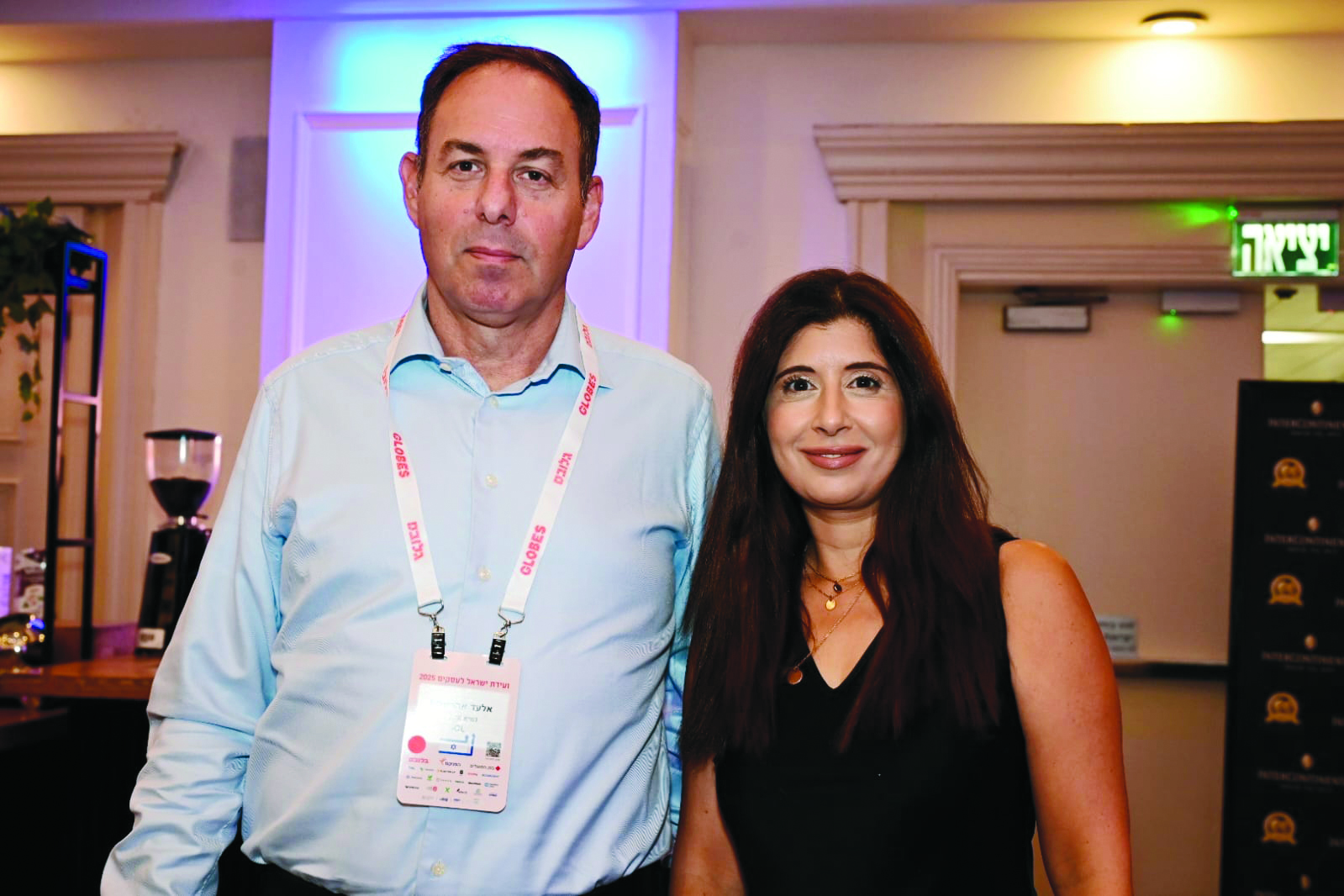
In November 2025, she was photographed with ICL CEO Elad Aharonson at the Israel Business Conference in Tel Aviv. The conference’s theme concerned resilience in the face of challenges. Within weeks, her own place in the company’s leadership would acquire a new title.
An electric detour, with familiar questions
Before that promotion came another boardroom. On October 26, 2021, REE Automotive announced her appointment as an independent director alongside Michal Brikman. REE was developing electric-mobility technology, an apparent departure from specialty minerals and investment management.
The announcement explained the connection. REE was adding financial, corporate-governance and sustainability experience to its board. Co-founder and CEO Daniel Barel welcomed the two directors as the company worked toward its business objectives. Geva Harel’s contribution was described through the experience she brought to oversight, rather than through a claim to have designed the technology.
Her board service illustrates how a career can cross industries without requiring a new professional identity at every stop. A company developing vehicles still needs directors who understand regulation, governance and institutional responsibility. ICL’s subsequent reporting describes her REE directorship in the past tense; it belongs to her career history rather than her current job list.
Making responsibility somebody’s job
At ICL, her title grew to include chief legal and sustainability officer. That pairing placed two substantial sets of responsibilities within one executive brief. It also gave a practical setting to a word, sustainability, that can otherwise become rather comfortable floating above the work.
A glimpse of the surrounding work came during ICL’s 2022 Year of Sustainability. The company’s compliance team organized an expert panel, material about the cost of bribery and an educational virtual escape room. Its account of those activities named Geva Harel among the participants pictured. An escape room is an unexpectedly cheerful venue for an anti-corruption lesson, though the importance of finding the right exit needs little explanation.
That same period brought colleagues from legal and compliance together in Amsterdam for a presentation of ICL’s sustainability roadmap. Gali Feldboy-Klinger publicly thanked Geva Harel for her support. These small details show the organizational work behind the executive title: colleagues meeting across countries, presenting plans and finding ways to teach obligations.
“Sustainability and innovation are interconnected.”
Lilach Geva Harel, 2025
Recognition followed at both professional and company level. Legal 500 included her in its Israel 2023 GC Powerlist as executive vice president and global general counsel. In 2024, she used LinkedIn to celebrate ICL’s sixth consecutive Platinum+ ranking in the Maala ESG Index, thanking the team and partners. Her post presented the achievement as shared work.
A target needs a number
In July 2025, ICL announced validation of its near-term greenhouse-gas reduction targets by the Science Based Targets initiative. Geva Harel connected that development to the work of reducing the company’s environmental footprint and embedding lower-carbon practices in its operations.
The numerical commitments make the announcement worth examining. Against a 2022 baseline, ICL set a 58.8 percent reduction target for absolute Scope 1 and 2 emissions by 2034. It also set a 35 percent reduction target over the same period for specified Scope 3 categories, including purchased goods and services and certain transport, product-use and end-of-life emissions.
Absolute Scope 1 & 2
emissions reduction
Specified absolute Scope 3
emissions reduction
ICL targets, measured against 2022. The bars represent planned reductions, not reductions already achieved.
These are future commitments, with defined boundaries and a baseline. Keeping those details attached to the percentages matters. A validated target provides a framework against which later performance can be judged; delivery remains a separate task. In her public statement, Geva Harel linked environmental progress to the long-term resilience of the business.
The public side of an industrial job
Her responsibilities also took her into parliamentary scrutiny of ICL’s operations. In June 2024, she accompanied the Knesset committee overseeing the Israeli Citizens’ Fund on a visit to Dead Sea Works. Infrastructure, environmental and finance executives joined the visit.
The group discussed the operations and their significance for the potash market and food security. Earlier committee proceedings show her addressing the Dead Sea’s water level, employment and the company’s proposals for solar energy. They also show lawmakers pressing questions about environmental effects and the terms under which resources are used.
These exchanges belong in her story because they place her work in an arena where the company’s account is questioned in public. As its legal representative, she articulated ICL’s position. The setting required discussion of the relationship between industrial activity, public assets and state oversight, with other participants entitled to challenge the answers.
The shipping lane and the dinner table
Geva Harel became ICL’s deputy CEO on January 1, 2026. Her current biography credits her previous tenure with advancing the sustainability agenda and delivering regulatory and business outcomes. The promotion followed seven years at the company.
Food security has become a recurring theme in her public statements. In a 2024 company article, she described pride in contributing to a business whose minerals serve an essential social need. The emphasis was on the connection between industrial inputs and the ability to produce food.
She developed the argument in a March 2026 opinion column, connecting disruption around the Strait of Hormuz with fertilizer supply. Her focus extended beyond the familiar discussion of oil prices to the materials needed for agricultural production.
On October 18, 2026, she returned to that subject in another column. She argued that governments should treat minerals, production capacity, infrastructure and knowledge as strategic assets, looking twenty or thirty years ahead. Shipping routes, in her telling, belong in the conversation about who can keep growing food when supply chains are under pressure.
It is a larger version of the practical concern visible in that seventeen-director discussion: how should a system be arranged so it can function when the easy assumptions fail? From a morning run beside the sea to arguments about what must travel across it, Geva Harel’s career keeps bringing the discussion back to what has to work.
Follow the thread
Profiles, interviews and further reading.