A woman leaves a threatening partner. She still has a front door, a journey to work, children who need collecting. Separation changes the address of the danger; it does not necessarily remove it. For Michal Sela Forum, this ordinary geography is a design brief. What would protection look like if it followed the woman through the life she wanted to keep?
- Practical protection: trained canines and security services for eligible threatened women.
- A technology pipeline: survivor workshops, a hackathon, an Academy and continuing support.
- The connection: Relyon, a hackathon-born alarm app, joined the protection programs in 2025.
The danger after the door closes
There is a specific loss behind the question. On October 3, 2019, Michal Sela was murdered by her husband. Her sister, Lili Ben Ami, founded the Forum in May 2020. The organization’s declared destination is zero femicides a year. Its route brings domestic violence specialists together with people whose usual work involves software, security and entrepreneurship.
The insight is about timing. An emergency response matters enormously, but so does recognizing danger before an emergency. The Forum translates warning signs into public resources and tools that professionals can use. Its Esther Code asks four questions about a relationship, then directs concerning answers toward specialist assessment. It is explicitly an early recognition and referral tool, rather than a diagnosis.
“What if we could turn a threatened woman’s home into her shelter?”The question on the Forum’s website
That question also explains its position in the market. Shelters, police, welfare services, security companies and personal safety apps each address part of the problem. The Forum connects several of those capabilities. Its direct protection work is concentrated in Israel, while international partnerships and advocacy give the organization a wider reach.
The service behind the button
Michal’s Watch, also known as Sayeret Michal, bundles a home camera, a panic button, an emergency call center and private security patrols. The package includes self-defense lessons and a warning letter from a law firm. A button alone cannot protect anyone. The useful product includes the people, procedures and response behind it.
The canine program takes a different route to the same concern. A woman receives a carefully selected protection dog, with three months of tailored training. The package extends to equipment and provision for the animal’s retirement. The dog must fit a household, not merely pass a security test. Family life is part of the specification.
These services have boundaries. Applicants must live separately from the threatening party and meet program requirements involving recognition by welfare or police authorities. Applying does not guarantee acceptance. The Forum also states that it is not a therapeutic care provider. Its protection programs sit alongside specialist support and law enforcement.
Reported average monthly cost per woman, 2024. Historical operating figures, not current prices or equivalent service packages.
A 2024 evaluation offers a promising, limited signal: nine canine recipients reported an average 70% reduction in threats. A small group’s reported experience cannot establish a reduction in murder risk. The distinction matters when an organization’s goal is so consequential. Evidence about feeling safer, fewer threats and surviving an attack answers different questions.
Let the people with the problem into the room
The Forum’s technology work begins before anyone opens a laptop. Nothing About Us Without Us offers free ideation workshops to women and young people affected by domestic violence. Google supports the program; EY hosts workshops. Experience of the problem becomes a qualification for helping define it.
For a builder, that can change the assignment. X-face.ai’s founders told CTech that conversations with survivors highlighted security after leaving an abusive relationship. Their answer was a camera system designed to recognize a specific person approaching a home and send an alert. The product brief came from what survivors said remained frightening.
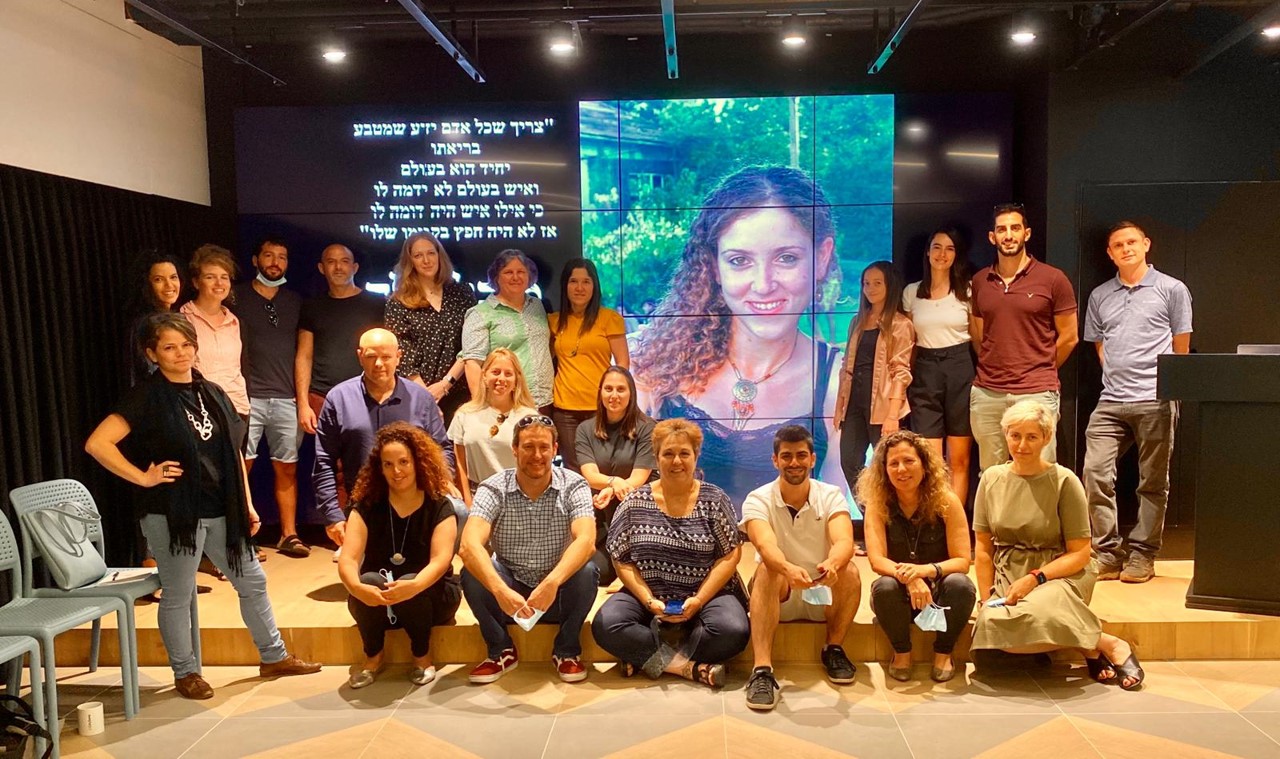
Selected teams move through the Safe@Home hackathon into the Michal Sela Startup Academy, developed with Google for Startups. Mentoring, workshops and business guidance continue beyond the initial competition. The fifth cohort graduated in March 2025 with six ventures. These are distinct projects supported by the Forum, rather than one suite of products it sells.
- 01Survivor insight
- 02Hackathon
- 03Startup Academy
- 04Rooftop support
The Forum’s development pathway. Participation does not guarantee a deployed product.
The Rooftop alumni community, launched in March 2022, supplies the less photogenic part: recurring meetings, mentoring, help with business models and introductions to investors. It addresses a familiar gap in innovation programs. A competition can create momentum; sustaining a team requires continuing access to expertise and support.
Who keeps the experiment running?
Relyon supplies a concrete connection between invention and delivery. Originating at the first Forum hackathon, its voice-activated emergency app joined the protection programs in 2025. A threatened woman’s phone could become another route to a private security response. The Forum’s two activities could now reinforce each other: developing tools and providing a setting in which to use them.
For readers, participation depends on their role. Technology teams can follow the hackathon and Academy application routes. Professionals can request the Esther Code ambassador kit. Supporters can donate or volunteer. Women seeking protection can apply through the program pages, where the eligibility questions make clear that this is an assessed service.
The money comes through a nonprofit structure: donations, foundations, corporate support and public partnerships. CHW supports protection work and international cooperation. The Forum’s 2025 report describes a NIS 4 million matching agreement with the Welfare Ministry over two and a quarter years, intended to protect 600 women. That is a program agreement, not venture funding.
The transferable lesson is practical: include the people affected, pair builders with specialists, and support the work after the demonstration. It depends on trained responders, reliable services, suitable participants and funding that lasts. A prototype cannot supply those conditions by itself. The Forum’s ambition is 100 prevention startups by 2030. Its more revealing test is whether an idea becomes useful in someone’s ordinary day.