Leslie Durschinger once travelled to a carbon-market conference the inconvenient way: more than 400 kilometres by bicycle, from Rotterdam to Cologne, through the rain. The 2016 EneCO2 Tour brought together 34 riders from 14 countries. There were conversations in the saddle, gingerbread at rest stops and a change of clothes in a castle’s wine cellar. Climate finance, it turns out, can occasionally offer better scenery than a meeting room.
It is a useful introduction to Terra Global Capital’s founder, chief executive and chief investment officer. Her professional vocabulary includes derivatives, carbon accounting and political risk insurance. Her biography also includes a family olive farm. The combination is less peculiar than it first appears: her work concerns what land can produce, who receives the proceeds and how to persuade money to stay interested long enough for something useful to happen.
A different use for a financial education
Before founding Terra Global in 2006, Durschinger spent two decades in financial services. Her employers included JP Morgan, Merrill Lynch, Barclays Global Investors and Charles Schwab. She held senior positions across derivatives trading, investment management, algorithmic trading, risk management and securities lending. That is a substantial apprenticeship in the ways a promising proposition can become an uncomfortable exposure.
At Terra, she applied that experience to financing nature-based solutions: activities that protect, restore or manage landscapes while addressing climate change. The practical work includes reducing deforestation, increasing tree cover and supporting changes in agriculture. Governments, community organizations, private companies and investors all enter the picture. Each arrives with different obligations; a pleasing photograph of a forest cannot settle their differences.
Her company combines technical project development with greenhouse-gas measurement and finance. That combination makes the career change more interesting than a simple departure from banking. Durschinger brought the machinery of investment with her, then set about finding where it could serve a landscape and the people living there.
Founds Terra Global Capital
OPIC approves up to $40m for Terra Bella
Forestry finance deal receives an award
Terra reaches its twentieth year
Even a forest needs an insurance policy
In November 2011, Terra Global Investment Management announced approval from the Overseas Private Investment Corporation for up to $40 million in financing for its Terra Bella Fund. The proposed fund would invest in community-based forest and land-use carbon projects in developing countries. The distinction between approval and money already invested matters: this was approval for financing, with a larger fund still being assembled.
The following year brought another piece of financial engineering. Terra worked with OPIC on political risk insurance for its investment in the Oddar Meanchey forest-carbon project in Cambodia. Environmental Finance recognized the work with its Sustainable Forestry Deal of the Year award in 2012.
Insurance is rarely the decorative part of an environmental story. Here, it belongs near the centre. Protecting an investment against political risk addresses one reason capital may hesitate to enter an unfamiliar market. Durschinger’s contribution was to work on that hesitation in contractual terms. A forest might command affection on sight; an investment committee generally requests paperwork.
Ten points, one impatient clock
At the Global Landscapes Forum’s investment gathering in London in June 2015, Durschinger had a shortened speaking slot. She responded with a David Letterman-style top-ten list about financing sustainable landscapes. People asked for the list afterwards. The delivery offered a little showmanship; the substance was decidedly practical.
Among her points: some worthwhile activities need donor funding because they cannot support a commercial investment. Different private investors have different motivations. Public money can help reduce risks, and familiar structures such as bonds and private equity funds can help attract institutional participation. Smallholder opportunities may also require dedicated technical assistance.
The closing appeal asked her audience to consider the time available to improve the way landscapes are managed, including for future generations. It was an unusually direct ending to a discussion of financial instruments. The list revealed someone willing to discuss the limits of investment while pressing the audience to put workable arrangements into motion.
“Don’t wait. Make every day count!”
Leslie Durschinger · London, 2015
The distance between a fund and a farmer
In 2019, Durschinger met Colombia’s then-president, Iván Duque, during his visit to San Francisco. Their conversation concerned investment and a model like the Terra Bella Colombia Fund. The underlying proposition connected smallholder agriculture, forest management and income from carbon credits.
That model sought to help agricultural groups increase yields and improve processing after harvest, allowing growers to retain more value. Alongside agricultural production, forest conservation and increased tree cover could generate another income stream through carbon markets. The attraction was an arrangement in which rural livelihoods and climate finance could reinforce each other.
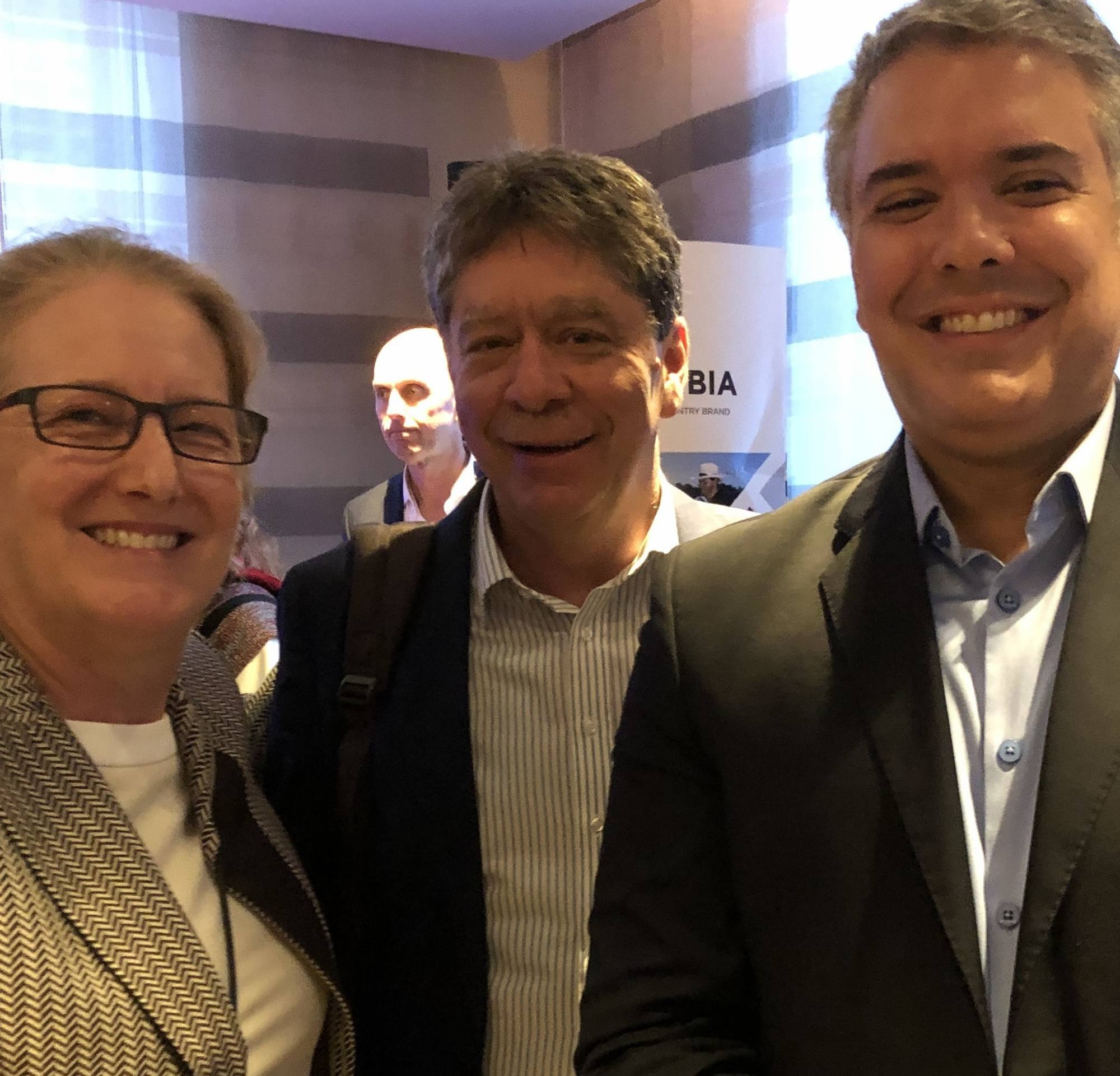
When discussing how projects are developed, Durschinger starts with questions about the country: land tenure, carbon laws and government approvals. A financial model has to reckon with those local conditions. The same activity may face quite different constraints across a border. That attention to place helps explain why her team includes foresters, agronomists, rural-development specialists and experts in mapping and remote sensing.
Describing Terra’s work in Colombia, she has explained how community patrols use smartphone applications to monitor forests. Electronic, geotagged records improved on paper reporting, while the work supported local skills and income. It is a helpful detail in a field often discussed through distant measurements. Someone still has to know the territory, collect information and keep the process going. Technology enters a working relationship with the people responsible for the forest.
Her work has also reached a different setting: California rice fields. In 2014, the American Carbon Registry gave Terra an Innovation award for a 5,000-acre rice-management project in the Sacramento Valley. Participating growers would change management practices to reduce methane emissions and earn credits. The project used a rice-management methodology developed by Terra.
The practical detail is characteristic of her company’s work. An environmental objective becomes a set of activities, a measurement method and a potential payment. The farmer still has a field to manage. An investor still has to assess the economics. The arrangement has to survive both conversations.
Who gets the value?
At a Forest Carbon Partnership Fund panel in Washington in January 2024, Durschinger described integrity in terms of where the financial value ends up. Her formulation put the people responsible for generating that value at the centre of the discussion.
“bringing the value to the place in which that value has been created”
Leslie Durschinger · REDD+ panel, 2024
She called for credits to avoid double counting, for recognized standards and for geographically specific accounting. These are technical concerns with distributional consequences: the accounting affects who can claim a result and receive revenue. The distance between a map and a payment can be surprisingly short.
Her willingness to argue for the sector is clear. In a 2024 conversation with SmarterMarkets host David Greely, she challenged media criticism of nature-based carbon projects and urged debate toward practical improvement. Her position is that criticism can affect the willingness of buyers and financiers to support projects, with consequences for community income. That is her argument as a developer and investor, and it carries the urgency of someone whose work depends on those transactions.
She also works within the institutions shaping the market. Her roles include membership of the IETA Council and the Verra VCS Program Advisory Group, alongside earlier work on REDD+ and carbon-standard committees. In September 2025, she submitted comments to a UN climate consultation on non-permanence and reversals, pressing for rules that could work for nature-based activities.
- 01FinanceFund work before credits are issued
- 02ImplementSupport locally grounded activities
- 03VerifyMeasure and check climate results
- 04SustainUse carbon revenue to support continuity
A simplified explanation of the model, rather than a promise of project returns.
The business she chose to build
Questions of participation run through Durschinger’s own company, too. In a 2024 discussion of women-led funds, she described barriers in fundraising that included implicit bias, limited networks and gender-related perceptions. She also observed that some women-led funds presented prospective returns conservatively, potentially understating their upside.
In a public post during Women’s History Month in 2026, she announced that an ownership change had made Terra Global women-owned again. She said women represented 52 percent of the company, including the senior leaders of its climate finance, natural resource management and technical greenhouse-gas quantification departments. The same post marked the approaching twentieth anniversary of her founding the business.
There is an institutional thread beyond Terra. In 2020, ACDI/VOCA appointed her to its board, bringing her experience in sustainable agriculture and forest finance into an organization concerned with economic opportunity. The recurring connections are between finance, development and the people whose livelihoods depend on land.
A working dinner, seventeen years later
By July 2026, Terra was describing another meeting in Malawi, where Durschinger joined local colleagues, conservation partners and government representatives over a working dinner. Their subject was the country’s carbon-market framework and opportunities to attract finance. Terra’s involvement in Malawi dates to 2009.
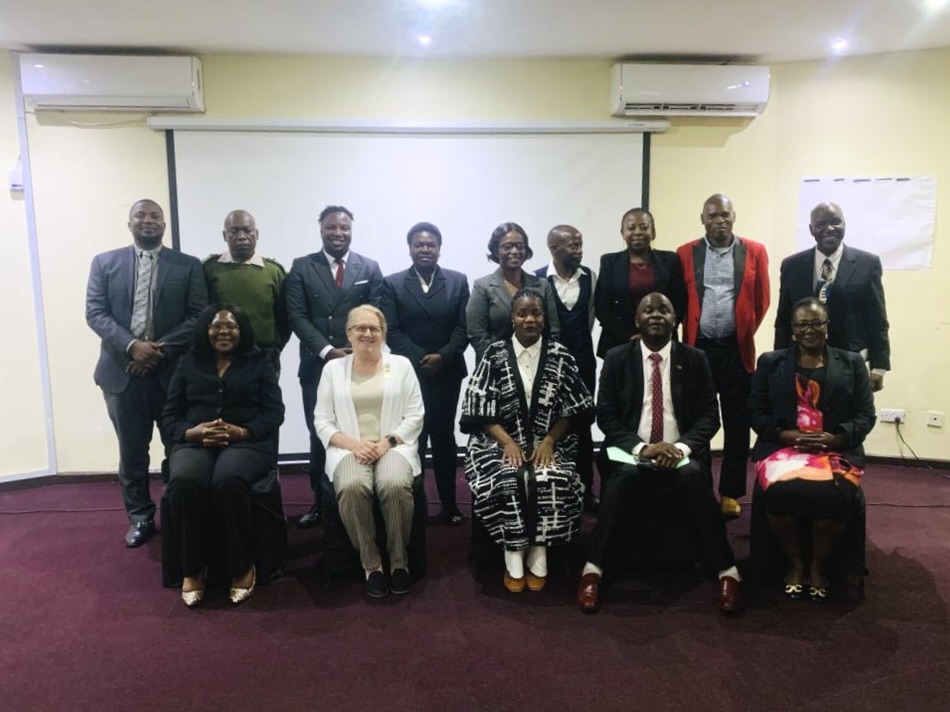
The discussion included experience from the Kulera Landscape REDD+ Program and activities such as beekeeping, sustainable agriculture and fish farming. Those details give the larger language of climate finance some scale that a person can recognize. Long-term conservation requires institutions and revenue, but its daily work is carried out through particular occupations in particular places.
Her 2026 calendar also included announced speaking engagements in Singapore on forest-carbon markets and jurisdictional programs, while a September New York Climate Week agenda listed her for a session on what funders are considering. Twenty years into Terra, the practical question of what attracts capital remains close at hand.
Then there is the olive oil. Durschinger and her family make it in small quantities on their Mendocino County farm. It is a modest, memorable detail beside the committees and investment structures. Her professional life follows land through contracts, measurements and financial models. The family farm supplies a more tangible product. There is something rather satisfying about a career that can accommodate both a carbon-accounting standard and a bottle for the table.
Read, watch & follow
- Terra Global Capital
- Leslie Durschinger on LinkedIn
- 2011 / Terra Bella financing approval
- 2012 / Forest finance and political risk insurance
- 2014 / Rice-management innovation award
- 2015 / Ten considerations for landscape finance
- 2016 / Cycling to Carbon Expo
- 2019 / A conversation about rural Colombia
- 2024 / Forest-carbon panel discussion
- Listen / SmarterMarkets with David Greely
- Read / Women-led funds and blended finance
- Read / Broadpeak’s conversation with Durschinger
- 2026 / Malawi’s carbon-market framework
- Watch / Carbon Expo interview on YouTube