A university is an unusual thing to market. It sells a future that cannot be inspected in advance, to people making one of the larger bets of their lives. The campus can be toured. The course list can be compared. The outcome remains partly invisible. Trust must carry the distance between the brochure and the years that follow.
Leah McTiernan arrived at that problem after spending more than two decades examining how people respond to ideas, messages and systems. She is now Chief Marketing Officer at International Business University, the independent, not-for-profit institution known as IBU. Based in Toronto, the university is building its identity around business education, applied projects and links to industry. McTiernan's task is to explain that identity without letting the explanation outrun the experience.
Her career makes the assignment feel less like a pivot than a transfer. At Ipsos, she moved through research management, client service, marketing, product activation, global panel operations and communications. Those titles span the visible and invisible halves of a brand. One half makes the promise. The other half builds the machinery that allows an organization to keep it.
01 / The habitResearch before the room falls in love
McTiernan began at Ipsos as a senior research manager around 2000, working across technology, telecommunications and financial services. By 2002 she had moved into a vice-president role in client service. Her responsibilities included business development, stakeholder management and the less glamorous choreography of full-service research. She also became the global product manager and subject-matter specialist for Big Idea, a proprietary tool for testing strategy before a finished advertisement existed.
That timing mattered. In a 2013 discussion about creative development, she distilled a lesson from strategist Martin Weigel: until an advertisement is made, the researcher is studying a creative hypothesis, not creative work. Her own takeaway was blunt: “The earlier research is conducted, the more valuable it is.” Research could influence the premise when the premise was still movable. Later, it often became a courtroom where everyone arrived carrying evidence for a decision already made.
“Research is a means to understanding, not an insight.”Leah McTiernan, on creative development research
In April 2010, the Big Idea product launched across 25 countries. The number is useful because it reveals another dimension of McTiernan's work. She was not only interested in the elegance of a finding. She was learning how a method travels: how to standardize it, teach it, support it and make it useful across markets. That combination of inquiry and rollout would become a recurring feature of her career.
Recognition followed. In 2012, the Advertising Research Foundation gave McTiernan a Great Mind Quality in Research Award for Big Idea and advancements in qualitative research. Her public profile also lists a Great Mind President's Award in 2013. Awards can freeze a career into a tidy moment. McTiernan kept moving across the organization instead.
02 / The tensionFeeling is data, too
From 2011 to 2018, McTiernan led marketing, communications and training work for Ipsos ASI and Ipsos Connect. She was responsible for brand and product management, thought leadership and participation in industry events and publications. It put her in the productive middle between researchers who wanted nuance and marketers who wanted a sentence.
Her 2015 essay “Why Emotions Matter in Advertising” shows how she handled the tension. She began by refusing a fuzzy definition. Did “emotional” mean engagement, resonance, physiological reaction, priming or something else? The category was less important than what happened in the audience. “An emotional ad isn't one we classify as such,” she wrote, “it is one people have an emotional response to.”
The essay avoided a fashionable choice between heart and spreadsheet. Emotional campaigns could build a brand over time, she argued, while rational messages and activation could help produce shorter-term results. The valuable work combined them. Her examples included facial coding, test-and-control designs and the small shifts in closeness that reveal whether creative work has landed.
McTiernan also wrote with an eye for the culture moving around the research. In 2016, she published pieces about Pokémon Go, Olympic sponsorship, Rio and Cannes. The subjects were bright and topical. The underlying questions stayed steady: Who is paying attention? What meaning did they take? Where did a brand enter the story, and did it earn the right to be there?
03 / The expansionFrom the message to the machine
After years in marketing and communications, McTiernan moved toward product activation. She became vice president of that function in 2018, then senior vice president of product activation and communications in 2020. The work involved implementing standardized, increasingly automated products across Ipsos. It was a shift from describing capability to making capability repeatable.
By late 2021, her remit included global panels and communications. She helped lead the growth, management and optimization of Ipsos iSay, a proprietary research-panel network operating across more than 55 countries, while communicating the expertise of the larger operations group. Panels are the human supply chain of survey research. Their quality depends on recruitment, participation, trust, technology and a respect for the people answering the questions.
Her publication record widened accordingly: mobile-first sample design, moving offline research online, mixed-mode fieldwork, trust in research and respect for respondents. This was not a departure from her earlier interest in emotion. It was the infrastructure beneath it. Before an organization can interpret a human response, it needs a system worthy of receiving one.
The widening lens appeared outside her formal job, too. McTiernan served on the board of Girls on the Run Ontario from 2015 to 2018. She spent years involved with the Marketing Research and Intelligence Association and served as president of its Toronto chapter. In 2025, she joined the proposed board slate for IABC Canada East Region as director of leadership and professional development. By 2026, the region listed her as its professional-development director.
04 / The new briefA promise students can inspect
At IBU, McTiernan's accumulated range meets a new kind of institution. The university describes itself as Ontario's first independent, not-for-profit university devoted exclusively to business education. Its programs emphasize small cohorts, industry-engaged faculty, employer projects and applied learning. Its Toronto campus moved to a purpose-built location at 655 Bay Street in February 2026. A second campus opened in Ottawa later that spring.
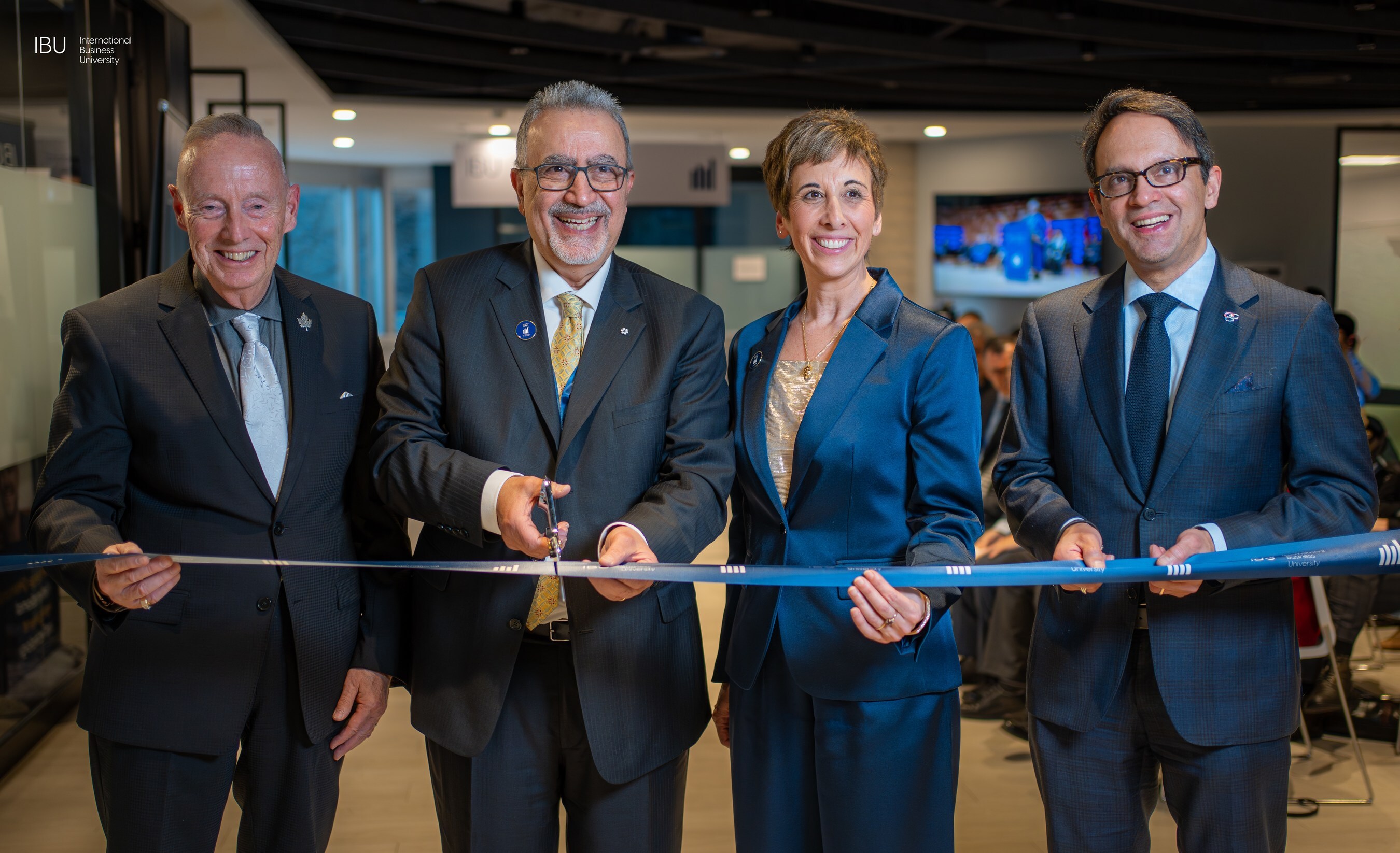
Those facts create a marketer's opportunity and constraint. A young university can define itself without carrying centuries of inherited language. It also has fewer generations of alumni to serve as proof. Its claims have to be visible in present tense: in the project a student completes, the mentor who answers, the employer who participates and the skill a graduate can demonstrate.
This is where McTiernan's old research questions become useful again. What does “career focused” mean as an experience rather than a label? What does a partnership change for a student? Which signals matter to employers? The job is not simply to find an emotional story. It is to understand which parts of the institution produce an emotional response, and which operational facts make that response durable.
A university can buy visibility. The harder work is making its promise survive the first class, the first project and the first job search.The brand challenge at IBU
IBU said that about 40 percent of its students were participating in real-life applied projects when the Toronto campus opened, with a goal of reaching 75 percent as industry partnerships expanded. That gap is more revealing than a polished slogan. It names the present, the ambition and the operating work between them. For a research-minded CMO, it is the kind of claim that can be measured and made meaningful.
05 / The through-lineCuriosity with a delivery date
McTiernan's public introduction begins with curiosity: the force that motivates her to explore ideas and push boundaries. Curiosity is easy to romanticize. Her career shows its more demanding form. It requires defining terms when a room would rather move on, testing a strategy while it can still change, and following an idea through product, training, operations and communication.
Colleagues' public recommendations add texture. One describes her ability to handle complex situations and find a way to get things done. Another emphasizes work ethic, integrity and the drive to deliver. Neither description fits the stereotype of the detached researcher. McTiernan's pattern is closer to applied curiosity: ask until the problem is clear, then accept responsibility for what happens next.
That may be the most useful connection between Ipsos and IBU. Market research taught her that the audience gets the final vote on what a message means. Higher education raises the stakes. Students live inside the proposition for years. Their experience becomes the finding.
A new university brand will be built through repeated encounters, not a single campaign. McTiernan has spent a career studying those encounters from different angles. Now she is helping design the conditions behind them. The research question has become an operating brief: make the promise specific, make the evidence visible, and listen closely to the response.