A website can know a remarkable amount about its visitor and still behave like a shop assistant who has wandered into the stockroom. Lars Birkholm Petersen has spent much of his career trying to close that gap: between what a business knows, what its software permits, and what a person actually needs when they arrive.
His examples tend to begin far from a software diagram. A clothes shop. A first date. Someone looking for information and being asked, rather prematurely, to buy something. The ordinary awkwardness matters. Petersen works in an industry fond of giving complicated names to experiences people understand perfectly well when they happen face to face.
Today he is co-founder and CEO of Uniform. Before that came a Danish digital agency, nearly a decade at Sitecore, a book written with two colleagues, and another agency called Altola. Across those changes, the question keeps returning: how do you make the technology serve the relationship, without making everyone wait for the technology?
A developer walks into a clothes shop
Petersen was born and raised in Denmark and later made his home in California. His professional beginnings belong to an earlier web. He started as a developer when frames and Active Server Pages were fashionable. Anyone who remembers frames knows that fashion, in software, is capable of considerable cruelty.
He also spent eight years as co-owner of a digital agency that was sold to Visma Software. That gave him experience on the side of the business responsible for turning a client's ambition into something that worked. In mid-2008 he joined Sitecore, where he would eventually become vice president of business optimization.
In 2010, he explained website personalization through an imagined visit to a clothing store. A sales assistant notices a shopper's clothes and style, then adjusts the recommendations. His example included Hugo Boss jeans, an Eton shirt and Lloyd shoes. The point was the familiar act of paying attention. A helpful shop assistant does not deliver the same speech to everybody who comes through the door.
He carried that observation into the web: visitors have different goals, behaviors and needs. Treating them identically leaves useful information unused. This was already his territory well before Uniform. The developer had begun asking questions that required answers from marketing, management and the people doing the shopping.
Frames and Active Server Pages feature in Petersen's account of his developer beginnings. His later work keeps returning to the people using the systems.
The book before the business
At Sitecore, Petersen built the Business Optimization Strategies operation, helping customers and implementation partners improve digital experiences. The work extended beyond configuring software. His public biography describes advising on organizational roles, analytics, cross-channel experiences and change management. Getting a platform installed was one job. Getting an organization to use it coherently was another.
In 2014, he published Connect: How to Use Data and Experience Marketing to Create Lifetime Customers with Ron Person and Christopher Nash. All three were working on customer experience at Sitecore. Petersen led the global business optimization consulting team; Person and Nash brought their own consulting experience to the book.
The title's key word was a verb. Its chapters moved through customer experience maturity, organizational roles and the business of persuading a board. A book that includes both personalization and selling to the board acknowledges an awkward truth about enterprise software: the interface is only one of the places where a project can get stuck.
The collaboration gave Petersen a way to set down methods developed through consulting. It also provides a useful marker in his career. Years before he led a company offering a shared workspace for digital teams, he was writing about how those teams should organize themselves. The problem had already acquired people, processes and a budget.
- 2008Joins Sitecore after the agency years.
- 2014Co-authors Connect with Ron Person and Christopher Nash.
- 2018Co-founds Altola, focused on personalized digital experiences.
- 2020Publicly describes Uniform and its work on existing technology stacks.
- 2021Announces Uniform's $28 million Series A.
- 2026Argues for experiences serving people and AI agents.
The agency after the book
After Sitecore came Altola, a boutique agency focused on architecting personalized digital experiences. Its work included Sitecore, Contentful and Jahia. That mix matters: different clients could need different tools, and somebody still had to make the pieces cooperate.
The Consortium of Personalization Professionals describes Uniform as growing out of work with clients, agencies and digital experience vendors. It names Petersen as a technology fellow and places the early company in a practical setting: connecting existing and new marketing technologies, bringing modern web architecture to enterprises, and improving performance.
By January 2020, Petersen was writing publicly about Uniform. He said the team had spent the previous year developing it. That early account emphasized building on an enterprise's existing stack. His argument allowed companies to adopt newer methods incrementally. The old systems did not have to disappear before useful work could begin.
There is a certain appeal in a software founder who makes room for the software a customer already owns. Most large organizations have plenty of it. Petersen's argument addressed that accumulated reality, along with a concern he had been discussing for years: personalized pages had to load quickly enough for their relevance to matter.
A truce between two departments
Uniform's founding team included Alex Shyba and Adam Conn alongside Petersen. Their subject was the difficult handoff between developers and the business users who needed to publish and change digital experiences.
At Uniform's virtual DXC Assembly in November 2022, Petersen described a pendulum. Traditional digital experience suites gave marketers tools for managing content, while requiring developers to work within proprietary systems. Headless technologies gave developers more freedom, but left marketers managing disconnected tools and requesting help to assemble them.
Each improvement could move the inconvenience to the next desk. The developer gained flexibility; the marketer gained another login and a place in the backlog. In Petersen's account, the connections themselves became a continuing maintenance job. Custom integration code could consume the time that teams wanted to spend building experiences.
A conceptual comparison of the tradeoff he described, not a performance measurement.
Darren Guarnaccia described that same middle ground when he joined Uniform in 2022. He thanked all three founders and wrote about giving marketers control while preserving developers' freedom. Configuration, collaboration and experimentation were central to his explanation. The ambition required both groups to be able to get on with their work.
For Petersen, this joined the organizational questions from his consulting years to a software product. The company could sell a workspace, but the reason for having one was the handoff. A launch should not need a small diplomatic mission between marketing and engineering.
Twenty-eight million dollars, same unfinished airplane
On December 2, 2021, Petersen announced a $28 million Series A led by Insight Partners, with participation from Elad Gil and Array Ventures. He reached for Reid Hoffman's familiar image of assembling an airplane while falling from a cliff, then added his own experience of repeatedly changing the aircraft's parts.
“We have also changed the wings, cockpit, and aerodynamics a couple of times,” he wrote.
The admission is more interesting than a tidy founding legend. The product had evolved. Petersen described beginning with fast personalization, then broadening the work to connecting tools and letting nontechnical users assemble experiences. The funding would support further development, partnerships and hiring. The objective was to reduce friction throughout digital delivery.
Led by Insight Partners, with Elad Gil and Array Ventures participating.
His public explanations also leave room for incremental change. In a 2023 discussion with E2X's Dom Selvon and commercetools' Kelly Goetsch, he examined the distinctions between headless tools, digital experience platforms and experience composition. In February 2024, he warned about migration pitfalls, including custom integration code and backends that become difficult to maintain.
Those warnings belong to a founder selling an approach to the problem. They are also consistent with his earlier work: choosing modern parts does not automatically produce a useful whole. Somebody must account for the experience of the people assembling it.
The customer gets a new intermediary
In a 2021 interview, Petersen framed personalization and privacy as a question of value. A company could use an architecture that kept data on the visitor's device, or store data and consider what the visitor received in return. His test was practical: would the experience help the visitor finish a task more quickly?
“Is the personalized experience valuable for the user in completing their task faster?”
Lars Birkholm Petersen, 2021
That attention to purpose also appears in his writing about intent. In another 2021 essay, he imagined a blind date beginning with a marriage proposal, then compared it with websites immediately asking newcomers to buy or sign up. The joke works because the sales pitch has arrived before the relationship. A visitor's task deserves a little conversation first.
By 2026, the audience in his argument had expanded. Uniform's May announcement of an upgraded Scout described a platform serving human visitors and AI agents. Petersen said the company had projected this change two years earlier. Agents involved in discovery and research needed access to structured content, while human teams needed tools to build and govern experiences.
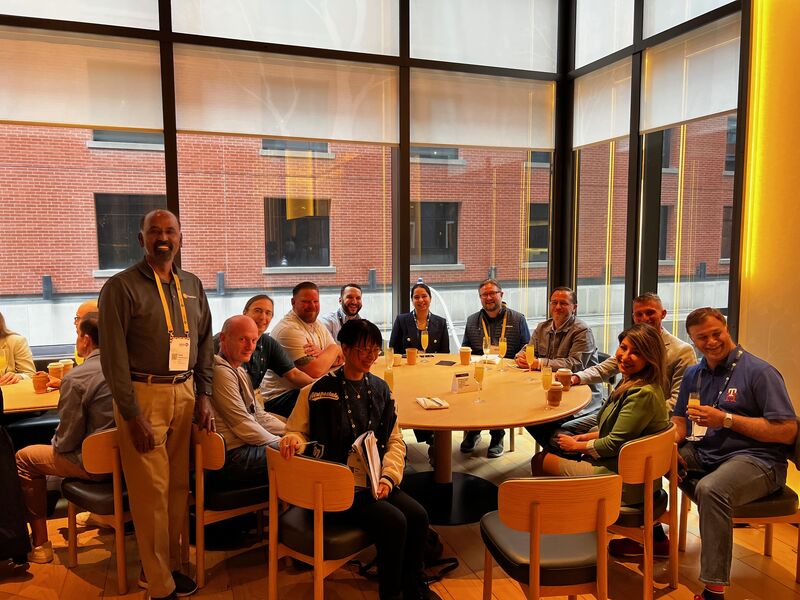
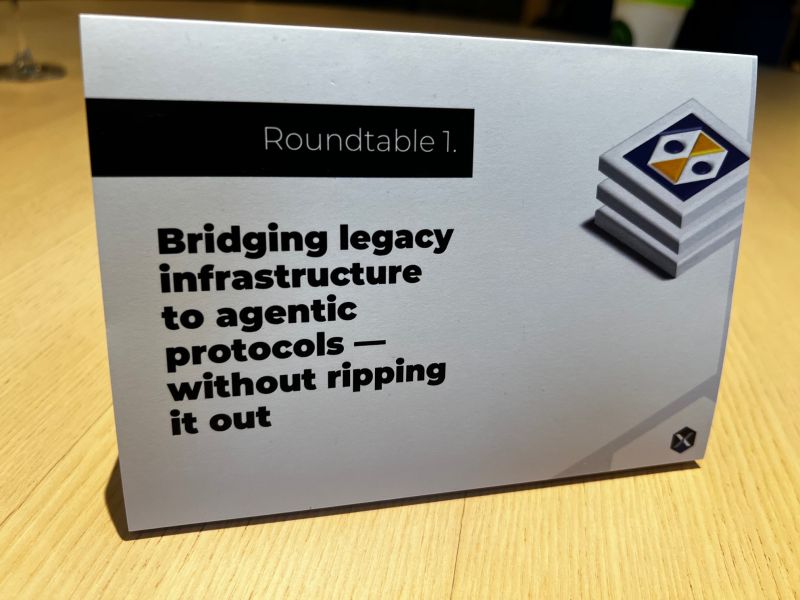
He also shared photographs from MACH X in Toronto, where he said he had hosted two roundtables with Gayatri Sikka about bridging existing infrastructure to agentic protocols. The sign on the table made the concern pleasantly explicit: keep the infrastructure while finding a way forward. Even a conversation about AI could begin with what a company already had.
In September 2026, Petersen published another argument about the digital experience platform category. His proposed progression ran from suites to composable systems, then to agentic and autonomous experiences. It continued a habit visible in Connect: describe the stages, and help an organization understand where it stands.
The vocabulary has traveled a long way from frames and Active Server Pages. Petersen's recurring concern remains recognizable. A person arrives with something to do. A team has something to publish. Between them sits an arrangement of people and software that can either help or delay. His career has repeatedly brought him back to that space, with a different job title and another attempt to shorten the wait.
Read, watch, follow
Continue with Petersen’s writing, conversations and work.