Lana Elie's flower company began with an indignity familiar to anyone who has tried to send a feeling across a time zone. She called a florist in Australia, read her card details to a stranger, spent real money on an arrangement she could not properly see, and discovered later that the bouquet which arrived was a poor relation of the one she thought she had bought. Romance had met a broken checkout.
Elie knew the better product existed. Independent florists were making inventive, seasonal work, but finding them from another city could feel like detective work. Their websites were uneven. Their availability lived in phone calls. The large delivery networks offered convenience, yet their catalogues tended to sand bouquets into a limited range of familiar shapes. The customer could buy quickly or buy interestingly. Doing both was harder.
This irritation followed her through a career spent where fashion, media and technology were learning to share a desk. She worked around digital projects and campaigns for brands including Burberry and Gucci, then became head of brand solutions for Europe, the Middle East and Africa at i-D. Fashion taught her to read a season. Digital work taught her to spot the machinery behind an apparently effortless experience. Flowers offered a chance to use both instincts at once.
“I was a frustrated customer and I think that's the best experience you can have.”Lana Elie on entering floristry without industry experience
The feed came before the flower shop
Six months before Floom had a name, it had an Instagram account. Elie photographed a flower each day in her living room, added a filter, and wrote about its season, meaning or history. The practice began as a small signal sent into the world: do other people care about flowers with this degree of attention?
They did. By launch, the account had attracted 6,000 followers and fed an email list. For an investor, those followers were evidence of engagement before a transaction existed. For Elie, they were also a research panel. The response to each stem revealed a vocabulary and an appetite. Instagram's recommendation system helped her find the florists whose work would eventually make the marketplace worth visiting.
The useful idea here is smaller than “build an audience.” Elie created the tiniest recurring version of the future company: one beautiful, seasonal object, made legible online. The account established taste before Floom asked anyone to trust its commerce. Many startups unveil a shop and then wonder how to acquire attention. Floom cultivated attention while the shop was still a sketch.
A marketplace that left the fingerprints on
Floom launched in London as a curated marketplace for local independent florists. Its essential product choice was to let those florists show what they actually had and loved making. A partner could decide the arrangement, available stock, selling radius, and delivery days. The customer saw the maker's style rather than a stock photograph of a bouquet to be approximated somewhere else.
The Floom exchange
style + stock
discovery + tools
choice + delivery
That distinction sounds decorative until one notices what a marketplace usually does. Scale rewards uniform fields, predictable photography and repeatable inventory. Creative suppliers produce irregularity by profession. Floom's job was to make that irregularity searchable and purchasable while keeping enough structure for delivery to work. Technology served as a frame around the florist's authorship.
Elie's fashion background appears everywhere in that premise. She spoke of flowers as fashion speaks of fabric: color changes with the season, provenance carries meaning, and clichés are lazy. She disliked the automatic red rose for Valentine's Day and the year-round insistence on a few famous stems. Her comparison was charmingly exact. People understand that leather and vintage wine bear the marks of their origins; flowers carry soil and sunshine in their color, size and scent too.
She also widened the occasion. Flowers need not wait for a holiday, a boyfriend, or a conventional recipient. Buy them for yourself. Buy them for a man. The marketplace proposition contained a cultural one: a bouquet can be personal without following the old script.
Building the machinery behind the beauty
The front page may have been flowers, but the operating problem was logistics. A stem passes through growers, wholesalers, florists, couriers and customers. Every handoff can spoil the promise. As Floom learned where orders failed, it moved deeper into the florist's working day: inventory, websites, point of sale, and business management. Elie called the ambition “the Shopify for floristry.”
Money arrived in stages. Early backing included New Look founder Tom Singh and an investor connected to a major flower distributor. A 2017 Crowdcube campaign was reported at £580,000, with more than 300 investors taking part. A later £2 million round was led by firstminute capital and Pembroke. Elie's fundraising method was direct. She studied the boards of businesses with similar models, found people one or two connections away, and wrote to those she thought should care.
“Be aligned on what you want your business to be.”Elie's advice to founders considering outside investment
Capital came with a warning label. Elie urged founders to understand the return an investor expects and test it against the future they want. The advice fits Floom's product philosophy: alignment matters at every layer. Customer and florist. Founder and investor. Marketplace and maker. A mismatch may remain invisible for a while, then turn up at the door looking nothing like the photograph.
The mistakes acquired stems and leaves
Elie has been unusually useful when discussing the parts founders prefer to crop out. Consider hiring. Her early interviews were relaxed by design; she wanted candidates comfortable enough to show their abilities. The atmosphere may have been kind, but the comparisons were inconsistent. Two of the first three hires were later asked to leave.
Her correction was methodical: common questions, structured feedback, and set projects for each candidate. A warm conversation remained possible, now supported by evidence. The episode reveals a trait that runs through her public comments. She likes intuition, but she respects what a process can protect. Taste chose the florist. Systems made the bouquet arrive.
When the pandemic forced local trade online, Floom's existing thesis accelerated. Demand for flowers grew, while suppliers faced a sudden digital-only reality. The company also opened its platform to local food producers whose normal routes to customers had been disrupted. The category changed, but the service stayed recognizable: help a local artisan become visible and transact online.
By then Elie was learning to step back from details without losing the future. She described supporting the team and making the destination clear as a central priority. Switching off came less naturally. Board games, restaurants and Scrabble on her phone supplied some relief. During travel she remained attached to email, packed too many shoes, and preferred Muji suitcases. The wheel locks, she noted, were particularly useful on Japanese bullet trains. Even the luggage had an operational feature.
Passing the shears
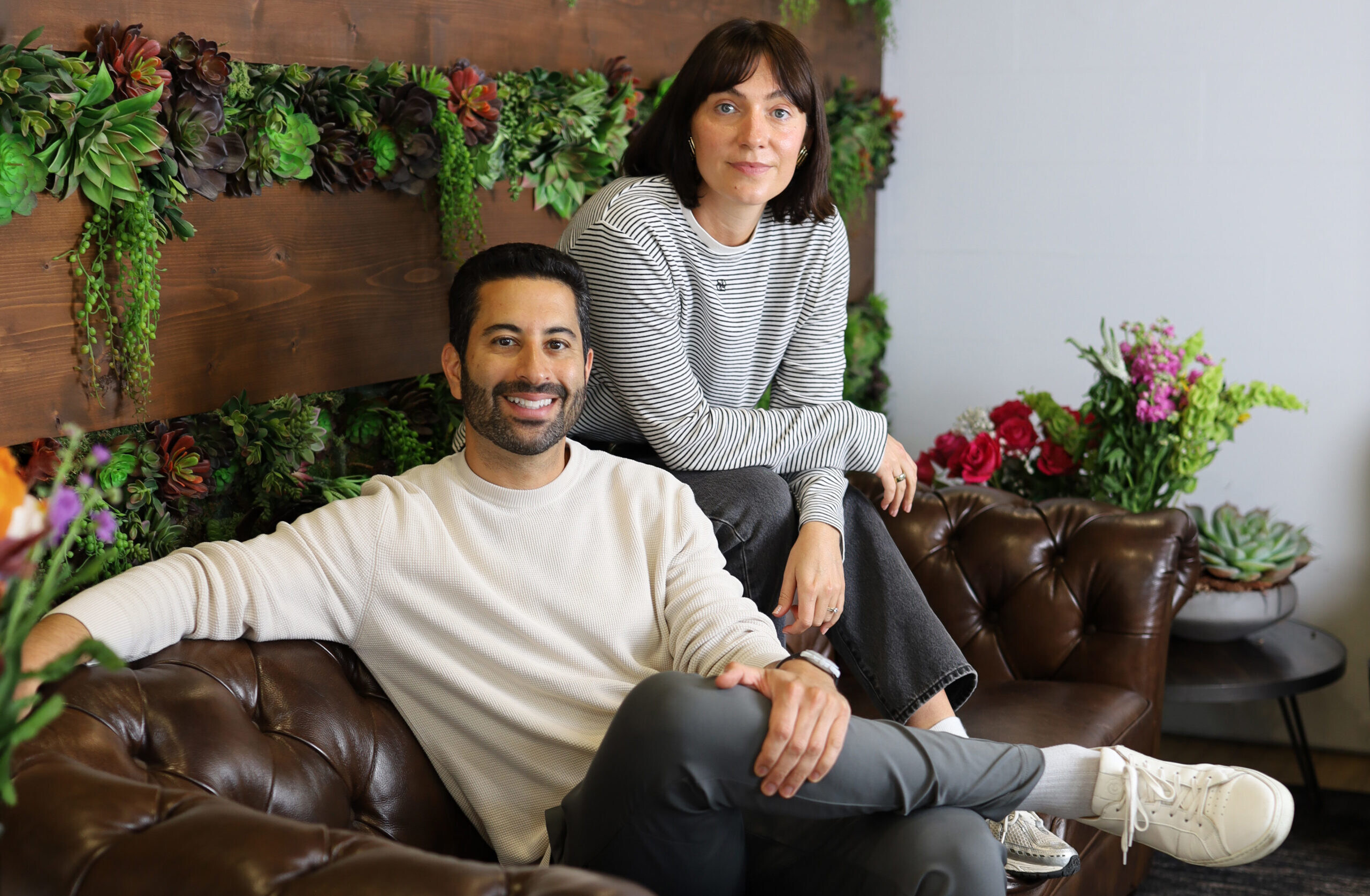
On May 28, 2025, BloomNation announced that it had acquired Floom. The buyer supplied e-commerce, point-of-sale and marketing tools to local florists in North America; Floom brought its UK marketplace and a bridge into Europe. The companies said Floom would continue to operate independently.
Elie's statement made the emotional test of the deal explicit. Floom had been her baby for nearly a decade and building it was, she said, her greatest accomplishment. She would pass it on only to people who understood the cause at its center: independent florists. BloomNation had built around the same community. The transaction read as a choice of steward as much as a change of owner.
After the exit, Elie moved from the operator's private conversations to the interviewer's public ones. She co-hosts Hot Takes Big Stakes Business with Bala co-founder Natalie Holloway. Episodes examine fundraising, the first million, founder compensation, launching, brand building, and the errors hidden by polished retrospectives. Her solo discussion of founder pay came from a subject she felt women in particular were not discussing enough.
The turn suits her. Floom began by making overlooked creative work visible. The podcast makes overlooked operating knowledge speakable. In both cases, the format is practical and the personality survives. There is advice, but also admission: launches can land quietly, co-founder choices are emotional, money conversations feel awkward, and founders make decisions with incomplete information.
Elie's career has moved from packaging digital stories for fashion brands, to building the rails beneath floral craft, to asking founders how their own machinery works. The constant is curation with a purpose. She spots something distinctive, asks why it remains hard to find, and designs a clearer route toward it.
A bouquet remains a tidy metaphor because it refuses to be too tidy. The stems differ. The season changes. The arrangement works when each part keeps enough of its shape. Lana Elie built Floom around that principle, then chose a buyer she believed would keep tending it. The internet has plenty of shelves. Her contribution was to leave the fingerprints on the flowers.