Lakshman Rathnam could see that something valuable was happening onstage. The panelists at a technology conference in Japan were experts. Their gestures had the rhythm of a lively exchange. The audience reacted at all the right moments. Yet for Rathnam, who did not understand Japanese, the room might as well have been behind glass. He was present, observant, and excluded.
It was an unusually productive kind of discomfort. Rathnam had spent much of his career engineering the border between people and machines: disk drives and acoustics, touch and force sensors, displays, hearing technology, the hidden physical systems that determine whether a device feels natural or obstinate. At the conference, the interface problem was no longer a button, a surface, or a sound. It was the conversation itself.
He later described the sensation in blunt terms: he had become “functionally deaf.” The experience clarified a problem that millions encounter without the novelty of travel. A classroom can be open while its lesson remains inaccessible. A city council can invite the public while its language quietly decides which public. A conference badge grants admission, not comprehension.
“Communication should be universal and not a privilege.”
An interface engineer meets the room
Rathnam's route to language software was long, technical, and more coherent than it first appears. His career included engineering and hardware leadership at Seagate, Western Digital, Apple, Palm and HP, Amazon's Lab126, and Earlens. His patent record travels across high-density fiber optics, quieter disk-drive mechanisms, multi-dimensional scroll wheels, capacitive touch, force sensing, displays, hearing devices, and, later, multilingual transcription.
The materials changed. The question stayed remarkably steady: how should a machine notice, interpret, and respond to a human being?
At Apple, his name appeared alongside other inventors on work involving capacitive sensors and a multi-touch scroll wheel. At Amazon, patented designs dealt with force-sensitive inputs, active styluses, and display assemblies. At Earlens, the interface moved into the ear. More than 25 patents later, the founder who would build a translation company had already spent decades examining touch, sound, feedback, and the small delays that make technology feel either immediate or irritating.
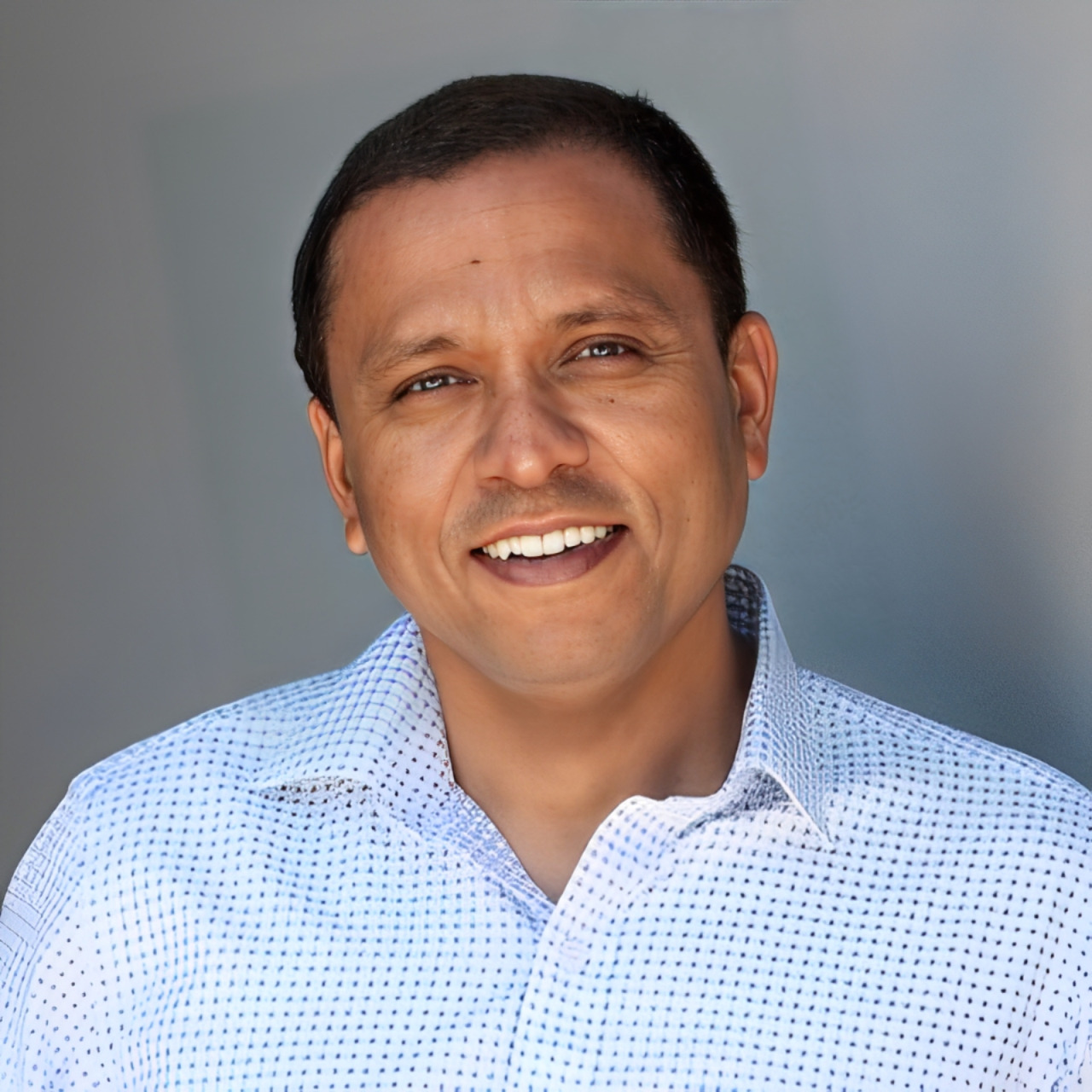
His formation began much earlier. Rathnam has said he grew up in a modest middle-class family in India, the youngest of five children. Before he turned eleven, he attended a military boarding school. He credits that environment with teaching responsibility and discipline. The words sound severe, but the lesson he tells most vividly from his early engineering years is about humility.
He once designed a fixture for testing parts. The concept had been discussed and seemed considered. He did not, however, ask peers to review the final design. The finished fixture was oversized and unusable. Metal and measurement delivered a crisp editorial verdict. Rathnam says the error taught him to seek feedback, refine ideas, and invite colleagues to criticize a design before reality does it more expensively.
The Rathnam pattern
A career of translating human intent into machine response.
The product brief hidden in exclusion
The Japanese conference supplied what patent language rarely does: a human reason to recombine old expertise. Rathnam understood audio, acoustics, speech-to-text work, and the awkwardness of not knowing what was being said. Advances in cloud computing, neural machine translation, and speech processing were making a different kind of system possible. In 2017, he founded Wordly. The company launched its first live AI translation and caption product for in-person conferences and events in 2019.
The basic experience is easy to explain. A presenter speaks. The organizer feeds that audio into a cloud session. Attendees use their own phone or computer, choose a language, and listen to translated audio or read captions. The same session can produce transcripts, summaries, subtitles, and captioned video after the event.
The practical shift is less about dazzling translation than about subtracting ceremony. Traditional interpretation can require booths, headsets, schedules, specialist teams, and separate economics for each language pair. Wordly turned much of that arrangement into software. The attendee already owns the receiver. The organizer manages one system. Language becomes an individual choice inside a shared room.
Then the room abruptly changed shape. Wordly had been designed around people gathering in person; in 2020, meetings scattered onto screens. The company expanded into virtual meetings and webinars and connected its service with platforms including Zoom and Cvent. What might have remained an event-floor utility became relevant to the square grid of remote work. The move also exposed a useful distinction. Translation was not tied to a venue. It was tied to live attention, wherever that attention happened to be.
The product kept following the conversation beyond its original boundaries. In 2023, Wordly added more natural-sounding neural voices, customizable glossaries, video subtitling, and developer APIs. A glossary may be the least glamorous object in artificial intelligence, which is precisely why it matters. Real meetings are crowded with product names, acronyms, surnames, and specialized terms that refuse to behave like textbook sentences. A language tool earns trust in the fiddly nouns.
Those mechanics matter because inclusion often loses to logistics. A school may want every family to understand a meeting, yet scheduling interpreters for every language and every occasion is difficult. A city may want broader civic participation, yet a resident cannot participate in a discussion that arrives as noise. Rathnam's wager is that when language access becomes simple enough to switch on, more organizations will switch it on.
By 2022, Wordly reported its first million users. It passed two million in 2023 and three million in 2024. In 2025, the company joined the Inc. 5000 at No. 1,707. By August 2026, Wordly said it had served more than six million users across 120 countries, powered more than one billion minutes of translation, and climbed to No. 521 on the list. Its reported three-year revenue growth was 668 percent.
Rathnam also carried the argument back into the sort of rooms that inspired it. He appeared at meetings-industry gatherings, including PCMA Convening Leaders and the 2024 AIPC annual conference, where he spoke about multilingual meeting trends. Meetings Today named him a Trendsetter in 2021. An NBC Bay Area interview placed him opposite technology journalist Scott McGrew to discuss how translation inside video conferencing could affect productivity and inclusion. The inventor had become an interpreter of the category itself, explaining why language access belonged in an event plan before anyone reached for a headset.
Rathnam founds Wordly around live multilingual communication.
The first live translation and caption product launches for in-person events.
The company reports reaching one million users.
Wordly enters the Inc. 5000 and reports five million users.
Usage passes six million people and one billion translated minutes, according to the company.
A billion minutes, measured one listener at a time
Scale makes a fine press release. Rathnam tends to return to smaller scenes. A parent understands a discussion about a child's education. A student follows a lecture without leaning on a classmate as an improvised interpreter. A resident listens to a council meeting in a familiar language. These are not decorative uses of translation. They change who can respond, question, and contribute.
This is where his founder story becomes more than the familiar tale of spotting a market gap. The conference in Japan did not merely reveal demand. It temporarily rearranged his identity. The practiced engineer became the confused attendee. Expertise onstage became inaccessible content. The insight arrived because he occupied the losing side of the interface.
A badge lets you enter the room. Understanding lets you join it.
Rathnam's public remarks also reveal an engineer's suspicion of premature victory. In the early years, he said Wordly added languages only after the team felt confident in quality and demand. He describes trust as one of the first barriers, especially in environments such as school boards where errors are not charming. The response was iterative rather than theatrical: work with customers, gather feedback, refine the models and experience, repeat.
The old oversized fixture hovers over this approach like a useful ghost. Build, certainly. But let other people test the dimensions before declaring it finished.
The ambition to become ordinary
In 2026, Wordly widened its frame. New workplace features moved multilingual support beyond the conference keynote into trainings, town halls, project meetings, and everyday operations. The company added deeper Microsoft Teams support, live subtitles, voice transcripts, language detection in its mobile app, and tools for post-event content. A brand refresh presented the same transition in visual form: the specialist event tool wanted to look like enterprise infrastructure.
Rathnam's five-year aspiration is telling. He wants translation and captions embedded in classrooms, learning systems, hybrid events, and institutional communications. Automatic, he says, rather than optional. The desired end state is not an audience applauding the translation software. It is an audience barely needing to think about it.
That is the peculiar dignity of infrastructure. It becomes more important as it becomes less visible. Light switches do not ask users to celebrate the grid. Elevators spare us a lecture on counterweights. Good language access should allow a person to choose a language and get on with the meeting.
There are plenty of grand promises attached to artificial intelligence. Rathnam's is refreshingly concrete: people should understand what is being said while it is being said. His career suggests why he chose that scale. He spent years making physical devices listen more carefully to fingers, force, movement, and sound. Wordly asks software to listen carefully enough that humans can hear one another.
The company may count its progress in users, countries, patents, rankings, and minutes. The founding unit remains a single listener, sitting in a room full of meaning, waiting for the glass to disappear.