In March 2020, the neatest line in Bizzabo’s business plan became its cruelest joke. The company made software for rooms full of people. The rooms were suddenly illegal, or at least unwise, and a calendar that had carried more than 100 events each week arrived at zero by the end of the month. More than 1,000 planned gatherings vanished in roughly two weeks. There are bad quarters, and then there is watching your market remove all the chairs.
Eran Ben-Shushan, Bizzabo’s co-founder and chief executive, had spent years arguing that a conference should be more than a hall, a lanyard, and a heroic quantity of coffee. It should be a system: discoverable, personal, measurable. Now the hall was gone. The system had to survive without it.
Bizzabo cut about a quarter of its team, a decision with no tidy inspirational gloss. Then the remaining staff built a virtual-event product in roughly two weeks. The change did not invent a new purpose. It preserved the old one under hostile conditions: help people find one another, help organizers create something useful, and give the people paying for it a way to know whether it worked.
The useful annoyance
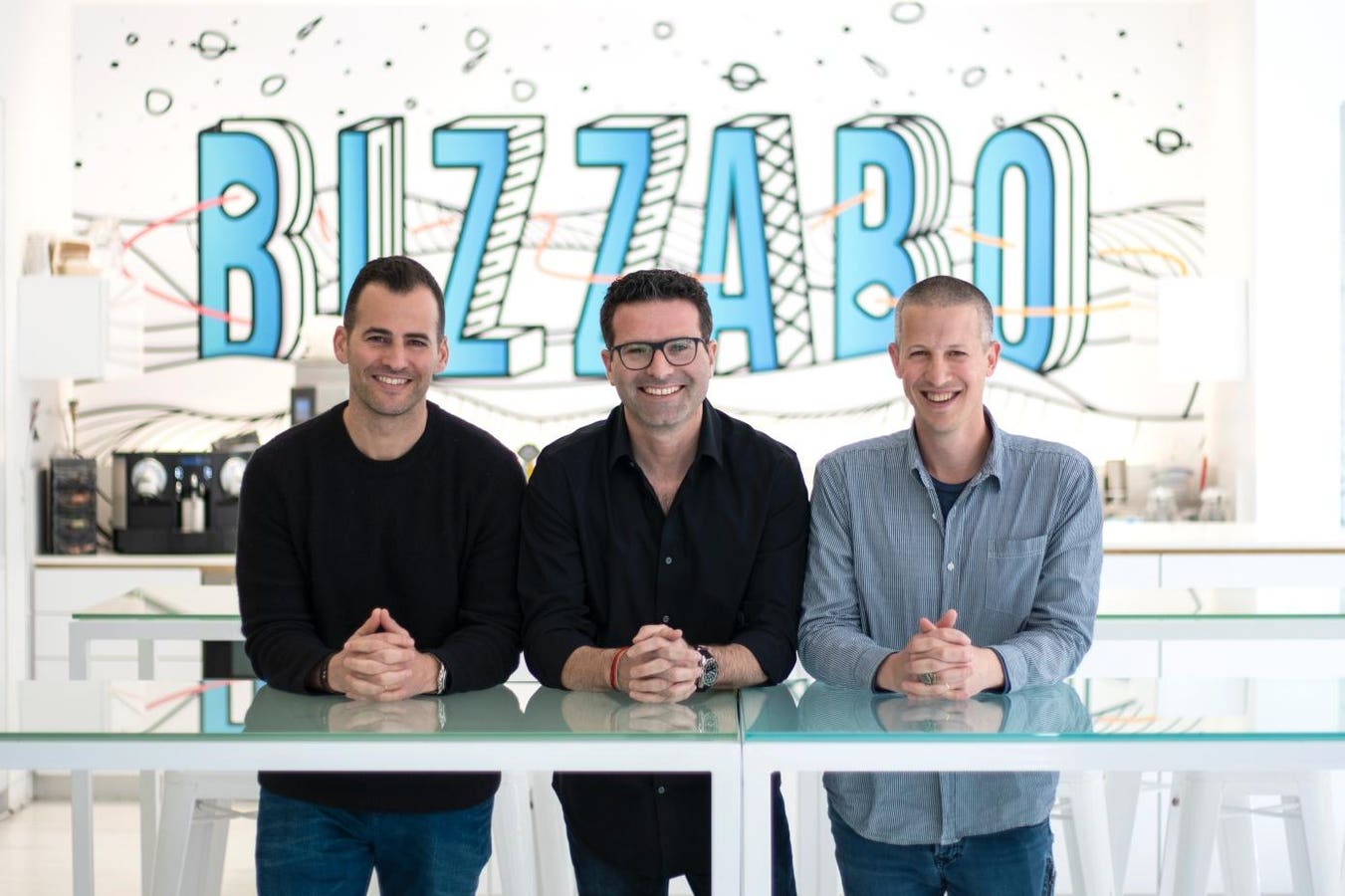
The company began, appropriately, with three people being annoyed at a conference. Ben-Shushan, Alon Alroy, and Boaz Katz had met in the Zell Entrepreneurship Program at the Interdisciplinary Center Herzliya. They were working on another startup idea and attending professional events to learn and network. Instead, they noticed how poor the networking was. Attendees wandered through a temporary city of name tags with little help finding the one conversation worth having.
Ben-Shushan understood both halves of the complaint. He had served nine years as an officer in the Israeli Air Force, then worked as a systems engineer and team leader at Elbit Systems. He had also been an event marketer and chief executive of the Rosh-Pina Media Convention. He knew systems that could not afford ambiguity, and gatherings that seemed to run on nothing else.
The founders worked for months from a family garage and launched Bizzabo as an event discovery and networking app. Its early promise was modest and humane: help you spot the relevant person across the room before both of you fled toward the miniature desserts. The app could recommend contacts from professional profiles, let attendees arrange meetings, and keep the relationship alive after everyone went home.
Customers soon complicated the idea, which was useful of them. Networking was one moment in a much longer journey. Organizers still had to build a site, sell tickets, promote sessions, manage contacts, satisfy sponsors, and explain the result to a finance department. By 2015, Bizzabo was moving toward an integrated management platform. Ben-Shushan’s description of the process is revealing: “Our biggest partners in innovation have been our customers.”
“Our biggest partners in innovation have been our customers.”Eran Ben-Shushan
That sounds like the agreeable language of software, where everyone listens and every roadmap is customer-led. In Bizzabo’s case, it left fingerprints. A networking app became an event platform. A live-event platform became a virtual one. A virtual system later absorbed onsite wearables. Each turn followed a practical nuisance voiced by somebody actually trying to run a gathering.
One problem, widening circles
The week the calendar became a cliff
Before that cliff, the business had gathered momentum. Bizzabo raised $15 million in 2017 after reporting annual recurring revenue growth above 200 percent for the prior year. A $27 million Series D followed in 2019. The company sold a broad promise to enterprise marketers: one place to manage the event, understand the attendee, and connect activity to outcomes.
Then the physical category collapsed. Ben-Shushan later said virtual conferences had represented less than 2 percent of events before 2020. The urgent temptation was to reproduce the stage on a laptop: a speaker, a grid of faces, perhaps a chat window performing the emotional labor of a cocktail reception. But a stream is not a gathering merely because many browsers point at it.
Bizzabo’s old preoccupation with the connective tissue became an advantage. Registration, sessions, sponsors, attendee profiles, communication, and analytics already lived near one another. Streaming could be added. The harder part was culture: asking an organization built for one reality to operate in its opposite.
The results were startling. In 2020, the company reported revenue doubling, events on the platform rising 65 percent, attendee registrations increasing 500 percent, and overall usage climbing 150-fold. In December, Insight Partners led a $138 million Series E, bringing total funding at the time to about $195 million.
Reported change during 2020
Bars share a 500 percent scale. Figures were reported by Bizzabo for 2020.
The round was not a victory over uncertainty. It financed a larger encounter with it. In 2021 Bizzabo acquired four companies in six months: the scheduling service x.ai, the audience-response startup Whalebone, the video-production platform TeeVid, and Klik, a Montreal company making smart wearable badges for physical events. The collection looked eclectic until the rooms reopened. Then its logic became visible.
The reopening was not a clean sequel to the virtual boom. Competition thickened, technology budgets tightened, and hybrid events did not settle into one predictable form. In July 2022, Bizzabo cut 120 jobs. A second reduction of 100 positions followed in December as the company reorganized around profitability, taking reported headcount from roughly 400 to 160 in under a year. The episode resists the easy fable in which a fast pivot solves the future. Ben-Shushan had built for constant change; constant change duly sent another invoice.
A badge learns to remember
Virtual events produced abundant evidence. Every click, session, question, and exit left a trace. Returning to a ballroom felt vivid but informationally dim. An organizer might know that 4,000 people attended and that the lunch queue was a scandal. What happened between those facts was often a black box.
Klik’s badge could exchange contact details, check people into sessions, support lead retrieval, and register interactions without storing personal information on the device itself. The humble rectangle pinned to a jacket became part ticket, part introduction, part sensor. Ben-Shushan saw the opportunity as continuity rather than novelty: bring the measurement habits learned online back into physical space.
There is a delicate problem here. Nobody wants to attend a spreadsheet. Measure too little and the organizer cannot improve. Measure everything and a social occasion acquires the charm of airport security. Ben-Shushan’s public thinking tends to resolve the tension through usefulness. Data should improve matchmaking, personalize what someone sees, and show what changed after the event. The point is not to admire a dashboard. The point is to make the next choice better.
“There is a massive demand for personalization and matchmaking.”Eran Ben-Shushan
That principle also explains his affection for an example from SAP’s Sapphire Now conference. Organizers used registration, browsing, and content signals to sort interests into five themes, then turned those themes into physical “neighborhoods” across an enormous venue. Data did not replace atmosphere. It helped design it: distinct spaces, content, and experiences for different cohorts, followed by more relevant communication afterward.
The CFO enters the ballroom
Ben-Shushan and his co-founders published Event Success in 2022, codifying an argument they had been making in product form. Registration and applause are pleasant, but neither proves business value. An event should be judged by the action it causes: an opportunity moving forward, a sales cycle shortening, a customer returning, a sponsor finding the right prospects.
By 2025, his view had sharpened around five shifts. In-person gatherings were being designed for intentional connection. Smaller hosted events were producing useful conversion. Event data was becoming part of go-to-market strategy. Personalization was expected throughout the journey. Sponsors wanted ROI while the room was still warm. Artificial intelligence, in his account, belonged across those jobs as connective tissue, not confetti.
Bizzabo’s own first-half 2025 figures reflected the smaller-room turn: customers hosted 27 percent more in-person events year over year, while gatherings under 150 attendees grew 34 percent. The current product direction includes Klik Box, a self-serve version of the onsite badge system for roadshows, regional meetups, and user groups. The grand convention remains, but the company is also dressing for dinner.
Ben-Shushan’s career now forms a loop. The former conference organizer became a software founder because events were fragmented and difficult to measure. The software founder now tells organizers to think like business operators. Between those points lie New York and Tel Aviv, the garage, the vanished calendar, a rapid virtual launch, four acquisitions, a book, and many millions of registrations.
Yet the original problem survives because it is not entirely technical. A room full of relevant people can still produce a hundred conversations about the weather. Software can improve the odds, illuminate the patterns, and remember what followed. It cannot manufacture curiosity. Ben-Shushan’s more interesting bet is that it does not need to. Build the conditions, remove the friction, ask better questions of the evidence, and leave a little room for luck.
A conference is a temporary world. It appears in the morning, develops manners by lunch, and is dismantled before anyone fully understands it. Bizzabo has spent more than a decade giving that world a memory. When the physical version disappeared, the memory became the map back.