The trouble began with hard hats. A large telecommunications company had roughly 1,500 construction workers scattered across the country, building the physical network in trucks and weather, while headquarters tried to send them a ten-year plan. The workers were not sitting at desks awaiting the next executive email. Processes kept changing. Tools kept changing. People kept changing. The corporate message was competing with the actual job.
This is the sort of problem KWI Communications likes because it reveals a useful distinction: information can be delivered while change still fails. The Atlanta firm built a rallying-cry campaign, coached frontline leaders using Gallup Strengths, created a custom change program and gave managers a communications playbook made for employees in the field. Executive messages averaged an 80% open rate. A meeting-in-a-box toolkit reached 91% adoption. The operation tripled its volume in 18 months while onboarding twice as many employees and vendors, progress the client said enabled about $1 billion in additional revenue.
The first thing to fail is usually trust
KWI sits in the seam between a communications agency and a management consultancy. It writes, designs, shoots video, handles media and shapes brands. It also runs surveys, facilitates focus groups, coaches leaders, maps stakeholders and measures adoption. That combination matters because the stated problem - “our employees are not engaging with the campaign” - is often a tidier version of the real one: employees do not believe leaders understand their work.
At a global chemical manufacturer, an internal “Vision 2025” campaign had already landed with a thud. The conventional move would have been a brighter relaunch. KWI began with anonymous surveys and focus groups. Sensitive complaints surfaced. Frontline employees, previously treated as an audience, became participants. The relaunch used their concerns and a more visual campaign; afterward, more than 60% of employees adopted the mission and vision, and more than 75% could remember its details.
The copyable move is not a clever slogan. It is to treat skepticism as data.
The change of mind was literal. Leaders heard things they had not been hearing, then acted where employees could see it. KWI's method can be reduced to five verbs - partner, strategize, execute, measure, pivot - but its more interesting premise is that measurement does not belong only at the end. Listening changes the plan before the plan hardens.
Charlie gets a face
A second case makes the point in miniature. An employer with nearly 18,000 mostly remote workers and 700 new hires had an overloaded IT help desk. It built an AI assistant named Charlie Bot. Technically, Charlie could answer questions. Socially, he was one more automated system arriving in Microsoft Teams with instructions attached.
KWI gave Charlie a face and a personality, planned a pilot with selected employee groups and then prepared the broader launch. Within 24 hours, 84% of virtual launch-party attendees had asked Charlie a question. Among survey respondents, 85% tried it in Teams and 82% of those users viewed its answers positively. The lesson is small enough to fit on a sticky note: adoption is a design problem before it becomes a training problem.
A journalist buys the newsroom
Ken Willis founded KWI in 2007 as a small collective built around journalistic principles, culture and close client partnership. Leah Gladu joined while the firm still had roughly a dozen people. She had studied journalism, interned at The Boston Globe and then moved through retail and technology communications. At KWI she progressed from account leadership to vice president, president and CEO. In January 2024, she bought the company.
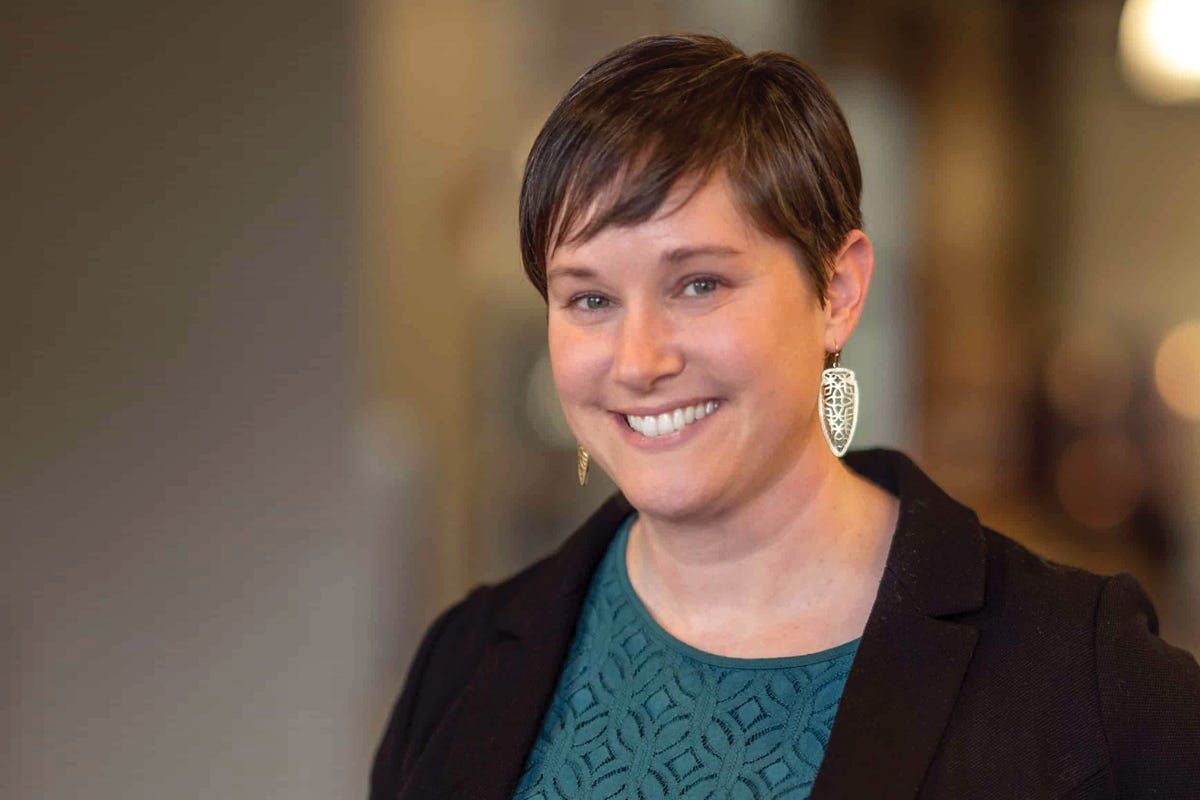
The ownership change was less a rupture than a handoff. Gladu had already helped move KWI from a niche internal-communications agency toward a people-centered consultancy. Its five service lines now cover organizational change; internal and external communications; management consulting; insights and analytics; and brand strategy and visual storytelling. Publicly named client work spans Aflac, Chick-fil-A, Cox, Crawford & Company, GPC and NAPA Auto Parts. The firm sells custom projects and ongoing counsel, not a software seat or standardized package.
Its competitive position is deliberately awkward. A large PR network can offer global reach. A specialist change firm can arrive with a certified methodology. An in-house team already knows the politics. KWI's pitch is senior, boutique attention combined with enough research, organizational design and creative production to stay through implementation. That works best when the client will let outsiders hear unvarnished employee feedback and when leaders are prepared to change their own behavior. It is a poor fit for a company shopping only for a launch-day announcement or unwilling to expose internal friction.
What a reader can copy: interview the frontline before naming the campaign; recruit managers as a channel; give a new tool a recognizable personality; measure one behavior, not vague awareness; and show employees which piece of their feedback changed the plan.
Then the spreadsheets rebelled
The neatest twist is that KWI eventually encountered its own version of the problem. Demand jumped during the pandemic as companies needed help explaining constant change. KWI grew from boutique to midsize, but managers were planning capacity in separate spreadsheets and asking around to discover who had time. Departmental habits obscured the view of the whole firm.
KWI centralized staffing, budgets and forecasts in ClickTime's resource-management system. A published case study reported five administrative hours saved per account executive each month, a 20% increase in firm-wide realization and a 40% reduction in inefficiencies. The communications advisers had met the enemy, and it was a side conversation about a spreadsheet.
That episode clarifies what KWI actually sells. Not words by the pound. Not morale. Not the idea that a charming campaign can cure a structural problem. It sells the connective work between what leadership wants and what a person on the factory floor, in a truck or inside a Teams window is willing and able to do next. Sometimes the artifact is an email. Sometimes it is a video, a survey, a coaching session or a bot with a face. The medium changes. The wager does not: people move when the change makes sense in the world where they work.