The letter was small enough to lose. The consequence was an entire exam. As a schoolboy, Kushal Nahata missed a test because his admission card never reached him. Days later, he learned it had been delivered to the wrong address. Someone had moved an envelope through a delivery system. The person who needed it was still waiting.
Nahata tells this story when explaining how he became interested in logistics. It has the useful untidiness of an actual grievance. There is no miraculous invention in it, no precocious business plan. There is a child discovering that a process can appear to work from one end and fail completely at the other. A delivery marked complete can leave somebody with very little to celebrate.
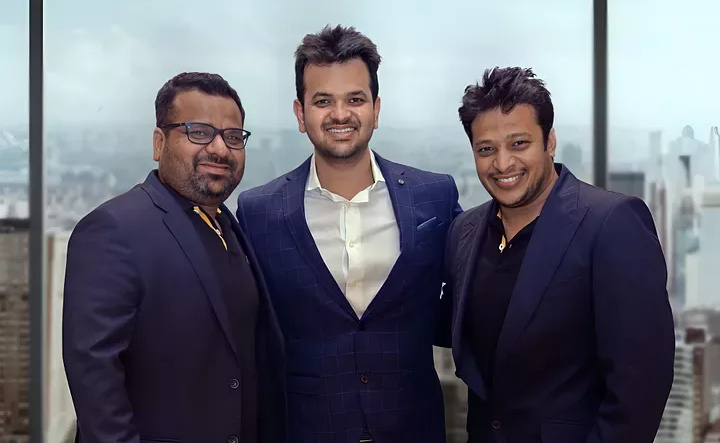
Today he is CEO and co-founder of FarEye, the delivery software company he started with Gautam Kumar and Gaurav Srivastava in 2013. Its work sits in the space that shoppers rarely contemplate until something goes wrong: selecting carriers, planning routes, tracking orders and coordinating the people who bring them home. The admission card makes a surprisingly durable introduction to that business. It gives the word delivery a consequence beyond a box.
A robot before a route
Nahata studied electronics and telecommunications at Kalinga Institute of Industrial Technology in Bhubaneswar. Kumar and Srivastava were college contemporaries. Before FarEye, the three were drawn to robotics, where an idea could be assembled, tested and seen moving across a floor. They built a business teaching students to make robots, earning money that helped finance their next steps.
In his account, publicity brought transporters to them with a less theatrical engineering problem: vehicles were moving, costs were high, and operators could not properly track or optimize the work. The invitation was practical. Here were people prepared to describe a problem because it was costing them money.
That beginning matters to the shape of Nahata’s career. He came into logistics through building and listening. The three founders had to learn what a delivery company actually did before they could sell it a better way of doing it. A robot can perform beautifully in a demonstration. A delivery operation has to work again tomorrow, with different orders and somebody absent from the shift.
The driver put the phone down
The early product received a particularly economical review. Shown a prototype crowded with features, a driver put the phone down and returned to his paper. The team simplified the interface: package details, address, recipient, clear colors and large type. The person expected to use the software had supplied the verdict without requiring a slide deck.
Then came the second customer. Different operating processes exposed the limits of the first design, and the founders rebuilt the software to make workflows adaptable. Those two encounters point in different directions: make the driver’s experience simpler; make the underlying system more flexible. Holding both ideas together became part of the product’s development.
FarEye’s early work included Jabong’s logistics arm, GoJavas. Delivery updates led to cash management, then more questions about sorting and routes. Nahata described the choice as helping the existing logistics ecosystem improve. He was building software for the companies already moving goods, rather than starting a carrier with a new fleet of trucks.
There is a social decision buried in that technical one. A driver is more likely to welcome an application that helps finish the day’s work than one whose chief achievement is making the driver easier to watch. Nahata’s early emphasis on productivity gave the person holding the phone a reason to care about what was on its screen.
For the founders, the second sale also made the word customer more complicated. Winning one account had shown that their idea could be useful. Winning another required room for differences they had not designed around. A configurable system gave those differences somewhere to go, instead of turning every new contract into a request to build the business again.
Fewer features on screen.
Clearer information for the job.
Different processes.
Workflows that could adapt.
A business acquires a passport
In September 2014, Indian Angel Network announced an investment in FarEye. Its description of the business was wonderfully concrete: scheduling, dispatching, monitoring jobs and coordinating mobile workers. It also named Middle Eastern fashion retailer Namshi as a customer. International use was already part of a company that had begun with problems close to home.
By 2016, FarEye had raised $3.5 million from SAIF Partners. Nahata was talking about opening offices in Dubai and Singapore, and about building something that would last beyond a few years. The ambition was becoming more explicit. A solution made for Indian delivery operations might have a life in other markets.
His later account of expansion is less ceremonious than the usual story of conquering territories. Customers moved jobs and asked to use the software again. Existing relationships opened conversations in new countries. “I did not even have a passport when I started FarEye,” he recalled. He moved to Chicago in December 2021; his public professional profile lists the city as his base.
The geography changed. The underlying bargain remained recognizable: a business makes a delivery promise, and somebody has to organize enough moving parts to keep it. An international sale still comes down to a local operation, a usable product and people who trust the result.
“I did not even have a passport when I started FarEye.”Kushal Nahata / 2022
A large cheque, then a harder reckoning
FarEye’s $100 million Series E in May 2021 brought TCV and Dragoneer Investment Group into the story. Existing backers also participated. The money was intended to expand the platform, invest in technology and explore acquisitions. It was a substantial vote on the business of helping other businesses deliver.
When Nahata discussed the round that July, he said the target had not originally been $100 million. The attraction was the people coming aboard and the help they could offer. His description put investor selection alongside the size of the cheque, a useful distinction when a funding announcement risks becoming the whole plot.
The next chapters were more difficult. In June 2022, FarEye confirmed a reduction in staff; reporting put the number at about 250. Nahata cited softer market conditions and a restructuring focused on product differentiation, automation and operational efficiency. The company said it would provide entitlements and help affected employees find work.
In February 2023, another 90 jobs were cut. Nahata confirmed that reduction and connected it to market demand. Those events belong in any account of his leadership. Funding creates possibilities, while decisions about spending and staffing determine who shares in them. For employees leaving a company, a strategic explanation accompanies a very personal change.
- 2013FarEye is founded
- 2021$100m Series E
- 2022-23Staff reductions
- 2026PILOT launches
The book in the backpack
There are less expensive ways to understand Nahata than reading a funding announcement. One involves opening his travel bag. In 2019, he described carrying an iPhone, a wireless charger, noise-cancelling headphones, Ray-Ban aviators and Geoffrey Moore’s Crossing the Chasm. His preferred backpack was a black leather Bottega Veneta. Even the logistics executive has to choose a container.
The book is a pleasing detail: a text about bringing technology to a broader market, packed beside the equipment needed to keep working in transit. He described reading as continuing education. The combination suggests a traveler making room for both the next call and an idea that might outlast it.
His public work also includes writing on delivery trends and conversations with other founders. In January 2022, he joined Kissflow CEO Suresh Sambandam for a discussion of enterprise software and logistics. At FarEye, the recurring “We Celebrate You” sessions bring him into conversations about employees’ experiences and memories. They offer a smaller scale of encounter than an industry keynote.
These details give some texture to the public role. A chief executive is often presented as a sequence of positions and transactions, with the hours between them edited away. Nahata’s reading and conversations make those hours visible. They also fit the way his early product developed: somebody else has knowledge you need, and the work is to make enough room to hear it.
Back at the dispatch desk
In January 2026, FarEye announced that all three founders had appeared in the Avendus Wealth - Hurun India U40 List 2025. The company reported FY25 revenue of ₹197.5 crore, up 25.9%, and said more than 90% came from international markets. These are company-reported figures, a dated view of the business rather than a forecast of what must follow.
The same announcement described Nahata’s responsibility as vision and enterprise direction, alongside Kumar’s operational role and Srivastava’s technology leadership. The original three-person partnership remains visible in the division of work. Nahata used the occasion to return to the customer, describing “every delivery” as “a human moment that matters.”
In April 2026, FarEye launched PILOT, an AI dispatcher coordinating 11 specialized agents. Its stated jobs include route planning, driver management, delivery recovery and invoice reconciliation, with human oversight for higher-risk exceptions. A partnership with Tech Mahindra followed, aimed at taking AI-led supply-chain execution to enterprise customers.
By September, FarEye’s discussion of the product centered on a familiar figure: the dispatcher fielding changes, delays and customer calls. The new software is intended to take on routine coordination and adjust decisions as circumstances change. The test is whether it can make those daily decisions useful and dependable for the people doing the work.
That is a fitting place to leave Nahata’s story for now: at a desk where a delivery plan meets an unpredictable day. Years of financing, software development and international travel separate that desk from the missing exam card. Yet the practical question travels well. Has the thing actually reached the person who needs it? Until it has, there is still work to do.
25.9% year-over-year growth
Company-reported in January 2026
Keep the conversation going
READ / LISTEN / FOLLOW