The first thing that disappointed Katina Mountanos was dinner. Back in the United States, the Greek olive oil she bought at the supermarket tasted nothing like the oil her family enjoyed in Koroni, in southern Greece. A familiar ingredient had become strangely unfamiliar. For most shoppers, that would have been the end of the complaint. Mountanos had relatives in olive country, experience building consumer brands, and a rather inconvenient memory of how the stuff ought to taste.
- Greek Koroneiki olive oil is the anchor; food, gifts and skincare widen the business.
- Early harvesting sacrifices yield for the flavor and polyphenols the brand prizes.
- Repeat customers and retailer interest helped turn a side project into a full-time company.
- A smaller first retail rollout made room for the supply chain to catch up.
The bottle that persuaded its maker
Kosterina began as a passion project in 2016, according to Mountanos’s 2020 account. The name had already enjoyed a modest social career: it combined Katerina and her husband Kostas and served as their wedding hashtag. They also owned the domain. Occasionally, romance does the administrative work.
Her résumé helps explain what happened next. Mountanos had worked in investment banking, studied at Harvard Business School, developed beauty products at L’Oréal, and built BeautyBar.com at Quidsi. She co-founded Manicube, the workplace beauty-services company acquired by Elizabeth Arden Red Door Spas in 2015. Later, at Walmart’s ecommerce incubator, she helped create consumer brands. This was a family obsession in experienced commercial hands.

In late 2019, an early customer recommendation survey returned a Net Promoter Score of 100, as reported in coverage of the company. Treat that as a signal from an enthusiastic early audience. It helped persuade Mountanos to commit full-time in 2020. Whole Foods’ interest supplied another piece of evidence. Affection was beginning to acquire a purchase order.
Picking early means leaving oil behind
The product’s central choice happens before there is a bottle to admire. Kosterina sources Koroneiki olives from southern Greece, harvesting early and pressing them promptly. Its account describes same-day pressing and less juice from unripe fruit. The tradeoff is a concentrated, grassy, peppery oil. Waiting could deliver more oil; picking sooner supports the profile Kosterina wants to sell.
Polyphenols, naturally occurring plant compounds, are part of that proposition. Kosterina publishes harvest-specific figures and says it commissions independent testing. Its Original product page currently lists 578 milligrams per kilogram for the November 2025 harvest. A number gives shoppers something to examine beyond a handsome label. It measures one characteristic of the oil; it does not establish a promised health outcome for its buyer.
For a cook, the choice is practical. Original is the bolder finishing oil: bread, salads, the last drizzle over a dish. Organic Everyday has a milder, fruity flavor and is pitched at cooking and baking. The distinction gives two bottles separate household jobs. Neither requires learning an elaborate new recipe.
Listed online prices checked October 3, 2026; shipping and promotions vary.
The national order she made smaller
In a founder interview, Mountanos described a Whole Foods buyer discovering Kosterina on Instagram. The retailer wanted a national launch. She judged the team and supply chain too small and agreed to begin in three regions. Demand had arrived faster than the machinery required to serve it.
“Launch what you know.”
Katina Mountanos, Startup Savant interview
This is the useful business lesson: an attractive opportunity can still be the wrong size. A regional start lets a supplier learn with fewer stores depending on each shipment. That interpretation is less glamorous than a story of instant national success, but considerably more useful to someone paying freight bills.
By September 2024, the expansion had reached another kind of shelf. Kosterina announced Premium Reserve and Spicy Red Pepper olive oils in more than 600 Target stores, alongside existing national availability at Whole Foods and Crate & Barrel. Health-conscious grocery shoppers and design-conscious gift buyers could encounter the same brand in different shopping moods.
A pantry brand with a bathroom cabinet
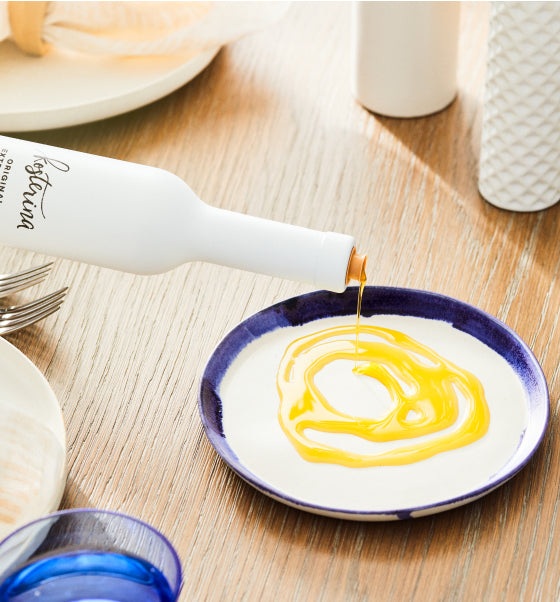
The assortment extends to balsamic vinegars from Modena, crushed fruit vinegars, organic snacking olives, gift sets and skincare. Olive oil is the connective ingredient and Mediterranean living the connective story. The skincare expansion, covered in 2021, also makes sense of the founder’s previous beauty career. Selling across categories is easier to understand when the founder has worked in them.
Today the website also sells olive oil shots and a lemon olive oil cake protein bar. Customers can dress a salad, flavor a drink, buy a host gift or replenish a cooking staple. Subscriptions advertise 10% savings with skipping, swapping and cancellation. The business earns money from products sold online and through retailers, with replenishment giving it a reason to keep hearing from customers.
The bill behind the beautiful bottle
A multi-category brand needs capital. Mountanos has reported approximately $10 million raised in a public interview. That is a dated founder account, rather than a current audited total. Bottles, inventory, new formulations and retail distribution make the financial ambition easier to understand. A pretty shelf is paid for before shoppers arrive.
Expansion also brings scrutiny. In February 2026, Kosterina signed a $15,000 California Proposition 65 settlement concerning alleged missing lead-exposure warnings on two Kalamata olive products. It denied the allegations and admitted no violation. The agreement requires California warnings when the covered products exceed its specified exposure threshold. This is a concrete reminder that a wellness identity comes with obligations beyond the advertising.
Copy the sequence, respect the limits
Kosterina competes in a premium olive oil market that includes Brightland and other modern pantry brands, as well as established grocery oils. Its Greek origin, single-variety sourcing, testing and packaging give shoppers a particular combination to consider. Those features must still earn their place in a household budget. Someone seeking inexpensive bulk cooking oil may have little use for a gift-worthy bottle.
A founder can borrow the sequence: begin with a product people replenish, listen for recommendation, and increase distribution as operations become capable. The lucky buyer discovery cannot be booked into a calendar. Nor can agricultural refinement run at software speed. Kosterina’s appeal begins with a remembered taste; its business depends on delivering that taste again.