Before BaubleBar had Disney characters or a place inside FAO Schwarz, it had a problem with appearances. Amy Jain and Daniella Yacobovsky wanted to sell jewelry for less. But on a screen, a low price can suggest an inferior object. A necklace might be a bargain; it might also be something that would disappoint the moment the box opened. The customer had to decide without touching it.
- Affordable accessories let shoppers experiment without replacing a wardrobe.
- The website supplies customer feedback as well as sales.
- Retail partners carry the designs into other shopping habits.
- Personalization and licensed characters give gifts a ready-made meaning.
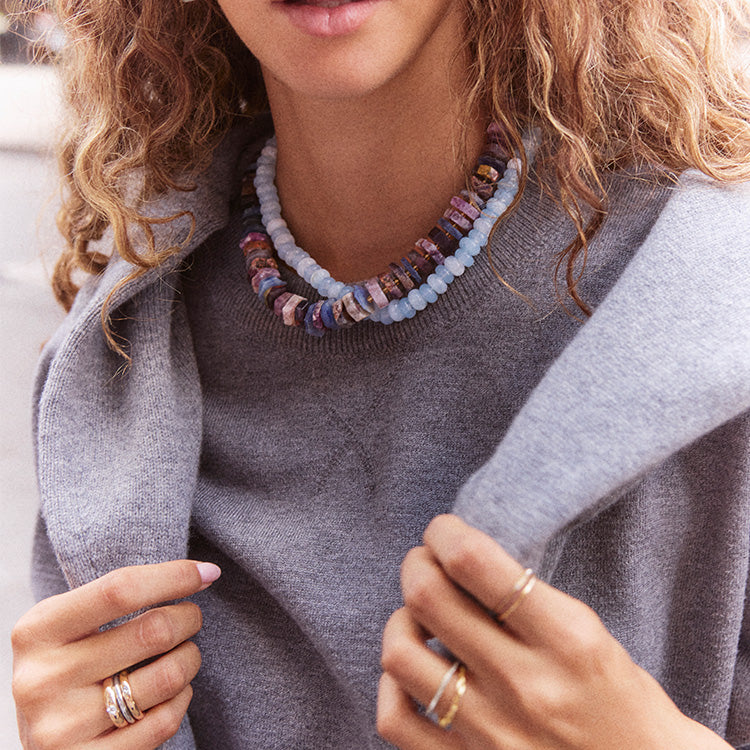
The founders’ early answer was decidedly unglamorous: improve the photography and styling. “The first version of our website was absolutely terrible,” Yacobovsky told Inc. in 2012. That admission is useful because it locates the trouble precisely. Having a product people might want was one task. Making strangers believe in it was another.
01 / The necklace between two extremes
Jain and Yacobovsky met in investment banking, became friends and attended Harvard Business School. Shopping together supplied the observation that became BaubleBar: the jewelry they wanted occupied an awkward middle ground. Expensive keepsakes demanded commitment. Bargain costume pieces could look disappointing. They wanted accessories that made experimentation feel reasonable.
Consider the difference between buying a dress and buying earrings. The dress must fit your body, your plans and perhaps your courage. Earrings can change the mood of an outfit already hanging in the wardrobe. BaubleBar’s proposition lives in that smaller decision. Spend on a detail; let the detail do some of the work.
During business school, the pair fitted research into field studies covering marketing and operations. Their financial background mattered because the opportunity required more than good taste. Someone had to understand how an attractive object traveled through a supply chain, acquired a price and reached a buyer.
02 / A shop that listens back
The interesting part of BaubleBar’s website is its second job. In a founder interview with Kara Goldin, Yacobovsky described it as the company’s laboratory. Buying patterns and customer interest could inform designs for different sales channels. The storefront offered a way to observe demand directly.
That does not make the company a software vendor. Its customers buy earrings, necklaces and gifts. The data serves a retail operation. This distinction explains why the founders’ appetite for numbers belongs in a story about fashion: it helps them decide what to put in front of people next.
“Cash is king”Amy Jain, speaking about startup decisions in 2016
In 2016, the founders described a design-to-website cycle of four to twelve weeks. Designers interpreted runway and in-season trends, then pushed ideas through production. That historical window reveals the operating ambition: reduce the time between noticing an appetite and offering something that might satisfy it.
- 01Observe demand
- 02Interpret & design
- 03Produce & sell
- 04Learn again ↻
The approach has a condition attached. Feedback must arrive while there is still time to act on it. A trend can lose its charm before inventory reaches the shelf. Speed also ties up money in design, production and stock. Jain’s advice about cash is unusually well suited to a business selling things that sparkle.
03 / Other people’s aisles
BaubleBar’s expansion complicates the familiar internet-brand story. In 2014, a Nordstrom partnership was set to place its products in more than 100 department stores. Physical retail offered another setting in which shoppers could encounter the pieces, and another route beyond the company’s own website.
Then came SUGARFIX. Launched in January 2017, the Target-exclusive line debuted with 180 styles, all below $30, in approximately 900 stores and online. New styles were planned monthly. The move translated BaubleBar’s design approach for a customer who might discover earrings while buying something else entirely.
SUGARFIX arrived at Target in 2017 with every piece priced under $30.
Financing helped support the broader business. A $10 million Series B in 2014 preceded further expansion; the announced Series C in 2016 added $20 million. Those are investment amounts, not the cost of a necklace or evidence of profit. Public funding tells us investors backed the operation. It cannot tell us whether any particular collection paid its way.
For retailers, the attraction is a stream of accessories that can sit beside apparel without requiring a new clothing collection. For BaubleBar, the tradeoff is a more complicated operation: different customers, price expectations and channels. The founder interview makes clear that its website and wholesale relationships belong to the same product system. The strategic change was a willingness to meet shoppers in stores they already visited. It is a useful expansion route when partners share your audience, and a less obvious one when a product needs lengthy explanation.
04 / Your initials. Their mouse.
The assortment now stretches from statement earrings and everyday layers to customized phone cases, totes and blankets. There are also gold and demi-fine options whose materials should be checked item by item. A shopper can choose a playful accessory, assemble a personal gift or shop a different material category within the same brand.
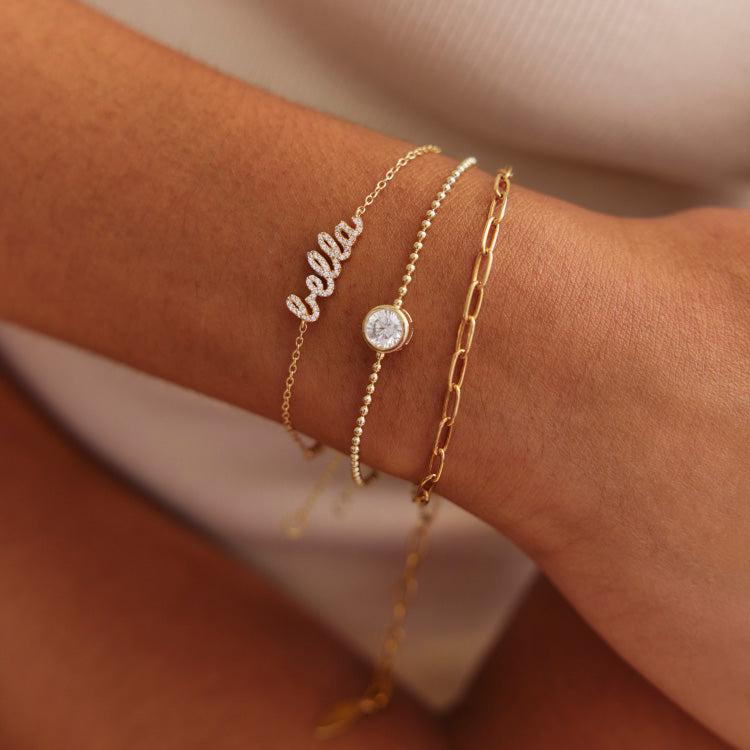
The Disney collaboration began in December 2020 with jewelry, then expanded into categories including custom blankets, ears and collectible pins. NFL, MLB and collegiate collections add team loyalties. My reading is that these products shorten the search for meaning: a favorite character or team supplies an association before the shopper even chooses the object.
Children get a more literal design role at Minibar’s FAO Schwarz experience. The store currently lists a custom bracelet at $40, with necklaces and bag charms at $45. Visitors select a base and up to nine letter or character beads, then assemble the creation with staff. Personalization becomes something to do together.
05 / What to borrow, what to buy
For a founder, the transferable lesson is to investigate the obstacle closest to the purchase. BaubleBar needed pictures that conveyed quality, designs informed by shoppers and distribution beyond its own front door. These are practical choices, although the financing and production demands make the whole operation harder to copy than the website.
For a buyer, the useful question is occasion. An initial necklace can make a gift specific; team jewelry can make game day personal; statement earrings can wake up familiar clothes. Compare materials with alternatives such as Kendra Scott, Pandora or independent Etsy sellers rather than assuming every jewelry price buys the same thing.
Personalization also asks for patience. BaubleBar’s custom pieces follow their stated production dates, cannot use expedited shipping and are excluded from returns. Standard U.S. shipping is currently $8 below the $75 free-shipping threshold. A last-minute present therefore calls for a different calculation. The charming detail still has to arrive on time.