The offending piece of jewelry did not have to be expensive to make its point. It only had to turn a finger green. At a New York brunch in 2015, friends Sophie Kahn and Bouchra Ezzahraoui talked about the peculiar choice facing a shopper who wanted a simple, modern gold piece: pay a great deal, or accept something that might not last. One knew fashion from Marc Jacobs. The other knew finance from Goldman Sachs. Their answer was Aurate, a fine jewelry business built around the idea that the price of a necklace ought to reflect the necklace more than the theater around it.
- Aurate sells contemporary necklaces, bracelets, rings and earrings, from vermeil to solid gold and diamonds.
- Its audience includes people buying fine jewelry for themselves, for gifts and for engagements.
- It tried owned shops, then used exclusive Macy's and Helzberg collections to reach about 197 stores at launch.
- The model to study is the channel decision: keep customer knowledge, spend less on your own storefronts.
The company record lists a 2014 founding year; Aurate describes its 2015 start as a soft launch. The distinction matters less than the first customer brief. Kahn and Ezzahraoui wanted pieces that felt suited to an ordinary Tuesday, not merely an anniversary dinner. Their customer might buy her own ring after a promotion, stack a bracelet with an old favorite, or commission an engagement piece without surrendering every decision to a jeweler. Aurate's own history says customer requests feed its design process, and that designs keep changing after launch.

The price tag had a costume on
Aurate's first proposition was straightforward. Sell fine jewelry directly, explain the materials, and avoid some conventional markups. On its quality page, the company sets a $440 Aurate price against a $900 traditional retail comparison. That is a company illustration, not a market-wide audit, but it shows the argument clearly: the shopper should see more of her money in the metal and stones. Aurate also says it makes many pieces to order, which reduces the inventory it has to finance before anyone buys.
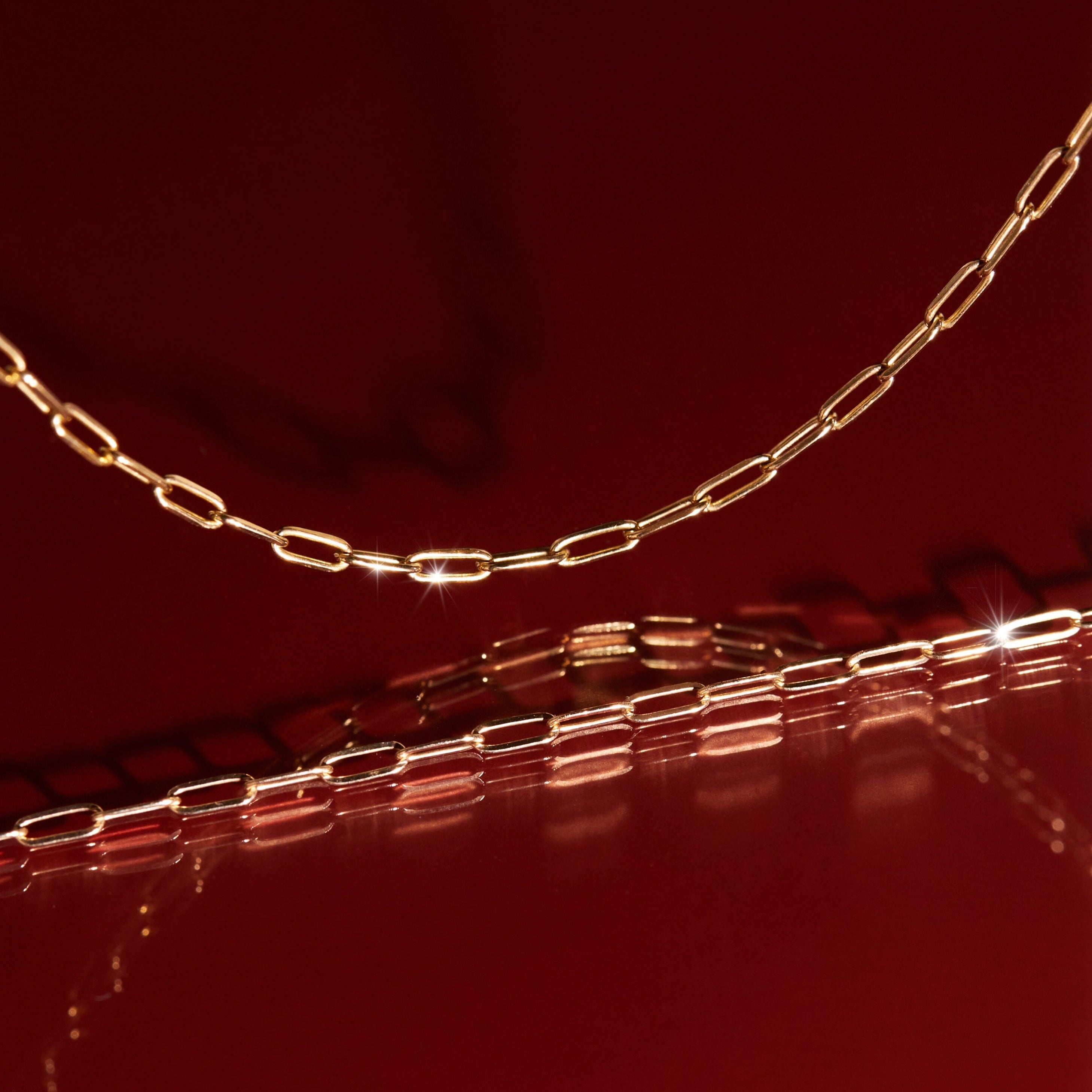
The catalog now spans recycled 14K and 18K gold, platinum, sterling silver and gold vermeil, with pearls, gemstones, natural diamonds and lab-grown alternatives. An entry-level chain and a diamond tennis necklace occupy very different price brackets. That breadth is the business's answer to a real shopping problem: a customer can enter for a small everyday piece and return for an heirloom or an engagement ring. Material choice is part of the offer. Vermeil is a lower-priced route into the look of gold; solid gold is the longer-term purchase. Aurate's product pages make those distinctions visible before checkout.
Aurate's 2019 Series A gave it capital to expand online, build technology and test physical retail.
Company announcement, June 2019The brand's ethical pitch is specific enough to inspect. Aurate says its gold is recycled and its diamonds are sourced under conflict-free rules; its quality page describes craftspeople working across the globe, including New York. Its early “A Book for Your Look” program paired purchases with books for children through Mastery Charter. None of that turns a purchase into a moral certificate. It does give buyers a list of claims to examine - recycled gold, diamond origin, workmanship and repair terms - instead of asking them to admire a vague halo.
The store was a good teacher, an expensive landlord
A jewelry purchase often benefits from a real counter. People want to judge the weight of a chain, the color of a stone, the scale of a ring. Aurate understood this early. It sold online and offline, opened New York pop-ups, and in 2019 turned two of those spaces into permanent stores. The rooms displayed materials and introduced the craftsmen behind the work. They also came with rent, staffing and inventory. Jewelry is small; the capital required to fill a store with real gold is not.
The pandemic interrupted the boutiques, and the company later tried physical locations again. But online sales changed the equation. Kahn told Glossy that Aurate could sell online in a day what it sold in a store in a month. That is a memorable ratio, not a universal rule for jewelers. For this company, it explained why physical access still mattered while physical ownership looked less appealing. The first approach to break was the notion that every new point of contact should be an Aurate-run shop.
“We’d sell online in a day what we’d sell in a store in a month.”Sophie Kahn, 2023
In 2023, the brand took a different route into the jewelry case. It designed Audrey by Aurate for Macy's and Laure by Aurate for Helzberg Diamonds. At announcement, Audrey was planned for 167 Macy's stores, Laure for 30 Helzberg stores and the latter retailer's website. The two lines were exclusive rather than a wholesale dump of Aurate's existing website catalog. That gave each partner something distinct to sell and let Aurate reach shoppers in markets where its own name was less familiar.
The advantage is prosaic, which is why it is interesting. Aurate could appear in roughly 200 stores without signing roughly 200 leases. Kahn told Retail Dive that fitting out even one store with a full collection of real gold and diamonds is a considerable investment. Wholesale moves some costs and control to the retailer. In return, it can buy reach, local credibility and a chance for customers to try a piece in person. The online relationship remains Aurate's own; the partner store supplies a different kind of discovery.
What the glass case cannot do
Aurate is still a jewelry company, not a distribution trick. The design work has to make a stranger stop at a counter. It has built a vocabulary of clean chains, bezels, stackable rings and tennis pieces, then widened that vocabulary through collaborations. Frye's 2025 debut in fine jewelry was a 14-piece limited collection with recycled gold, vermeil, silver and lab-grown stones. The Marilyn Monroe capsule, later expanded, used pearls and colored stones to make a familiar image wearable in an ordinary week. These partnerships give Aurate borrowed recognition, but the product still has to survive being compared with the other trays in the case.
There is also the less photogenic matter of service. Aurate advertises a lifetime guarantee on qualifying vermeil and gold jewelry, with a repair program for U.S. orders. Its published terms exclude everyday wear, lost pieces, some collaboration items and certain third-party alterations; some stone replacements cost extra. A buyer choosing between vermeil and solid gold should read those terms alongside the price. The guarantee is useful as a route to service, but the word “lifetime” does not mean every accident is free.
Aurate sits between the old fine jewelry counter and the internet-born self-purchase brand. Mejuri is one obvious alternative, as are traditional jewelers and department-store collections. Aurate's distinction is the combination of customer-led design, stated material choices, its own ecommerce channel and partner-built physical reach. Its lesson travels farther than jewelry: talk to buyers before designing, test a channel with real transactions, then count all the costs of keeping it. The precise point at which wholesale beats an owned store will vary with margins, customer habits and a retailer's willingness to give the brand space. The general habit of counting is available to anyone.
The green finger at brunch was a product complaint. The empty boutique was a business clue. Aurate paid attention to both, and the second may prove the more valuable piece of gold.