Consider the chair. In a coffee shop, it seems like a harmless object: a place to sit, open a laptop, and stretch one purchase into an afternoon. But somebody pays for the space beneath it. Kopi Kenangan began by asking how much of that arrangement an Indonesian customer actually needed on the way to work.
- Small takeaway stores brought fresh coffee into everyday budgets.
- Palm sugar, fresh milk, and an ex-inspired name gave it local identity.
- First full-year group profit: 2025. Reported outlets: 1,500+ in September 2026.
In 2017, Edward Tirtanata, James Prananto, and Cynthia Chaerunnisa launched a coffee business in Jakarta. Their opening was a price gap. International chains sold an experience many people could not afford every day; inexpensive instant coffee offered a different drink entirely. A small takeaway counter could sell freshly made coffee without charging customers for an afternoon indoors.
The first outlet was in the Standard Chartered office tower in South Jakarta. In a later interview, Prananto recalled construction capital of roughly Rp200 million and payback within two to three months. Those are founder recollections about one early shop, not a promise for the next thousand. Still, they explain the appeal: prove one counter, then build another.
Approximate opening capital recalled by co-founder James Prananto. Reported payback: 2-3 months.
02A little heartbreak in the cup
Kenangan means memories. Mantan means an ex. Put them together and the signature Kopi Kenangan Mantan turns an ordinary coffee order into a tiny romantic confession. The drink combines coffee, fresh milk, and palm sugar. You can buy a familiar Indonesian flavor and make a joke about your former partner at the same time.
Kopi Kenangan serves commuters, office workers, students, and delivery customers seeking a daily purchase. Its expertise combines recipe development with retail execution. A memorable name earns attention; a nearby outlet and a dependable drink earn the next order.
Today the menu extends beyond milk coffee to espresso drinks, chocolate, seasonal beverages, and food. The wider Kenangan Brands family includes Cerita Roti bread, Chigo chicken, and Kenangan Manis cookies. Bottled Kopi Kenangan Hanya Untukmu also reached convenience stores and supermarkets. Each format places the brand in a different part of the customer’s day.

03The app needs a counter
The business makes money selling drinks and food through physical stores, its own app, and delivery platforms. The app lets customers order ahead and collect purchases, arrange delivery, and participate in loyalty programs. Kenangan Points and Kenangan VIP give the company ways to reward repeat visits across participating brands.
The software shortens ordering and helps target offers. A barista still makes the coffee. Convenience depends on a nearby outlet, a short queue, and a smooth handover.
Alternatives include Starbucks, Fore Coffee, Janji Jiwa, and independent kedai kopi. Kopi Kenangan’s original advantage was a specific combination: local milk-coffee flavors, a modest store footprint, and a price intended for frequent use. Those choices place it between the inexpensive everyday drink and the premium café visit. Other chains can pursue that same middle ground.
The app connects the steps. The outlet makes the drink.
04Then the commuters stayed home
The pandemic exposed a weakness in the original geography. Offices and malls had been sensible places to find customers until those customers stopped coming. Prananto described the resulting change plainly: Kopi Kenangan began putting outlets closer to residential areas. It also worked with delivery partners including Grab and Gojek.
What failed first was the assumption about where demand would appear. The coffee habit survived while the morning journey vanished. Kopi Kenangan followed customers home.
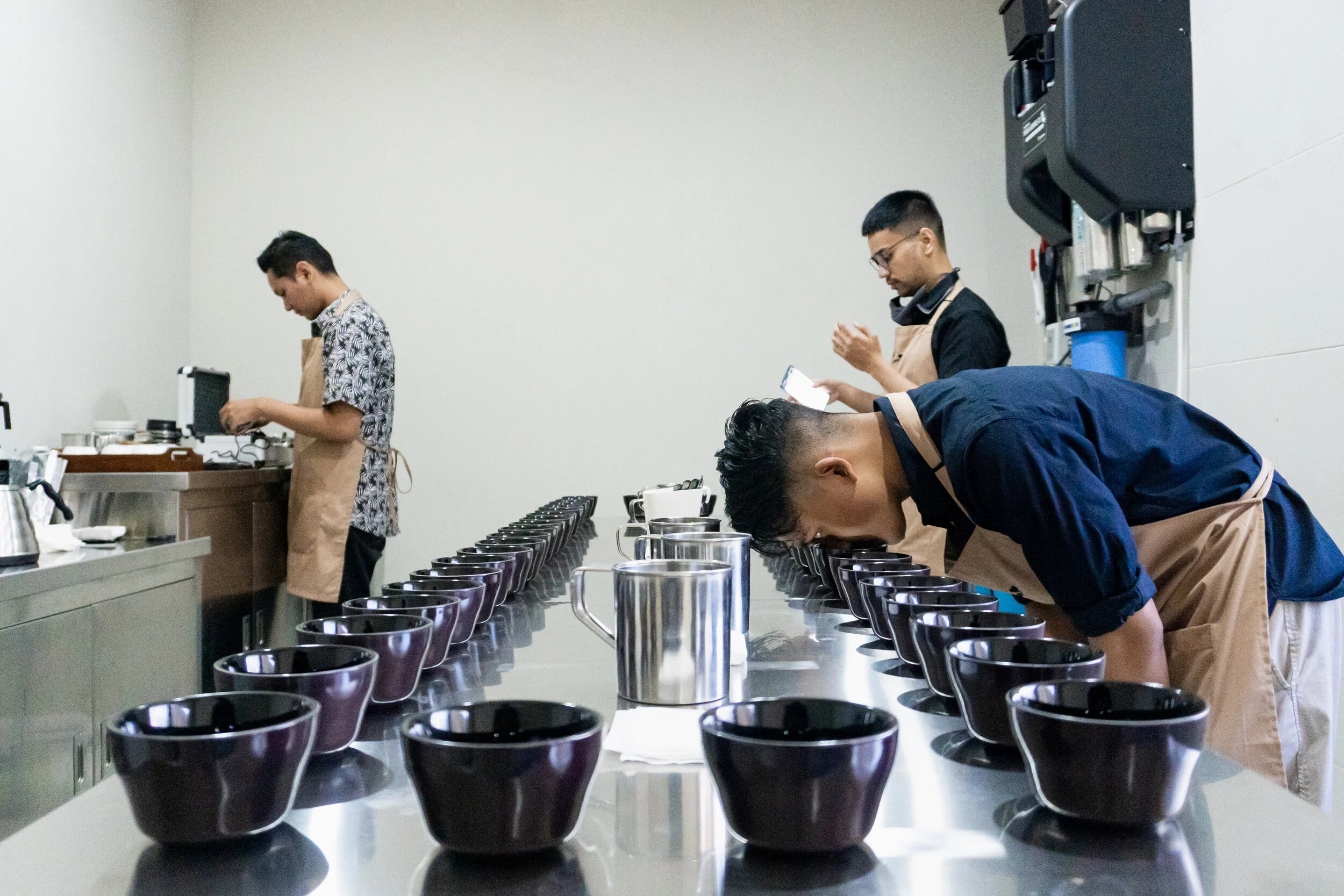
Consistency presented another problem. Prananto said the Indonesian chain owned and operated its stores rather than franchising them, to keep control over execution. Kenangan Academy, formally inaugurated in August 2020, added structured barista training, food-handling skills, and leadership development. Expansion required people who could reproduce the product as reliably as the sign outside.
05A billion-dollar label meets the till
Outside money accelerated the rollout: an $8 million seed round in 2018, $20 million Series A in 2019, and $109 million Series B in 2020. In December 2021, a $96 million first Series C closing led by Tybourne Capital Management valued the company above $1 billion. A valuation measures what investors will pay for ownership. It does not tell you what remains after wages and rent.
That distinction became consequential. In a February 2026 interview, Tirtanata described excess funding as a pitfall and emphasized discipline. The group reported its first full-year profit for 2025. Early unaudited reporting put revenue at $184 million and net profit at $17 million; the company’s later ESG announcement reported $18 million in net profit.
Profitable shops did not guarantee a profitable international group. The founders had to account for the whole organization. Store payback and group earnings deserve separate spreadsheet lines.
“The biggest problem in South-east Asia startups is that founders are over-resourced, not under-resourced.”
EDWARD TIRTANATA · THE BUSINESS TIMES · FEB 2026
US dollars. Revenue reported in early unaudited results; net profit as reported in the company’s later ESG announcement. Bars share one scale.
06Memories travel. Menus adjust.
Abroad, the brand trades as Kenangan Coffee. Its Taiwan debut in April 2026 used local partners and introduced a Pistachio Macchiato. In September, Alpha JWC reported more than 1,500 outlets across seven markets, including Indonesia, Malaysia, Singapore, the Philippines, India, Australia, and Taiwan. The investor also announced increased investment alongside Tirtanata and existing backers.
The consumer story keeps moving too. A July 2026 campaign appointed NCT’s HAECHAN as brand ambassador and launched banana drinks starting at Rp19,000. Meanwhile, the company introduced Barista Hebat with Parakerja to train and support deaf employees. The playful menu and the training system operate on different schedules, but both need attention.

07Copy the question before the counter
The transferable idea is to examine what customers are being charged for and what they actually use. Then design the premises, product, and ordering process around that answer. Test the economics of one location, train for consistency, and watch where demand moves. Kopi Kenangan offers a concrete example of those choices working together.
The conditions matter. A small counter needs sufficient repeat purchases; affordable prices leave less room for weak traffic, expensive rents, or delivery costs. A neighborhood seeking long café visits presents a different problem. Overseas markets bring different tastes and operating arrangements. The chair was removable in the first shop. The customer’s reasons for buying never were.