Edward Tirtanata’s first Kopi Kenangan shop occupied twelve square metres behind an elevator. It was a modest place to ask a rather immodest question: why should a daily cup of coffee cost so much? The shop opened in Jakarta in 2017. There was little space to sit, which suited the idea. Customers would take their coffee and get on with their day. The business would depend on their coming back.
He had already tried the more expensive end of the beverage trade. At Lewis & Carroll, the tea business he founded in 2015, a cup could cost around 40,000 rupiah. Multiply that by thirty days and the bill reached 1.2 million rupiah. In his account of the decision, that represented roughly a third of the minimum monthly wage in 2017. A pleasant afternoon was one thing. An affordable routine required different arithmetic.
Kopi Kenangan began with coffee priced at 15,000 rupiah. Tirtanata’s reasoning was plain: a business needs repeat customers. The initial purchase can be won with curiosity. The next purchase must fit somebody’s life. His earliest shop had few amenities, but it offered an answer to that monthly bill. The question would stay with him long after the company could afford a larger room.
A trader learns to choose his market
Tirtanata was trying small businesses well before he was trying coffee recipes. As a child, he sold Pokémon cards. It is a pleasingly literal introduction to trading: find something other people want, establish a price, and persuade them to hand over their money. The merchandise would change. His interest in the exchange endured.
At Northeastern University in Boston, he initially entered engineering before switching to finance and accounting. Trouble in his father’s business changed his attitude to studying. He has described it as a wake-up call. He graduated in 2010, and his work placement had already taken him to Ernst & Young in Jakarta. He wanted to understand the tax system of the country where he intended to work.
“I started drinking coffee there.”Edward Tirtanata, recalling the campus Dunkin’ Donuts
He returned to Indonesia and went into commodities trading with his father. When the market fell in 2014, he found himself exposed to prices he could do little to influence. That experience helped direct him toward consumer goods, where he could make decisions about the price charged to the buyer. The appeal of coffee had a financial side as well as a flavour.
His tea lounge grew from a different kind of memory: drinking tea with his mother in Boston. Lewis & Carroll offered a place to spend time. Kopi Kenangan would offer a way to keep moving. Tirtanata had tried hospitality with a room around it. He was ready to see what customers wanted from the cup itself.
Give the cup a name worth remembering
The coffee company was founded with James Prananto and Cynthia Chaerunnisa. Its name means Coffee Memories. The signature Kopi Kenangan Mantan makes the reference more pointed: memories of an ex. In a market crowded with drink names, the founders had found a conversational opening. Some customers might prefer their romantic history sweetened and served over ice.
Tirtanata’s recollection of that hidden first location helps explain the joke. A tiny shop behind an elevator needed to be remembered. The founders could not rely on a large storefront to announce them. The name could do some of that work, giving people something to repeat after they had finished the drink.
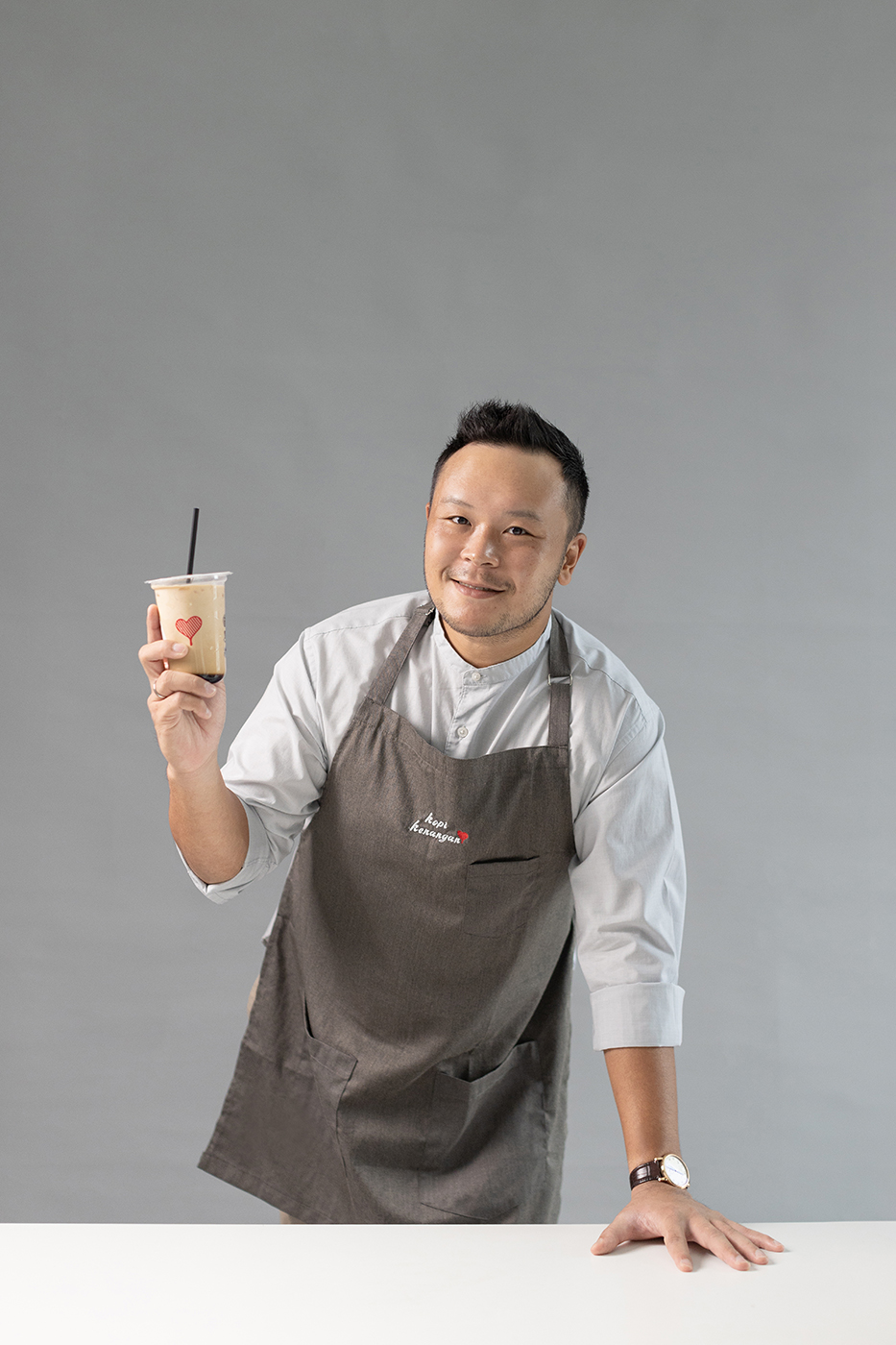
Underneath the wordplay sat a practical choice about packaging. Tirtanata described using bubble-tea packaging because the coffee needed to travel easily. Delivery gave the little shop access to customers beyond its physical footprint. A takeaway business could sell more drinks than its seating capacity suggested, particularly when its seating capacity was approximately none.
In his early account, the first outlet reached 700 cups a day and broke even within three months. More locations tested whether the idea could repeat. By September 2018, he said, the chain had eight stores and began fundraising. The first experiment had become a question about organisation: how do you reproduce a cup people want without letting the reproductions drift?
The second cup is the difficult one
That problem appears repeatedly in Tirtanata’s accounts of the business. Early quality control was a weakness, he acknowledged. Expansion money consequently had another job: making the product dependable. A memorable name brings a customer to the counter. Once there, the drink must justify the trip, and the next branch must justify the previous branch’s reputation.
He described mystery shoppers, quality assurance teams, and regular revisions to operating procedures. Feedback from different areas fed into training. Those are ordinary mechanisms, and their ordinariness is the point. A chain grows through thousands of small acts that customers should not have to think about: a recipe followed, a shift organised, an ingredient available when it is needed.
His preference for learning on the job also put employees close to the work they needed to master. The company’s developing app offered another route to the customer, letting people choose pickup or delivery. Technology could help capture repeat transactions. The loyalty, however, still had to survive the experience of drinking what arrived.
By 2025, Tirtanata was describing an operational system called JARVIN, used to monitor inventory and store processes in real time. He also spoke about recipe testing, sourcing from local farmers, and creating standard procedures before launch. A founder can be enthusiastic about a flavour. An operator must arrange for that flavour to be available after the enthusiasm has moved to another project.
A latte crosses a border
International expansion introduced a fresh complication. An Indonesian customer’s favourite drink did not automatically describe a Singaporean customer’s preference. The company researched markets before entry, adjusting the coffee profile and sweetness. Abroad, the brand became Kenangan Coffee. The promise could travel while the details of the drink changed.
Tirtanata’s friends had endured plenty of recipe testing in the early days. He later joked that some had become reluctant to meet him because he kept asking them to try his experiments. Those trials supplied a small, personal version of a problem that would become regional: the person making the coffee needs somebody else’s verdict.
In Malaysia and Singapore, the brand’s presentation also became brighter and more playful. Tirtanata explained that the Indonesian habit of joking about past relationships did not translate in quite the same way. Memories could remain in the name without every new market receiving the entire breakup. Even heartbreak benefits from a little market research.
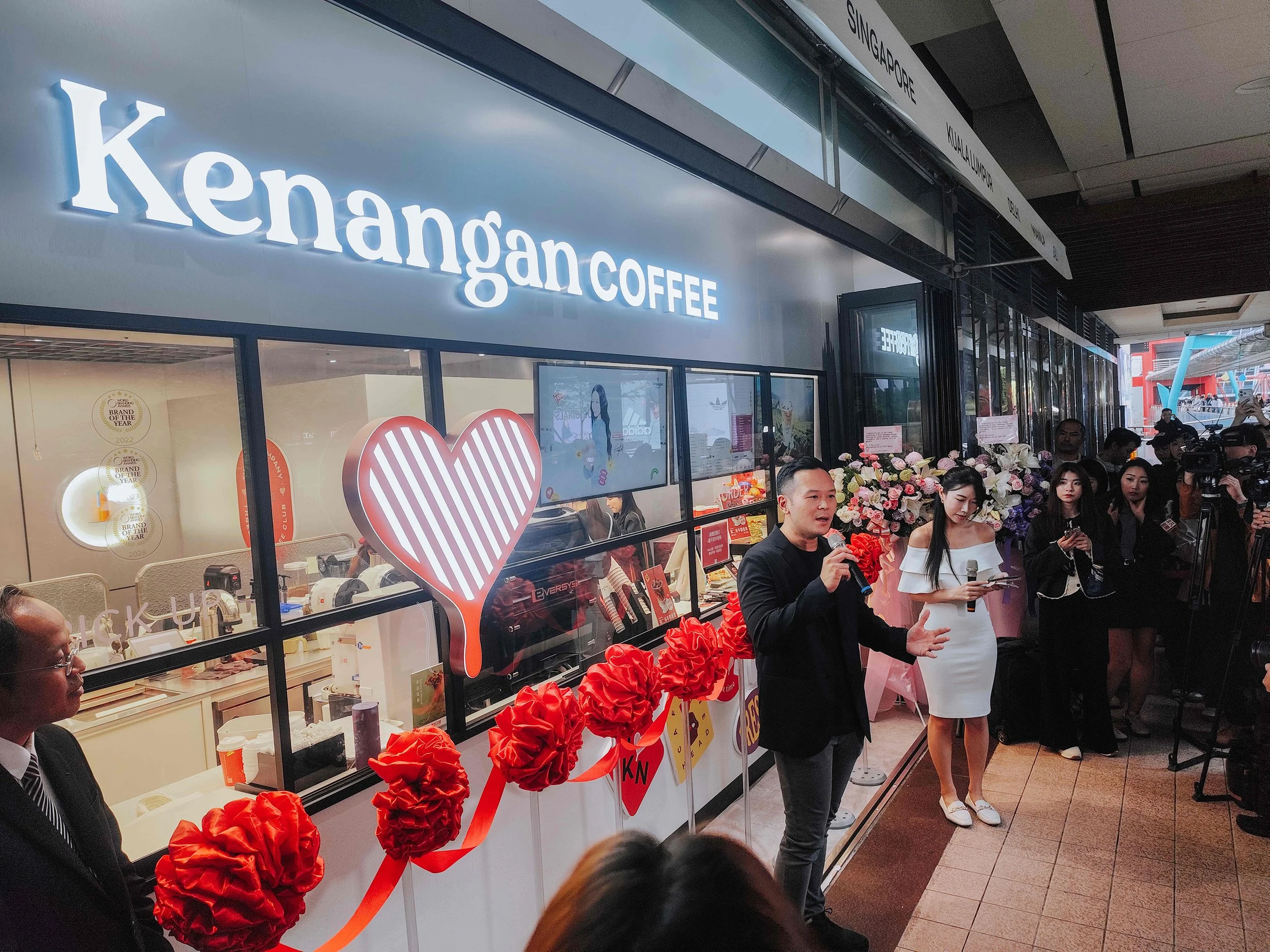
He has talked about local focus groups as a way of preserving the brand’s identity while making it welcome elsewhere. There is no single decision called international expansion. There are many decisions about people, premises, recipes, and what a familiar name means in an unfamiliar place. For Tirtanata, the work includes accepting that familiarity at home can become an assumption abroad.
When the list became too long
In December 2021, Kopi Kenangan announced a $96 million Series C first closing at a valuation above $1 billion. Its wider portfolio included bread, chicken, and cookies. Investors had supplied the means to pursue more opportunities. The harder question was how many opportunities management could pursue well at once.
By February 2026, Tirtanata was unusually direct about that history. Fresh capital and pressure to grow had encouraged extra business lines. He regarded some of them as costly distractions. The company narrowed its attention from ten annual initiatives to three. A chief executive who had spent years adding stores was now describing the value of a shorter list.
“The biggest problem in South-east Asia startups is that founders are over-resourced, not under-resourced.”Edward Tirtanata, February 2026
The group reported its first full year of net profit for 2025. Unaudited results showed $17 million in net profit and $184 million in revenue, with revenue rising 45 percent from the preceding year. These figures describe a business becoming more disciplined after rapid growth. They also make his retrospective useful: the mistakes belonged to the same company as the eventual result.
Reported FY2025 figures; February 2026 reporting described the financial results as unaudited.
Still on the buying side
The next set of ambitions is substantial. A 2026 expansion plan envisaged 4,000 stores by 2030. Rising coffee costs made the original affordability proposition harder to protect. Tirtanata described diversifying supply, hedging prices, and buying disposable cups directly from factories. The grand plan still involved the decidedly ungrand business of what a cup costs.
Store counts from the company plan published in Forbes India, May 2026. The 2030 figure is a target.
In September 2026, he increased his ownership in Kopi Kenangan, buying shares that included holdings of early employees and shareholders. For those sellers, the deal offered access to value before a public listing. A secondary sale moves money to the shareholder selling. It gives private-company ownership a practical use beyond a number on paper.
He linked that decision to people who had joined when the chain was still small. Some wanted to realise part of what they had helped build. He wanted more exposure to the business. An eventual IPO remained under discussion, with timing and venue undecided in September reporting. The transaction allowed the participants to make a decision without waiting for that larger event.
Tirtanata’s story keeps returning to the same modest unit: one purchase. A card sold as a child. A cup bought before class. A drink tested with a friend. A share purchased from an early employee. Each asks what somebody values enough to pay for. Nine years after the little shop behind the elevator, he was still answering that question with his own money.