A real estate agent begins the morning with a database full of people and a day full of weather. One contact has started clicking listings again. Another has ignored six emails. A home-purchase anniversary has quietly arrived. The information exists, but attention has limits, and the coffee has not yet negotiated an extension. Kim Koraca believes software should be able to help with this particular human predicament.
Her argument is less futuristic than it is practical. The useful system does not sit blankly until an agent invents the right prompt. It notices the returning visitor, spots the dormant relationship warming up and proposes a next move. Perhaps it drafts the email. Perhaps it prepares a comparative market analysis. The agent still decides, edits and sends. The machine has simply done the looking.
That distinction has become the center of Koraca's work as chief marketing officer at MoxiWorks, the Bellevue-based real estate software company. She joined as a consultant in spring 2025, helped steer a corporate refresh and a new website, and moved into the CMO chair that September. Her arrival coincided with the company's effort to recast itself around RISE, an AI-driven platform intended to turn activity inside an agent's database into a short, useful sequence of actions.
The industry kept adding tools. The problem stayed.
Koraca has been close enough to real estate software to watch several versions of progress arrive. In 2015, as director of marketing at Lone Wolf Real Estate Technologies, she was already talking about connected systems and the value of moving data through a brokerage's technology stack. At Constellation1, she helped establish a new enterprise real estate technology brand after its 2020 launch. The work earned her recognition as a RISMedia Real Estate Newsmaker in 2022.
Her career later included CMO roles at eZmax and eZsign, as well as advisory work through Kim Koraca Consulting. MoxiWorks was a consulting client before it became her employer, a career turn that carries its own neat proof of concept: do the work closely enough and the client may ask you to keep the keys.
Across those roles, the vocabulary of the industry changed. Back-office systems moved to the cloud. Integrations multiplied. Mobile became ordinary. AI became the word printed on every available piece of conference signage. Yet the everyday failure Koraca points to is stubbornly old.
“Follow-up has been an industry problem for more than 20 years, and despite waves of new technology, it still hasn't been solved well.”Kim Koraca · On real estate follow-up
The trouble, in her diagnosis, is not a lack of capability. It is a lack of prioritization. An agent may have a CRM, email templates, listing alerts, advertising tools and a cheerful assortment of dashboards. None of them necessarily answers the morning question: who needs me today?
The attention handoff
A brand is what the product helps someone do
Marketing executives are often invited into the room after a product has decided what it is. Koraca's record suggests she prefers an earlier meeting. MoxiWorks CEO Eric Elfman described her strength as aligning marketing, sales and product strategy. At MoxiWorks, that meant helping position RISE around the work it changes rather than the novelty of the machinery.
The message is specific. RISE scans for buying signals, recommends whom an agent should contact and proposes the material that might move the conversation forward. Koraca has described the difference as surfacing what agents “didn't even know to ask.” The phrase works because it turns AI from an oracle into an observant colleague, one less interested in composing a sonnet than in pointing to the ringing telephone.
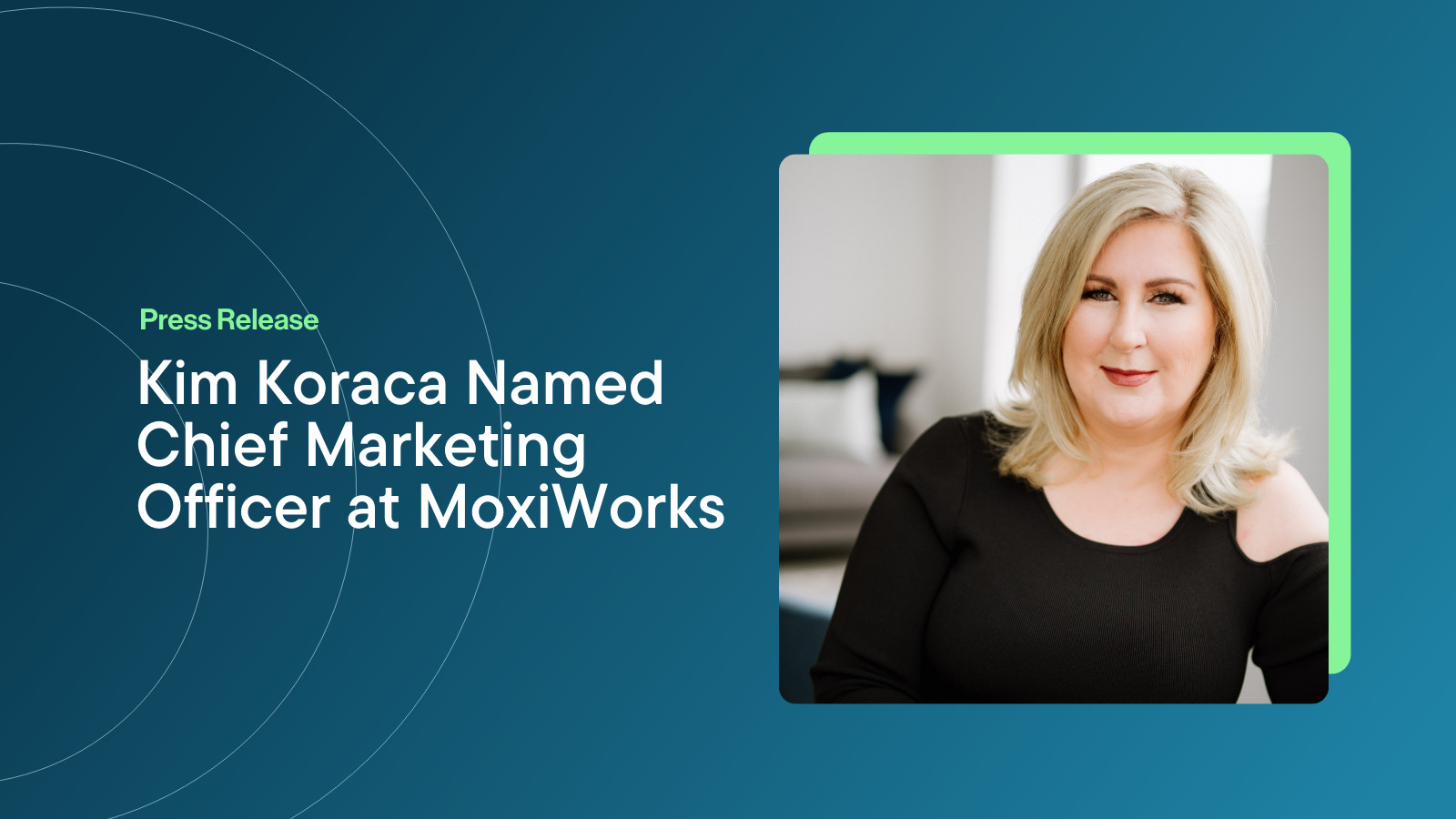
This is also why she talks about brands as something animated by people. “Watching brands I help shape, like MoxiWorks, come to life with fresh momentum and positive energy that is driven by the people behind the brand, not just a logo, is the most rewarding part of my work,” she said when RISMedia named her a 2026 Newsmaker. Then came the shorter operating principle: “Great products matter, but great people make the difference.”
The thought avoids a common rebrand trap. A new typeface can announce a change, but it cannot make sales understand product, or product understand the customer, or a customer feel understood at 8:17 on a Tuesday morning. Koraca's 2025 brief included the visible work, a refreshed identity and modernized site, alongside a marketing-department restructure intended to improve cross-functional alignment and accelerate go-to-market execution. The surface and the system had to agree.
Guardrails are part of the promise
Proactive AI introduces a second question after usefulness: what is it allowed to notice? Real estate records contain more than names and email addresses. They can include transaction histories, family details, addresses and the private motivations behind a move. Koraca has used a familiar scenario to make the risk concrete: an agent asks a general AI tool to personalize a campaign and pastes in client information without knowing where that data may travel or remain.
Her answer is not to make the agent an amateur privacy engineer. It is to put governance into the platform and keep brokerages involved. Brand standards, MLS rules, regulatory obligations and client trust already sit with the brokerage. AI adds a new layer, but it does not cancel the old responsibilities. In Koraca's telling, responsible deployment and useful deployment belong in the same product sentence.
“RISE isn't just helping you clean up your inbox. It's changing what your priorities were for the day so that you aren't missing anything.”Kim Koraca · On daily priorities
There is an old marketing temptation to make ease sound effortless. Koraca's version is more believable. The platform can recommend and prepare. The brokerage still sets policy. The agent remains in control. A useful guardrail is not ornamental morality; it is the condition that makes action possible without a small panic afterward.
The hidden product is an evening off
Koraca's recent public writing adds a personal edge to this otherwise operational story. She has said that, for much of her career, she put work before friends, family and often the moment itself. She cared about her commitments and the brands she served. Even when she was physically present elsewhere, her mind could remain at work. She describes that plainly as a regret and says maturity changed how she thinks about it.
This matters because it alters the measure of automation. A system is not humane merely because it performs a task quickly. If it creates more alerts, more checking and a vague fear that something is always slipping away, it has automated the action while preserving the anxiety. Koraca now connects MoxiWorks' product promise with the possibility of being responsive without being permanently available.
The aspiration is quietly radical for enterprise software. Let the professional stop thinking about work. Let a parent attend the school pickup without mentally patrolling a pipeline. Let dinner be dinner, rather than a poorly lit annex of the CRM. When a meaningful signal appears, the system can surface it in time. Until then, the mind is permitted to be where the body is.
At Lone Wolf, Koraca advocates for integrated technologies that move data through brokerage systems.
She helps build recognition for Constellation1 and is named a RISMedia Real Estate Newsmaker.
She arrives at MoxiWorks as a consultant to help reshape its brand and marketing strategy.
MoxiWorks names her chief marketing officer.
RISMedia and Inman recognize her work as she publishes a practical case for systematic, responsible AI.
The next useful thing
Koraca's playbook is not limited to real estate. Begin with the neglected behavior, not the fashionable technology. Find the signal buried inside the customer's routine. Connect product, sales and marketing around the same next action. Put the rules close to the capability. Then describe the result in human terms.
Her LinkedIn recommendations reinforce the operating style beneath that playbook. Former colleagues describe someone who tactfully challenges the status quo, empowers her team, builds consensus among competing views and still delivers under tight timelines. Those are useful qualities when the work requires a legacy brand, a new platform and several departments to walk into the future at approximately the same speed.
There is a small irony in a marketer making the case for less noise. It is also the point. More messages cannot compensate for poor timing. More tools cannot decide what deserves attention. And AI that can write everything may still be less valuable than AI that knows when one honest note should be sent.
For Koraca, the emerging interface is not the empty prompt. It is the considered nudge: this person, for this reason, now. Behind that nudge sits two decades of brokerage software, brand building and the accumulated knowledge that work expands cheerfully into every unguarded hour. The worthy machine, then, does more than accelerate work. It helps work reach an ending.