Kevin Lavelle had an awkward request for Phil Mickelson. The golfer had become a business partner in Mizzen+Main, Lavelle’s dress-shirt company. Now the team wanted him to dance. Specifically, to dodge golf balls on a driving range while demonstrating how much a dress shirt could stretch. There are comfortable ways to begin a commercial partnership. This was a different approach.
Creative director Richard Ross had dreamed up the concept; Lavelle had to sell it. At Mickelson’s California home, with his wife Amy and agent Steve Loy present, Lavelle laid out the idea. Amy laughed. Then came the useful disclosure: Phil could do the worm. A clothing pitch had acquired a rather unexpected competitive advantage.
The resulting 2018 commercial took about 90 minutes to film. Mickelson’s movements were his own; the flying golf balls were added digitally. It was an unusually literal demonstration of flexible workwear. Lavelle had built a company around a practical improvement, then found a way to make people enjoy looking at it. That combination runs through his career: notice an inconvenience, make something tangible, persuade someone to give it a try.
“It was one of the most uncomfortable moments of my life.”
Kevin Lavelle, on pitching the dance commercial
Dallas was the plan. Dubai was the detour.
Before the shirts, Lavelle had a respectable itinerary. He grew up in Florida, went to Southern Methodist University in Dallas, and graduated in 2008 with a bachelor’s degree in engineering management. He was a President’s Scholar whose education included time in Britain, Spain, Southeast Asia, and Australia. Staying put had never been much of a specialty.
He joined Oliver Wyman expecting to work from Dallas. When the consulting firm offered Dubai instead, he accepted. The office brought together employees from 34 nationalities. For a new graduate, it was a fairly brisk introduction to how many different assumptions can fit around a conference table.
He later returned to Dallas and worked in investing at Hunt. Consulting and investment analysis gave him experience examining other people’s businesses. Eventually, he wanted the responsibility of making one himself. The product idea had been waiting since a college internship in Washington: a congressional staffer, arriving in a building drenched in sweat, had made the standard office shirt look like an unfinished engineering project.
A shirt had to survive the hanger
Lavelle played golf and knew what performance polos felt like. He wondered why the fabrics that made sense on a course had not found their way into a conventional dress shirt. The question was straightforward. Turning it into a product required skills he did not yet have in textiles, manufacturing, and apparel.
He eventually found a seamstress in Dallas’s Bishop Arts neighborhood willing to make a prototype. He supplied a shirt she could take apart and fabric she could use to rebuild it. Years later, he remembered the prototype as unpromising on its hanger. On his body, it worked. Jen, his wife, did not immediately recognize that he was wearing something different. The experiment had passed a demanding test: it could be unusual without looking unusual.
Mizzen+Main launched in July 2012. Early attempts to find buyers were considerably less elegant than the finished business biography. Lavelle took a rack to a gym and bought space at sporting-event expos. The Dallas Marathon Expo produced no sales. People preparing to run were apparently not also preparing to overhaul their office wardrobes. A plausible customer theory had met a roomful of actual customers.
The bedroom became a stockroom
The young company occupied the Lavelles’ home in a very physical way. Shirts needed somewhere to go before they could go anywhere else. Jen helped pack orders when Kevin traveled. For Valentine’s Day in 2013, he rented a storage unit so she would stop colliding with inventory boxes in their bedroom. Romance, in this case, came with additional square footage.
He wrote thank-you notes to accompany orders for nearly 18 months. He went almost two years before taking his first paycheck. When money for Christmas gifts was scarce, the couple made soap. These are small domestic details, but they give the early business its proper scale. Before the athlete partnerships and investment announcements, there was a household trying to accommodate a company.
Lavelle’s recollection of progress includes a modest milestone: realizing that he could no longer remember the last day without a sale. The business was becoming less dependent on the next friendly purchase. Enough strangers were choosing the shirt to make a pattern. That mattered more than the enthusiasm of the launch party.
- 2008SMU graduate; joins Oliver Wyman
- 2012Mizzen+Main launches
- 2017L Catterton growth investment
- 2019Moves from CEO to chairman
- 2022Begins Harbor with Charlie Hill
- 2024Harbor announces nationwide shipping
The internet needed a fitting room
Daymond John gave Lavelle advice that helped shape the distribution strategy: get people to try the shirt on. The fabric’s appeal was difficult to communicate through a picture. A store could supply the missing part of the explanation, using the customer’s own shoulders and elbows.
Wholesale also offered relationships that a small online brand could not quickly manufacture. Independent retailers knew their communities and their customers. Lavelle was willing to direct shoppers to those stores even though selling through another business meant accepting a smaller margin. In 2016, he described a business with roughly 80 percent of sales online and 20 percent wholesale. Both routes put the same label in someone’s closet.
The practical work extended beyond the fabric itself. Cuffs and collars needed structure that would cooperate with stretch material. Inventory had to be available when demand appeared. Lavelle turned down private-label opportunities from larger stores because he wanted customers to recognize Mizzen+Main. The shirt’s usefulness could open a door; a recognizable brand could give people a reason to come back through it.
By 2017, the company had attracted growth investment from L Catterton. The announced purpose was concrete: broaden the products and expand distribution across channels. The investment amount was not disclosed. A business that had begun with one particular complaint about office clothing was accumulating the less glamorous machinery required to keep answering it at scale.
A voice in the headphones
Another turning point arrived through Tim Ferriss’s podcast in 2015. Lavelle bought sponsorships before he could be certain they would pay off. Ferriss, who disliked the inconvenience of conventional dress shirts, could explain the product from a position listeners understood. The pitch had a recognizable problem and a wearer who seemed relieved to have found an answer.
Lavelle later described the sponsorship as a decision that changed the company’s trajectory. Demand brought its own difficulty: the business had to fulfill the interest it had worked so hard to create. By June 2016, he was describing a progression from about 50 retail locations at the end of the first quarter of 2015 to about 160 by year-end and more than 210 the following spring.
The athlete relationships helped carry the same argument into other settings. J.J. Watt became a partner; Mickelson would later turn a dress shirt into golfing attire and a dance costume. These partnerships made the fabric visible in motion. A photograph could show a collar. A golfer moving freely could explain the rest.
Learning to leave the CEO chair
Lavelle’s own taste was fairly steady. Asked about a style influence in 2017, he chose Ralph Lauren and the appeal of clothes that still look good years later. He preferred clean, classic pieces with a good fit. There is a pleasing consistency there: the founder selling a change in how a shirt behaved was not asking everyone to change how they dressed.
Recognition followed the operating work. He became an EY Entrepreneur Of The Year regional winner in 2016 and received SMU’s Emerging Leader Award that year. He also helped establish the Dallas Global Shapers community. Mizzen+Main’s partnerships included the Navy SEAL Foundation, the Travis Manion Foundation, and 31 Heroes.
In 2019, he announced that he would hand the CEO role to Chris Phillips and remain chairman. He moved into leadership at Stand Together, serving as senior vice president before returning to a new operating venture. Leaving daily control of a company he had built was a distinct decision in its own right. The next chapter would ask him to learn a different product category altogether.
The second complaint came from home
The idea for Harbor began when the baby-monitor app the Lavelles used lost its connection. Kevin discovered that the system had stopped doing the job he expected it to do. Trying other monitors exposed trade-offs rather than a satisfying replacement. His next business began with the sort of product evaluation that requires no presentation: use the thing, find the failure, wish it worked differently.
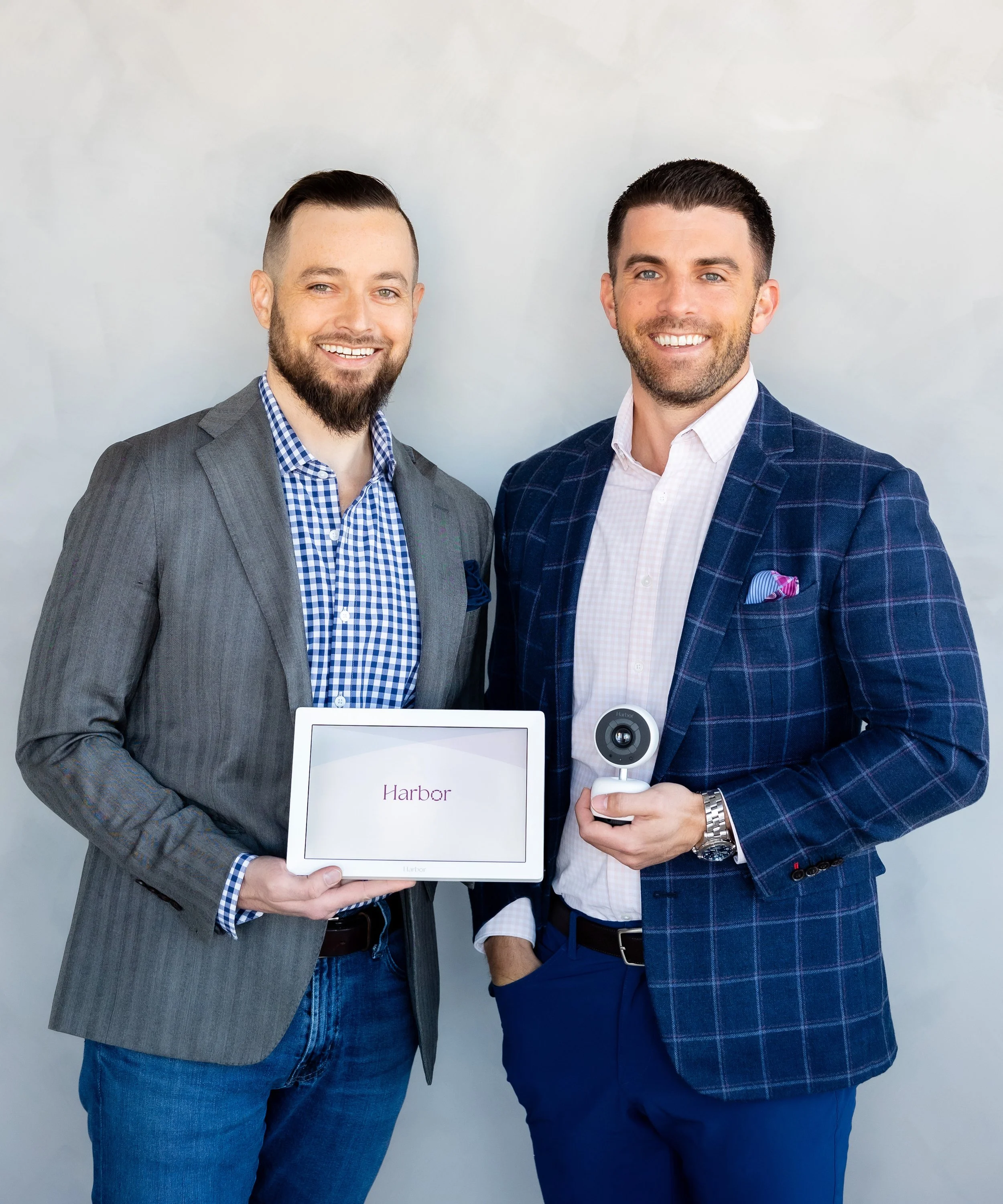
He joined forces with Charlie Hill, and Harbor took shape in 2022. The product combined a dedicated monitor and camera with local connectivity, so the basic connection would not depend on an internet service staying available. Remote access offered a separate convenience. For Lavelle, the central attraction was reliability in an object people were supposed to be able to rely on.
Harbor announced a $3.7 million seed financing in February 2024. By September, it announced nationwide shipping and $7 million in seed funding. Trust Ventures led the investment, with participants including Capital Factory, Morrison Seger, and Tim Ferriss. The company was operating in hardware now, with the development and manufacturing demands that come with an object someone must eventually take out of a box.
An ordinary evening is part of the ambition
The connection to Ferriss survived the change in products. When Lavelle was preparing Harbor, he sent a message thanking him for the earlier sponsorship’s effect on Mizzen+Main. A follow-up conversation eventually led to an investment. An advertising relationship from the first company had become part of the second company’s foundation.
At home in Dallas, Lavelle and Jen are raising two children. He has described making room for family walks, cooking dinner, and time together as deliberate priorities. Those details belong alongside the businesses. The household that once supplied a packing operation also supplies the everyday experiences against which the next product is measured.
His career keeps returning to the same small distance: the gap between what an ordinary object promises and what it actually does. A shirt should accommodate a person moving through a day. A monitor should keep its connection. Lavelle has spent years working inside that gap. Sometimes the work involves financing, distribution, and a manufacturing partner. Sometimes, with the right golfer, it involves the worm.