Brian Williams has a rather specific description of the early days of OneSource Virtual: “We're on a rocket ship held on by Velcro.” It is an unusually tactile image for a cloud business. You can almost hear the fastening coming apart. In his recollection, rapid growth came with hard work, resilience, prayer and days that tested the people doing the building. The joke survives because the company did, too.
In late 2008, Williams, Wesley Bryan and Britt Wirt launched OneSource Virtual. Business operations followed in 2009, during the financial crisis. Their chosen subject was the work that happens after a company buys enterprise software: implementing it, using it and getting essential administrative jobs done. Payroll lacks the glamour of a product launch. It does, however, have a deadline that people tend to remember.
Williams was entering familiar territory. A third-generation entrepreneur, he had spent two decades in the HR and payroll services industry by the time he later explained the company's origins. He saw providers with useful technology and others with good service. The opportunity he described was to bring those capabilities together. Workday became the platform around which the founders built their offering.
His education had taken him to East Central University in Oklahoma on a combined academic and baseball scholarship. He graduated with honors in business administration. The sporting detail adds a pleasing footnote to a career spent building teams, although Williams's later account of leadership would dwell more on helping people improve than on collecting stars. The company he helped start would give him ample opportunity to test that distinction.
One platform, a growing set of chores
OneSource Virtual committed itself to Workday in 2008, becoming both a partner and a customer. That relationship gave the business a clear boundary. It would build its services around a particular software environment, learning how its customers worked inside it. Williams later explicitly connected OneSource Virtual's expansion to Workday's growing popularity. A founder can choose a platform; the platform's fortunes still matter.
The company's model became known as Business Process as a Service, or BPaaS. Behind the abbreviation sits a practical arrangement: software, specialist staff and repeatable processes working together to carry out administrative tasks. OneSource Virtual's technology enabled service delivery inside the customer's Workday environment. The appeal was continuity between the system holding the information and the people doing the work.
That focus left room for expansion. Payroll and HR services could be joined by finance and accounting services without abandoning the Workday relationship. The company developed its proprietary Atmosphere technology to support real-time, in-application delivery. For Williams, the proposition depended on the quality of the service as well as the technology. Customers were buying help with work that had to be right, repeatedly.
A business that needed more room
The early numbers explain the Velcro. OneSource Virtual recorded $315,000 in revenue in 2009. Revenue reached $36.9 million in 2013, with three-year sales growth of 999 percent. The windows used to measure growth differ, but the direction is plain. A young operation had become a company with a much larger set of obligations.
Recognition followed. In June 2014, Williams received EY's Entrepreneur Of The Year award in the Emerging Growth Company category for the Southwest region. His response credited the OneSource Virtual team. The same summer, the business appeared on the Inc. 500 for a second consecutive year, at number 471. Awards gave the expansion a public label. Inside the business, expansion meant finding people and making the operation work.
In June 2015, Technology Crossover Ventures made a $150 million equity investment, joining earlier investor Halyard Capital. The stated purposes included international expansion and developing finance and accounting outsourcing services. Investment of that size widened the company's options. It also made the question of what the business could reliably deliver more consequential. Money can finance a plan; someone still has to staff it.
By September, OneSource Virtual had opened a processing center in Derry, Northern Ireland. The company projected approximately 290 jobs there by the end of 2017. Williams described a location search focused on a skilled workforce and a community suited to the business. The plan extended service capacity toward Europe while supporting existing American customers. An enterprise born in Texas now had to make its methods travel.
Annual revenue in 2013
Equity investment from TCV
Active customers by November
The CEO as the person removing the obstacle
Williams's public writing from this period reveals what he thought the job required. In a November 2015 essay on leadership, he divided the CEO's responsibilities into strategy, building a team and equipping that team to succeed. The last assignment included clearing obstacles and improving communication. He described himself as working alongside employees and serving them. It is a demanding job description for anyone attracted primarily to the title.
He also recalled senior people making time for him when he was young. His intention was to offer employees similar access, including those without impressive titles. He acknowledged the limits: with hundreds of people in the company, he and the directors could not meet everyone. That qualification matters. An open door becomes a more complicated promise as the number of people outside it grows.
His proposed test of leadership was personal. Would people continue to follow someone who no longer held the title? Would talented employees choose to work with that leader elsewhere? Those questions bring authority down to the level of a working relationship. They also explain his stated enthusiasm for seeing employees develop. Growth, in that account, included what people became capable of doing.
“My job is to serve my employees.”
Brian Williams · 2015
Boot camp, Babe Ruth and the next desk
By June 2016, Williams was describing the machinery behind that philosophy. Every new employee, whatever the position, attended a company boot camp covering its history, services and values. Quarterly town halls helped people understand recent developments and upcoming work. Managers received leadership training. Employees had access to Lynda.com's online learning library. Culture, in this version, occupied scheduled hours as well as sentences on a wall.
He favored internal promotion and argued that a capable person struggling in one position might flourish in another. To make the point, he reached for Babe Ruth, who began his major-league career as a pitcher before becoming famous for hitting home runs. For a former baseball scholarship student, it was an apt choice of example. The management advice was practical: examine the assignment before giving up on the employee.
Outside advice had a place, too. Acresis advisers Mark Hodges and Bill Thomas began working with the founders in 2011. Williams also credited coach Mark Fenner with helping him, his executives and the company's culture during a period of rapid growth. These relationships complicate the lone-founder picture. Building the business involved accepting help from people who had seen versions of its problems before.
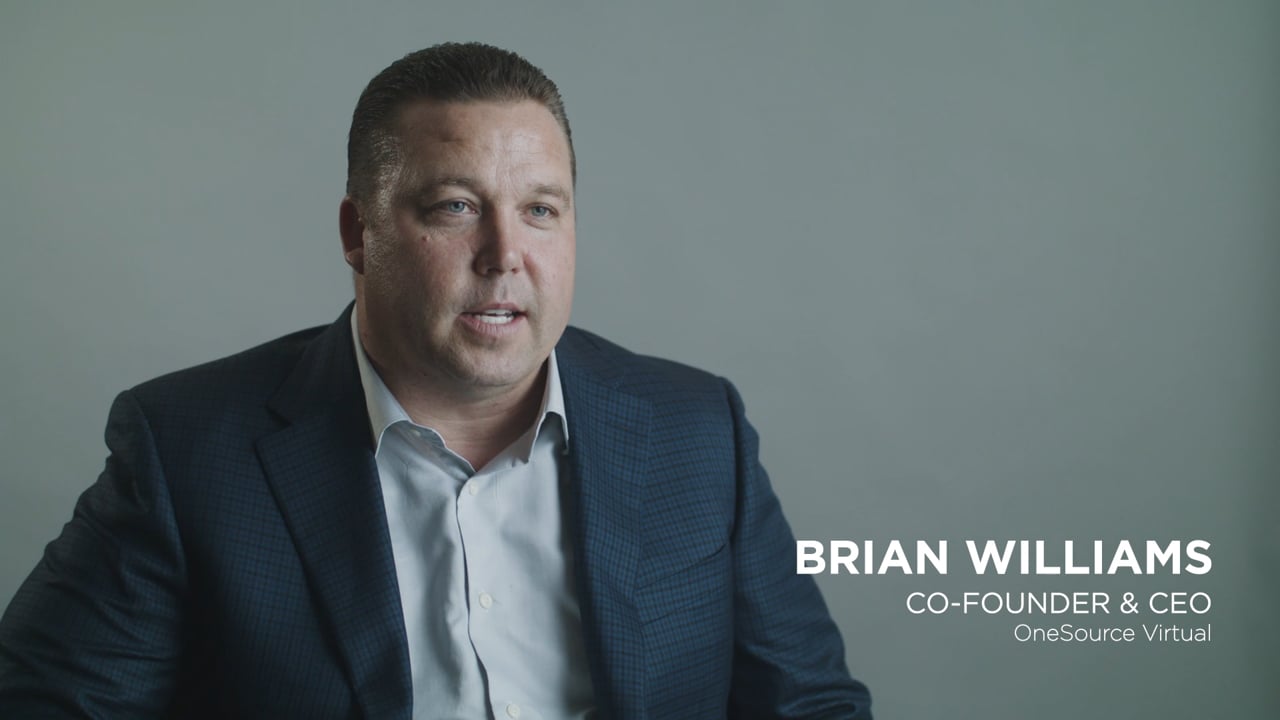 ▶ Watch the founder interview ↗
Even the floor plan had a job to do
The workplace itself became part of the operating problem. The headquarters project addressed disconnected earlier facilities and the need to accommodate a growing employee population. The project brief covered 215,000 square feet. It considered how staff gathered, how executives collaborated and how customers experienced the building. A company selling cloud services still needed somewhere for people to sit down together.
The design included shared gathering space, a central coffee hub and executive offices that could double as meeting rooms. Its planners considered both customer privacy and employee access to executives. Those are mundane details with organizational consequences: who encounters whom, how far a colleague must walk and whether a closed room remains empty. The floor plan offered a physical version of the questions Williams raised in his writing.
His own attitude toward change was less restrained. “Growth doesn't scare me. Status quo scares me.” The sentence fits a founder willing to expand quickly, but the surrounding business required the patient work of training, space planning and service delivery. By November 2016, OneSource Virtual had passed 500 active customers. Each additional customer made dependable execution a larger part of the assignment.
Handing over the daily calendar
In 2017, Williams moved from CEO to executive chairman, and Trey Campbell took responsibility for running the business. Campbell had joined as president and chief operating officer in 2016. Williams explained the change in terms of the volume of work and the need to divide responsibilities. His new remit gave him more time for the board's agenda and matters outside daily operations.
The company continued changing shape. It agreed in 2022 to sell its professional services and application management practices to Cognizant; the transaction took effect on January 1, 2023. Nearly 400 employees joined Cognizant. OneSource Virtual retained its BPaaS business, concentrating on ongoing payroll, HR and finance services. The founder's business had grown large enough to separate activities that once sat together.
January 2026 brought another ownership change: TA Associates announced a majority growth investment. Halyard Capital and TCV exited, while founders, management and employees retained a significant minority stake. Financial terms were undisclosed. The announcement described more than 1,400 Workday customers and plans to support continued growth, product development and customer capabilities. John Bax was now CEO.
Williams welcomed the investment and said he would remain involved as a board member and shareholder. His current company biography also describes him as an active investor and student of the industry. The work has changed from the early CEO's daily decisions to a continuing role in the company's direction. The Velcro line remains funny. More revealing is the long effort to give the people aboard something dependable to hold.