Asked to put a number on her own workplace, Kelley McCabe Ruff chose eight. It was September 2015, and a roundtable introduction required a score between one and ten. The founder of eMindful could have awarded herself full marks. She left two on the table.
“Well we do well, but there is always room for improvement, so I would give us an 8.”
Kelley McCabe Ruff · September 2015
It is a small exchange, with a useful absence of fireworks. Here is a chief executive acknowledging that the company she runs is a work in progress. Eight is respectable. It also leaves tomorrow something to do. In the public story of McCabe Ruff, the practical details often carry more weight than the grand declarations.
The roundtable had asked participants to introduce themselves in 30 seconds. A title was one possible starting point; a description of their working lives was another. McCabe Ruff began with the straightforward facts of her company and role, then supplied the score when prompted. It was a brief introduction to a discussion among peers, with little time for a polished corporate history. That format gives the moment its appeal. Much of a founder’s public life consists of explaining the enterprise at length. Here, she had half a minute and a number. The response allowed satisfaction and self-criticism to occupy the same sentence, without making a production of either.
She had already worked in senior technology roles at Salomon Brothers, Lehman Brothers and Citigroup. Then she founded a company that delivered live online classes to organizations. The setting changed. The work still involved getting people and systems to function together, with all the complications concealed inside that tidy phrase.
Two graduations, one family
McCabe Ruff holds an MBA from New York University. Her LinkedIn profile lists NYU Stern and the years 1984 to 1989. Alongside the financial institutions on her résumé, that credential places her comfortably in the language of budgets, management and corporate decisions.
There is another graduation worth lingering over. In 2005, she and her mother, Eileen Blaker Raynolds, graduated together from All Faiths Seminary International in New York City. A mother and daughter in the same graduating year is a more interesting biographical detail than another line of executive titles.
Raynolds had a substantial professional life of her own, including a senior career at Siemens and experience captaining a racing yacht. The shared graduation gives the family story a lovely specificity. Two adults, each with an established life, had undertaken another course of study. Education had become something they could share.
There is no need to turn the occasion into a hidden explanation for every decision that followed. It stands on its own. McCabe Ruff’s education crossed business and seminary study; her working life crossed corporate technology and entrepreneurship. Her résumé accommodates both without obliging either to apologize for the company.
A hundred encounters with the real world
By November 2015, McCabe Ruff had a distinctly operational subject to discuss at Berkeley: lessons from more than 100 employer implementations. Her scheduled presentation drew on several years of eMindful’s work. The number mattered because it described repeated encounters with organizations, rather than a product demonstrated once to an agreeable audience.
An employer program has several audiences. Someone authorizes it. Someone introduces it. Someone has to decide whether to attend. These are different decisions, often made by different people. A founder working in that setting has to carry an idea through a chain of permissions before a participant ever opens a classroom.
The title of her presentation promised lessons from the front lines. That is a useful place to locate her contribution. She was bringing experience accumulated through delivery: taking a service into workplaces, encountering the questions, and returning with something more concrete than an attractive proposition.
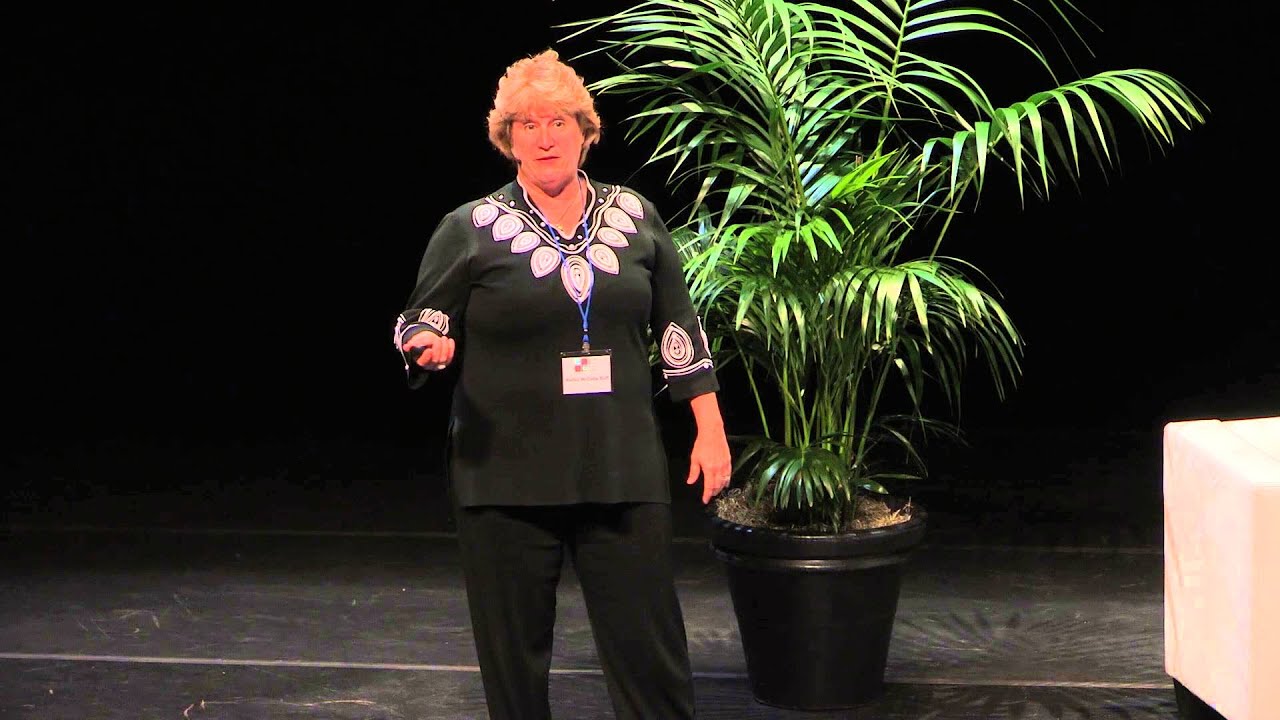
A clip published in February 2016 runs nine minutes and 47 seconds. Its subject is adoption, engagement and sustained participation. Even that sequence tells a story. Introducing a program comes first. Getting people involved follows. Keeping them involved demands another round of effort.
Those distinctions are easy to flatten in a pitch. An account opened can look like a customer won; a first session can look like a habit established. The subject of her talk keeps those stages separate. Anyone who has ever signed up enthusiastically for a course and then ignored the reminder email will recognize the difficulty.
McCabe Ruff’s public professional recommendations add a customer-facing detail. Harriet Stein described her as collaborative and patient, and recalled receiving repeated help making a business case to senior leadership. It is an account of a supplier working through a buyer’s internal process. The persuasion continued after the first conversation.
Fourteen minutes, and the rest of the business
In January 2016, eMindful and Spafinder launched the One-Percent Challenge. The invitation was deliberately small: devote approximately 14 minutes a day to a live online session. One percent of a day is 14.4 minutes. Fourteen made a convenient, rounded appointment.
The campaign offered a free 30-day membership, daily class topics and a teacher-facilitated conversation board. Those details gave the invitation a place to go. Someone accepting the challenge could enter a service with a schedule, instructors and other people, rather than simply receiving an exhortation to try harder.
Approximately 1% of a day. A small commitment, given a specific place on the calendar.
The commercial problem becomes clearer when the clock is set beside the company. Fourteen minutes is what a participant contributes. Behind that appointment are instruction, product design, customer acquisition and the work of keeping the service available. A modest request at the front door can require a substantial organization behind it.
That makes the partnership worth noticing. Spafinder brought a distribution relationship to the campaign; eMindful brought the program. The arrangement placed McCabe Ruff’s company in front of a partner’s audience. For a founder, finding a route to people can be as consequential as deciding what to offer them.
The small commitment was also a recognizable piece of product framing. Fourteen minutes sounds possible in a way that a sweeping promise of personal reinvention may not. The campaign gave prospective participants an amount of time they could assess. They could look at a calendar and make a decision.
The money arrives with a to-do list
By October 2016, the company had announced a $6.85 million Series B financing. LFE Capital led the round, and its managing partner Leslie Frecon joined the board. Existing investors One Earth Capital and Bridge Builders Collaborative participated, alongside new investors New Ground Ventures and Fairground Capital.
The announced uses of the money were engagement marketing, new product development and sales expansion. These are revealing priorities for a company built around participation. It needed to improve what it offered, reach additional buyers and encourage people to use the service. The capital was attached to specific jobs.
Led by LFE Capital
Board membership belongs in this part of the story too. Raising money introduces additional people into a company’s decisions. McCabe Ruff’s comments at the time emphasized the investor’s contribution to strategy and finance. She was describing a working relationship, as well as a transaction.
Earlier that year, eMindful had appointed Norman B. Anderson as senior science advisor. He had previously led the American Psychological Association. The appointment added another experienced executive to the organization around its founder. A company’s public face may be one person; its capacity grows through the people who join.
Seen together, the partnership, appointment and financing show several kinds of company building happening in the same year. One extended distribution. Another added expertise. The funding supported further development and commercial expansion. None replaces the others. A founder has to keep several conversations going at once.
There is a practical tension running through this phase of her career. The company sold organizations a service that individuals had to choose to use. An institutional contract could create access, but attendance still happened one person at a time. That helps explain why engagement appears beside sales and product development in the financing announcement. Each addressed a different part of the same commercial task. For McCabe Ruff, the classroom and the boardroom were connected by the unglamorous business of participation. The next person had to find a reason to come, and the organization had to be ready when they did.
A company beyond its founder’s tenure
Wondr Health announced its acquisition of eMindful on July 20, 2021. By then, Mary Pigatti was eMindful’s CEO. The announcement said the business would continue under its own name and its management team would remain in place. McCabe Ruff’s role in this chapter is that of founder and former chief executive.
The distinction matters in telling her story. The acquisition belongs to the history of the organization she started, while the leadership at the time belongs to the people actually doing that work. A company can carry its founder’s contribution forward through colleagues and successors.
- 2005Graduates from seminary alongside her mother.
- 2015Brings employer implementation lessons to Berkeley.
- 2016Leads eMindful during its Series B financing.
- 2021Wondr Health acquires eMindful under later leadership.
The lasting interest in McCabe Ruff’s career is in the combination of its parts. Technology roles at financial institutions. Business school. A graduation with her mother. Live online teaching. Employer contracts. A board and a financing round. Each belongs to the same professional life, even if they would rarely appear together in a career-planning brochure.
Her eight-out-of-ten answer remains a fitting place to leave her. There is accomplishment in it, and an allowance for unfinished work. The business of getting people to show up gives a founder plenty of both. Tomorrow, after all, comes with another calendar.